




Israeli military operations in Gaza have intensified, with recent strikes injuring two children in the Al-Musallah area, south of Khan Younis, and killing a Palestinian man in the Tuffah neighborhood of Gaza City. According to Al-Araby TV, Israeli aircraft targeted eastern Khan Younis, and four Palestinians were wounded in the central Gaza Strip. Ambulances attempting to reach the wounded reportedly came under fire, underscoring the volatile situation on the ground.
The humanitarian toll continues to mount. Over the past 24 hours, the bodies of four Palestinians were recovered from rubble, and five were injured in ongoing attacks. Since October 7, 2023, the death toll has reached 72,049, with 171,691 injured. Despite a supposed ceasefire beginning October 11, Israel has killed at least 591 Palestinians and injured 1,583 more, while 724 bodies have been recovered from the rubble, according to the Palestinian Ministry of Health.
Netanyahu’s Controversial Role on Trump’s “Board of Peace”
In a move that has drawn widespread criticism, Israeli Prime Minister Benjamin Netanyahu joined President Trump’s “Board of Peace.” The board, notably absent of Palestinian representation, aims to discuss Gaza’s reconstruction and will hold its first meeting on February 19 in Washington, D.C. Netanyahu’s appointment has been met with skepticism. Hamas official Mahmoud Mardawi commented on X, “Netanyahu’s appointment reinforces doubts, deepens the lack of trust, and rewards policies of extermination and repression instead of holding them accountable.”
This development comes as Hamas leadership, led by Muhammad Darwish, met with Iranian diplomat Ali Larijani in Doha. The meeting underscored Iran’s “unwavering support” for the Palestinian cause, amidst ongoing negotiations between Iran and the United States.
U.S. Political Maneuvering and Middle East Policy
The U.S. is reportedly drafting a proposal for the gradual disarmament of Hamas, requiring the group to surrender weapons capable of striking Israel. The plan, spearheaded by Jared Kushner and other U.S. envoys, suggests a phased process allowing Hamas to retain some small arms initially. However, Hamas official Osama Hamdan stated that no official disarmament proposals have been received.
Meanwhile, movement at the Rafah border crossing remains heavily monitored. Forty-six Palestinians entered Gaza under strict Israeli restrictions, and 47 Palestinians, including patients and their companions, left Gaza. Israel’s arrangement with the Abu Shabab militia to oversee the crossing raises concerns about the permanence of such measures.
Human Rights Concerns and International Reactions
Human rights issues continue to plague the region. Abdullah Barghouti, a prominent Palestinian leader, was reportedly assaulted in Israeli detention, suffering injuries and severe weight loss. The Commission of Detainees’ Affairs reports that 87 Palestinians have died in Israeli detention since the conflict began.
Additionally, Israel’s targeting of aid workers has drawn international condemnation. The UN Office for the Coordination of Humanitarian Affairs (OCHA) reported the death of a UNRWA staff member in Gaza, bringing the total number of aid workers killed to 589 since October 2023.
U.S. Domestic Issues and International Diplomacy
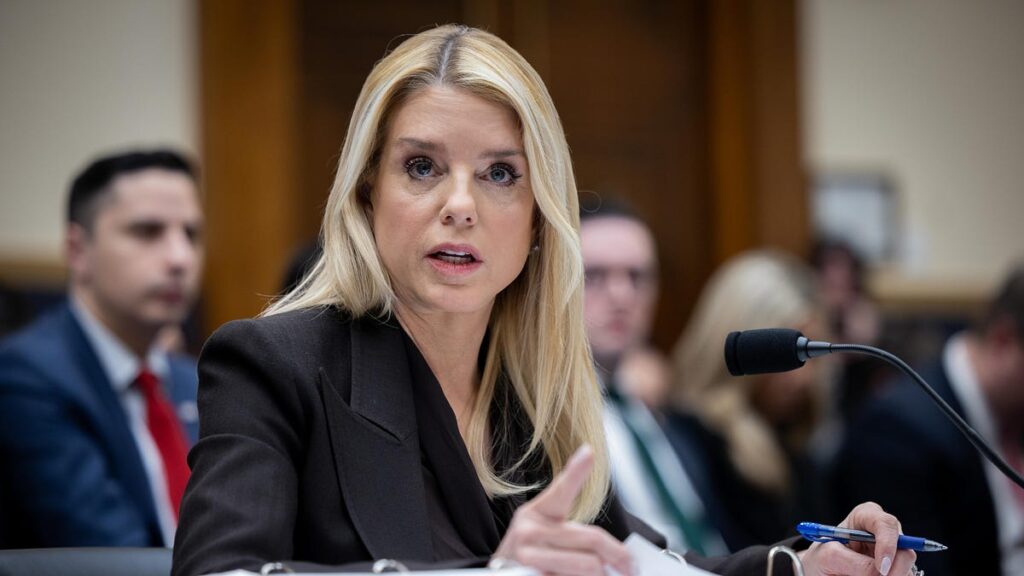
In the U.S., Attorney General Pam Bondi faced scrutiny during a House Judiciary Committee hearing, where Epstein survivors confronted her over the Department of Justice’s handling of their cases. Bondi’s contentious remarks led to a heated exchange with Rep. Becca Balint, highlighting ongoing tensions within U.S. politics.
Furthermore, the IRS admitted to improperly sharing taxpayer data with the Department of Homeland Security, raising privacy concerns. This revelation comes amid broader debates over immigration policies and civil liberties in the U.S.
On the international front, U.S. Energy Secretary Chris Wright visited Venezuela to discuss an overhaul of the country’s oil sector, signaling a potential shift in U.S.-Venezuela relations. Meanwhile, Democratic senators urged Secretary of State Marco Rubio to halt the deportation of Iranian asylum seekers, citing potential persecution.
Military and Security Developments
In Sudan, RSF drone strikes targeted schools and civilian areas, exacerbating the humanitarian crisis. The Sudanese Armed Forces vowed retaliation, further escalating tensions in the region. Similarly, in Yemen, clashes between the Southern Transitional Council and government forces resulted in multiple casualties, reflecting ongoing power struggles.
In South Asia, militants in Pakistan ambushed police patrols, killing five officers, while separatists in Indonesia’s Papua region targeted pilots and soldiers, highlighting persistent regional conflicts.
Global Geopolitical Shifts
Russia announced it would adhere to the limits of the expired New START treaty if the U.S. does the same, amid ongoing diplomatic tensions. Meanwhile, Russia’s drone strike in Ukraine’s Kharkiv region killed a father and his three children, drawing international condemnation.
In a significant arms deal, India signed a $39 billion order for French Rafale fighter jets, marking a major step in its defense modernization efforts. This move strengthens India’s strategic ties with France and other Western arms suppliers.
As geopolitical dynamics continue to evolve, these developments underscore the complex interplay of military, political, and humanitarian issues shaping the global landscape.