



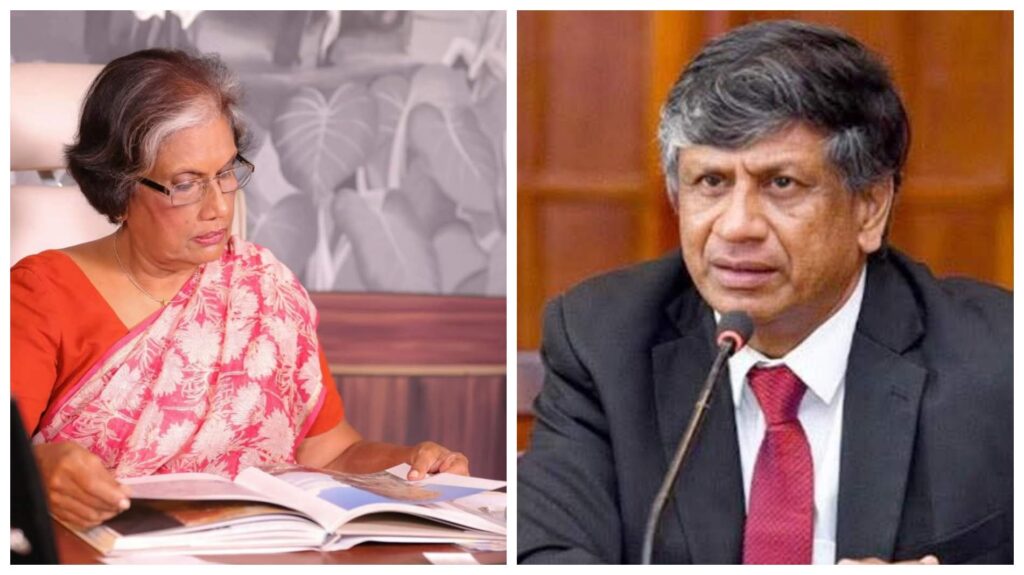
Former President Chandrika Bandaranaike Kumaratunga has raised alarm over what she perceives as the erosion of Sri Lanka’s professional public service. In a statement, she warned that politically driven governance and selective justice are threatening the very foundations of the State. Her comments come amid growing concerns about the integrity and efficiency of public institutions in the country.
Kumaratunga shared her thoughts on her Facebook page, citing an article titled “When Justice Becomes Selective,” which she believes highlights critical issues affecting Sri Lanka’s governance. She expressed full agreement with the article’s views, particularly its examination of integrity within the public service. Her statement underscores a broader debate about the role of non-partisan governance in maintaining a functional democracy.
Concerns Over Saman Ekanayake’s Detention
Central to Kumaratunga’s message is the case of former Presidential Secretary Saman Ekanayake, who is currently in remand custody. Ekanayake is accused of approving funds for a foreign visit by then-President Ranil Wickremesinghe in 2023. Kumaratunga, who knows Ekanayake personally, described him as a “scrupulously honest and highly professional public servant.”
“A government cannot function without a professional, efficient, and honest public service,” Kumaratunga stated. She emphasized that while political leaders may not need extensive administrative experience, they must demonstrate unwavering integrity and rely on career public servants to govern effectively.
The Risk of Politicizing Public Service
Kumaratunga warned that the current government appears to be dismantling the remnants of the country’s public service, replacing qualified professionals with party loyalists lacking necessary experience. This trend, she argued, could further weaken democratic governance and erode public trust.
The former president linked these developments to the 2022 Aragalaya protest movement, which she sees as a manifestation of growing public awareness of governance failures. “Citizens rose up only after realizing how severely governance standards had deteriorated,” she noted.
Historical Context and Future Implications
Sri Lanka has been grappling with governance challenges for nearly two decades, according to Kumaratunga. She cautioned that without a change in the current approach, the nation could face further chaos. Her comments echo the conclusions of the Vox Civis article, which argues that the responsibility for reversing this decline ultimately lies with the people.
“The responsibility for reversing this decline ultimately lies with the people,” Kumaratunga urged, calling on citizens to question decisions, understand long-term consequences, and make democratic choices to rebuild the nation.
The announcement comes as Sri Lanka continues to navigate a complex political landscape, where the balance between political influence and professional public service remains a contentious issue. Experts suggest that maintaining a non-partisan public service is crucial for the stability and functionality of any democratic government.
Looking Ahead: The Role of Citizens
As Sri Lanka faces these governance challenges, the role of its citizens becomes increasingly significant. Kumaratunga’s call to action encourages the public to engage more actively in democratic processes, ensuring that their voices are heard and their interests represented. This development follows a global trend where citizens demand greater accountability and transparency from their governments.
Meanwhile, the case of Saman Ekanayake serves as a poignant reminder of the delicate balance between political authority and public service integrity. The outcome of his detention could set a precedent for how similar cases are handled in the future, potentially influencing the broader governance landscape in Sri Lanka.
In conclusion, Kumaratunga’s warning highlights a critical juncture for Sri Lanka. The choices made by its leaders and citizens in the coming months could determine the trajectory of the country’s governance and democratic health. As the nation stands at this crossroads, the call for integrity, accountability, and professional governance remains more relevant than ever.