




On February 14, 2026, a digital transformation is quietly reshaping the airline industry, as carriers and consumers engage in a subtle tug-of-war over the vast data generated by online ticket searches and purchases. This shift, driven by technological advancements and artificial intelligence, is poised to redefine the balance of power between airlines and their customers.
To grasp the significance of this transformation, it’s essential to understand the evolution of flight booking systems alongside the internet’s growth. During the dotcom era, online ticket sales emerged, giving low-cost carriers like JetBlue in the United States and Virgin Blue (now Virgin Australia) a competitive edge. Empowered passengers disrupted traditional business models by booking their own fares and comparing prices, sidelining travel agents and altering airline strategies.
The Rise of Online Booking
According to Ian Douglas, a senior aviation lecturer at the University of New South Wales, “Online booking moved the work to the customer.” This shift required immediate payment and effectively ended the practice of airlines holding reservations pending later ticketing. As online habits expanded from desktop computers to smartphones and social media, airlines began leveraging the wealth of personal and consumer data available online.
In the late 1990s, platforms like Expedia, Travelocity, and Booking.com empowered consumers to bypass travel agents and book their own tickets. This not only incentivized passengers to show up for flights but also significantly reduced the risk of empty seats for airlines. As a result, industry average load factors—measuring passenger miles against available seat miles—rose from approximately 68% in 1998 to about 83% by 2020.
Technological Advancements and the Airline Industry
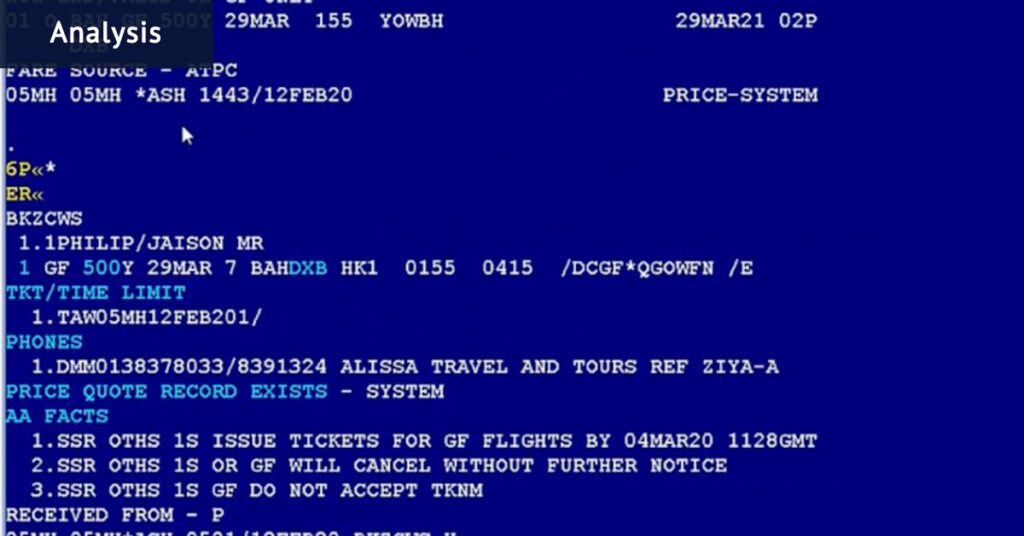
The introduction of Webjet in 1998 further disrupted traditional ticket-selling processes by offering cheaper fares directly to consumers. This bypassed the global distribution system (GDS) that underpinned booking systems like Amadeus, Sabre, and Travelport, which travel agents relied on. At the time, GDS interfaces were complex and inaccessible to the average consumer, with fare codes like F or A for full-fare first class and K, L, or Q for discounted economy tickets.
Airlines in the U.S. were pioneers in creating apps for the iPhone, establishing direct business-to-consumer relationships through their own apps and websites. This model fostered the growth of low-cost airlines, with JetBlue launching in 1998 and rapidly expanding by offering no-frills, point-to-point flights.
As consumer behavior evolved, even larger legacy carriers like Qantas, American, Delta, and United adapted to the internet’s influence. Qantas, for instance, launched its low-cost carrier Jetstar in 2004. The industry embraced online booking, leading to unbundled ticket offerings where meals, luggage, and seat selection were charged separately, giving consumers greater control over their purchases.
The Impact of AI and the New Distribution Capability
The digital revolution intensified with the advent of artificial intelligence. Former Qantas CEO Alan Joyce highlighted this challenge, stating, “If airlines don’t own the customer interface in the age of AI, someone else will, and we’ll become just the plumbing behind the platform.” The launch of Google Flights in 2011, alongside Skyscanner and Kayak, brought internet power closer to ticketing through aggregate price comparisons.
In 2012, the International Air Transport Association introduced the New Distribution Capability (NDC), a travel data transmission standard designed to replace the GDS. NDC allowed airlines to bundle detailed offers, a capability previously limited to online travel agencies. While NDC has benefited larger airlines, its adoption remains uneven, with more than 95% of Corporate Traveller’s corporate travel customers using it, according to Carolyn Childs, a travel futurist.
“I wonder if NDC is going to get overtaken by AI but creates a common language and architecture to let other things operate,” said Childs.
Despite its promise, nearly 50% of airline NDC programs have failed due to inadequate scaling and lack of dedicated teams, according to aviation retail software provider Accelya. However, NDC has shifted power back to major airlines, allowing them to control inventory and pricing strategies more effectively. Airlines can now adjust prices instantly based on demand, bypassing the limitations of the fixed-price model.
The Future of Airline Data and Consumer Privacy
The current era, defined by AI, enables automated pricing shifts without human oversight, leading to the concept of “offer-order.” In this model, a unique offer is made to an individual customer, becoming an order upon selection. Childs describes offer-order as the “point where consumer need and market’s need really combine.”
Amid these technological advancements, concerns about privacy and “surveillance marketing” have emerged. Dean Long, CEO of the Australian Travel Industry Association, is skeptical that technology will lead to invasive targeting of passengers. While airlines can identify customer “personas,” they still struggle to achieve truly individualized marketing experiences.
As technology continues to evolve, the question remains: who will benefit more, airlines or passengers? Childs suggests that the tug-of-war between consumers and airlines will persist. However, AI’s potential to disrupt the airlines’ advantage is significant, as savvy consumers can still find ways to win individually.
In this dynamic landscape, the balance of power between airlines and consumers will continue to evolve, driven by technological innovations and the ongoing data revolution.