




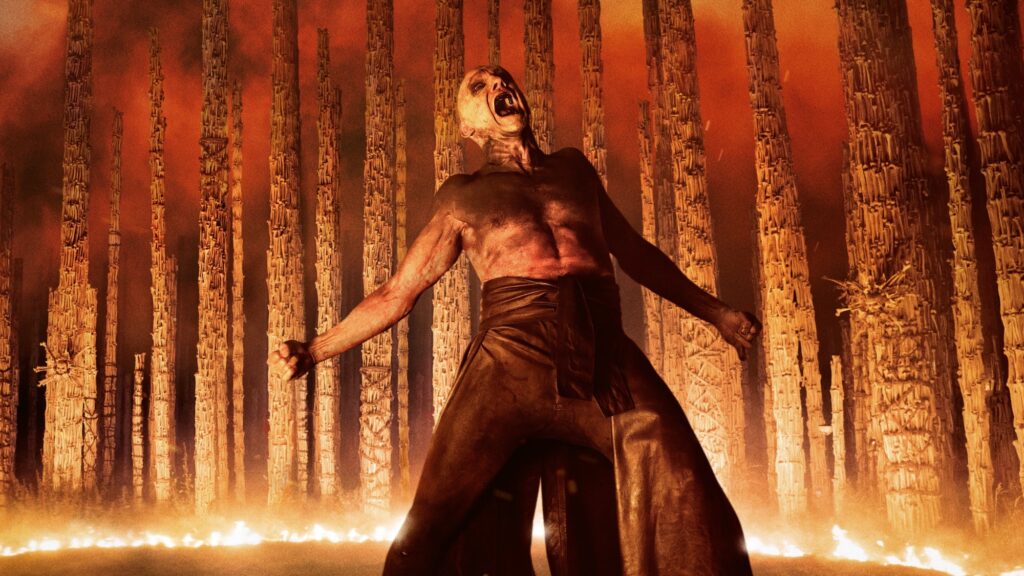
28 Years Later: The Bone Temple is a gripping addition to the renowned zombie franchise, offering a dual narrative that explores both the introspective and brutal aspects of a post-apocalyptic world. Released on January 16, the film presents a stark contrast between a thoughtful examination of loneliness and a more conventional tale of human cruelty, both penned by Alex Garland.
The film’s duality is evident in its two main storylines. On one hand, it delves into the philosophical musings of Dr. Ian Kelson, portrayed by Ralph Fiennes, a character who embodies both madness and kindness. On the other, it presents the chaotic world of Sir Jimmy of the Crystal, played by Jack O’Connell, a character whose sadistic tendencies reflect the darker side of humanity.
The Philosophical Undertones
Dr. Ian Kelson, a character who has become synonymous with the series, represents the intellectual pursuit amidst chaos. His creation of the titular Bone Temple serves as a poignant monument to those lost to the rage virus over the past 28 years. Fiennes’s portrayal of Kelson is both nuanced and compelling, offering a glimpse into a mind that seeks hope and understanding in a world ravaged by despair.
Kelson’s interactions with the infected, particularly with a character named Samson, highlight the film’s deeper themes. Samson, a monstrous Alpha, becomes a symbol of the potential for redemption and understanding, as Kelson attempts to study rather than destroy. This narrative thread offers a fresh perspective on the zombie genre, emphasizing empathy over eradication.
The Chaotic World of Sir Jimmy
In stark contrast, the film also explores the world of Sir Jimmy and his followers, a group that embodies the chaos and cruelty of a society in disarray. O’Connell’s performance is both energetic and unsettling, capturing the essence of a character driven by a twisted sense of justice and power.
The subplot involving Spike, a character from the previous film, further illustrates the harsh realities of this world. Spike’s journey with Sir Jimmy’s gang reveals the oppressive nature of dogmatic control, as he is forced to conform to their brutal ways in order to survive.
Directorial Vision and Cinematic Style
Nia DaCosta, known for her work on Candyman and The Marvels, brings a fresh directorial voice to the franchise. Her approach to the horror genre is both grisly and thought-provoking, pushing the boundaries of what audiences have come to expect from the series.
DaCosta’s vision is particularly evident in the film’s aesthetic and tone, which lean towards the Grand Guignol style. This choice, while effective in some sequences, can also be seen as nihilistic, particularly during a controversial torture scene that challenges viewers’ endurance.
Implications and Future Prospects
The film’s exploration of regressive worldviews and their consequences offers a stark commentary on contemporary society. By drawing parallels to a post-BREXIT UK and a world influenced by anti-intellectualism, 28 Years Later: The Bone Temple challenges audiences to reflect on the societal forces that shape our world.
As the film concludes, it leaves viewers eager for the final installment of the trilogy. With Garland’s vision guiding the narrative, the promise of a conclusive chapter offers hope for a satisfying resolution to the complex themes explored in the series.
The film’s ability to balance introspection with action, coupled with Fiennes’s standout performance, makes it a must-see for fans of the genre and newcomers alike. As the story unfolds, it becomes clear that the true horror lies not in the zombies themselves, but in the human capacity for both destruction and redemption.