

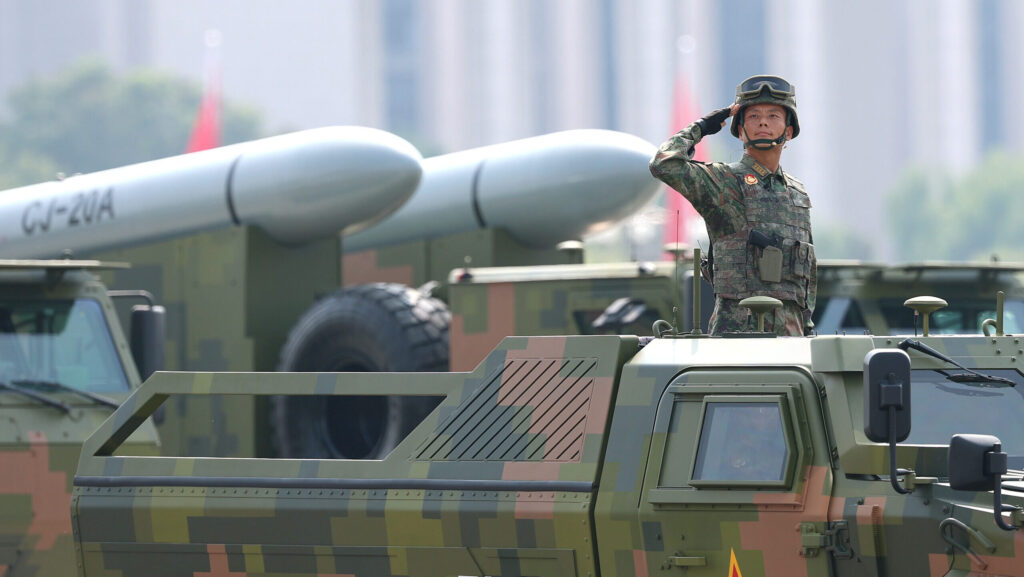
Since 2023, the senior leadership of the Chinese People’s Liberation Army (PLA) has been significantly overhauled. The latest high-profile removal is Zhang Youxia, one of the two vice chairmen of the PLA’s Central Military Commission (CMC), marking a continuation of a sweeping purge within China’s military ranks. This follows the dismissal of several key figures, including Gen. Li Yuchao of the PLA Rocket Force in 2023, Defense Minister Li Shangfu in 2024, and other top officials in subsequent years.
The removal of these leaders has left a vacuum at the top, with only Xi Jinping, as chairman, and Gen. Zhang Shengmin, head of the CMC Commission for Discipline Inspection (CMCCDI), remaining as official members of the CMC. This extensive reshuffle raises questions about the motivations behind these actions and the potential ramifications for China’s military and political landscape.
Understanding the Purge: Corruption, Guanxi, and Bureaucratic Politics
The ongoing purge of military leaders in China can be attributed to several factors, primarily corruption, relationship networks known as “guanxi,” and bureaucratic politics. Corruption has long been a pervasive issue within the PLA, with allegations often serving as the official reason for dismissals. Notably, Lt. Gen. Gu Junshan, a former head of military housing, received a suspended death sentence for corruption in 2015, highlighting the deep-rooted nature of the problem.
Corruption within the military is not just a domestic issue but has broader implications for China’s strategic capabilities. The failings of the Russian military in Ukraine due to corruption serve as a cautionary tale for the PLA, particularly concerning potential conflicts in regions like the Taiwan Strait or the South China Sea.
The Role of Guanxi Networks
Another critical aspect of the purge is the influence of guanxi, or relationship networks. These networks, based on familial, educational, and regional ties, play a significant role in Chinese society and governance, often blurring the lines between personal and professional relationships. Such networks can facilitate corruption, as seen in the case of former Chongqing Party Secretary Bo Xilai, whose downfall implicated both civilian and military officials.
The recent investigation into Zhang Youxia also named Zhong Shaojun, a long-time associate of Xi Jinping, suggesting that even those with close ties to the Chinese leader are not immune. This indicates Xi’s willingness to challenge entrenched networks, even when they involve his allies, to consolidate his control over the military.
Bureaucratic Politics and Military Reforms
Bureaucratic politics further complicate the situation. The PLA has undergone significant reforms under Xi, with the CMC being reorganized and the service structure revamped. The promotion of the CMCCDI, now equivalent to the Joint Staff Department and the Political Work Department (PWD), underscores a shift in power dynamics within the military hierarchy.
The purges may also reflect resistance to these reforms, particularly from those who benefited from the previous system. Accusations against Gen. Zhang Yongxia and Liu Zhenli of “severely trampling and disrupting the Chairman responsibility system” suggest professional disagreements with Xi’s vision for the military’s future.
Implications for the PLA and China’s Strategic Posture
Despite the upheaval at the top, the PLA continues its operations, notably around Taiwan, with no apparent slowdown in military modernization efforts. However, the purges could have less visible effects on military readiness and command discretion. Officers under scrutiny may adhere more strictly to regulations, potentially improving unit readiness but limiting flexibility in decision-making.
The focus of the purges has largely spared the theater commands, responsible for planning and executing military operations. This suggests that while the leadership is being reshaped, the operational capabilities of the PLA remain intact, at least for now.
Future Prospects and Potential Shifts
As Xi Jinping moves to repopulate the CMC, there is an opportunity to elevate new leaders and integrate fresh networks into the military hierarchy. This could lead to further shifts in the PLA’s strategic orientation and operational priorities. The outcome of these changes and the possibility of future purges will depend on how effectively Xi can manage the delicate balance of power within China’s military and political structures.
Dean Cheng, a non-resident fellow with the Potomac Institute for Policy Studies and the George Washington University’s Space Policy Institute, emphasizes that the full impact of these changes will unfold over time. As China continues to navigate its internal and external challenges, the evolution of its military leadership will remain a critical area of focus for analysts and policymakers worldwide.