



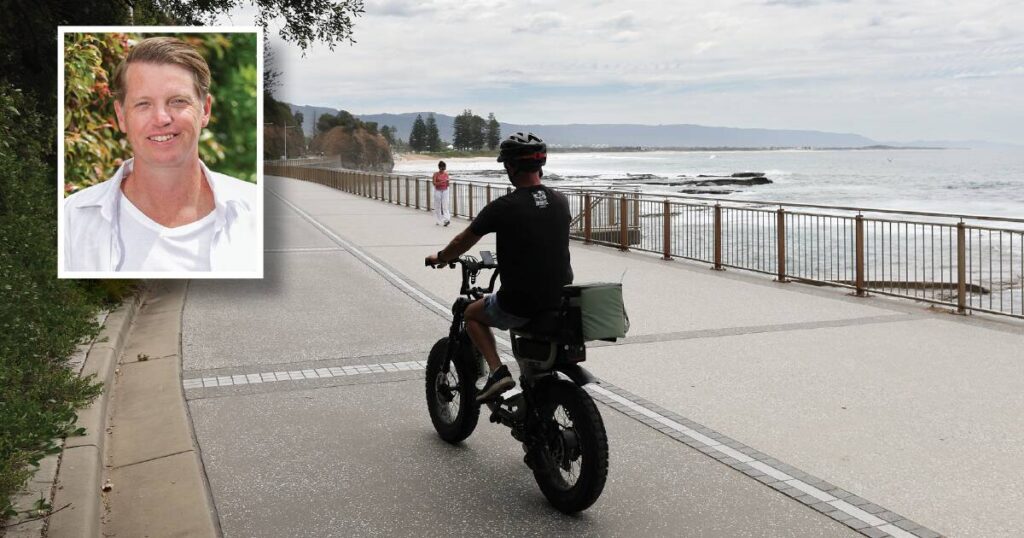
In a move to support the New South Wales Government’s crackdown on illegal e-bikes, Wollongong City Council is exploring the possibility of establishing compounds for confiscated vehicles. Councillor Dan Hayes, a vocal advocate for stricter enforcement, has reached out to the council’s general manager to discuss potential measures.
The announcement comes as the state government intensifies efforts to address the growing concern over illegal e-bikes, which have been a source of frustration for many residents. “A tipping point has been reached,” said Cr Hayes, emphasizing the need for local action to complement state initiatives. “Whether it is promoting the Crime Stoppers service, having locations for compounding the seized illegal e-bikes, or other possibilities to reduce this illegal behaviour such as signage or education, we want the enforcement of the new reforms to be able to be implemented.”
Community Concerns and Government Response
The issue of illegal e-bikes gained significant attention over the weekend following the state government’s announcement of plans to confiscate and crush these vehicles. Transport Minister John Graham highlighted the need for a streamlined process, noting that current procedures for seizing and destroying illegal e-bikes are overly complex.
While some community members expressed support for the crackdown, others criticized the severity of the proposed measures. “Gonna be some upset parents who paid a lot of money for an illegal motorised vehicle to give to their unlicensed, entitled kids knowing full well what they were doing was wrong and against the law,” commented Shane Mason on social media.
Diverse Opinions on Enforcement
Not everyone agrees with the idea of crushing e-bikes. Jamie Errington, another resident, argued, “I think it’s a bit far to take a $4000 plus bike from someone and just crush it. Do it another way if you gotta but that’s ridiculous.” Similarly, Georgi Bamfield described the decision as “small-minded,” suggesting alternative solutions such as registration and fines.
Wollongong councillor Jess Whittaker also expressed reservations about the harsh penalties. She proposed that seized e-bikes could be modified to meet legal standards rather than being destroyed. “If seizure is necessary, these bikes could be modified back to being compliant and still provide transportation to people that is more sustainable and safer than a motor vehicle,” she stated.
The Debate on E-Bike Legality and Safety
The debate over e-bikes is not limited to enforcement measures. Many residents argue that the focus on e-bikes is disproportionate compared to other modes of transport. Tadana Maruta, operations manager at Pedl, an e-bike retailer, emphasized that the risks associated with e-bikes are minor compared to those posed by cars. “You can’t just pick one mode of transport and say, ‘we are going to crush this’,” he said. “That has to be applied for cars, it has to be applied for trucks, it has to be applied for every mode of transport.”
However, critics of e-bikes point out that unlike cars, e-bikes do not require insurance or registration, making it difficult to hold riders accountable. Geoffrey Farlow, a local resident, noted, “There’s a reason for the e-bike problem and that’s because they don’t pay any insurance or registration and have no identification.”
Legal Standards and Compliance
Under current regulations, e-bikes must comply with the European safety and quality standard EN-15194, which mandates a maximum power output of 250 watts. Bikes must be pedal-assisted, with the motor not serving as the sole source of propulsion. Throttle-only bikes and petrol-powered bikes are illegal on public roads.
Retailers are permitted to sell non-compliant e-bikes for use on private property, but they must not mislead customers about their legality. This regulatory framework aims to ensure safety while allowing for the use of e-bikes in appropriate settings.
Looking Ahead: Balancing Safety and Accessibility
As Wollongong City Council considers its role in the crackdown on illegal e-bikes, the broader conversation about urban mobility and safety continues. The challenge lies in finding a balance between enforcing regulations and promoting sustainable transport options.
For now, the council’s decision on whether to establish compounds for seized e-bikes remains pending. Meanwhile, the debate over the appropriate response to illegal e-bikes is likely to persist, reflecting broader tensions between regulation and innovation in urban transport.
As the situation develops, stakeholders from government officials to community members and retailers will need to collaborate to address the concerns and opportunities presented by e-bikes in Wollongong and beyond.