



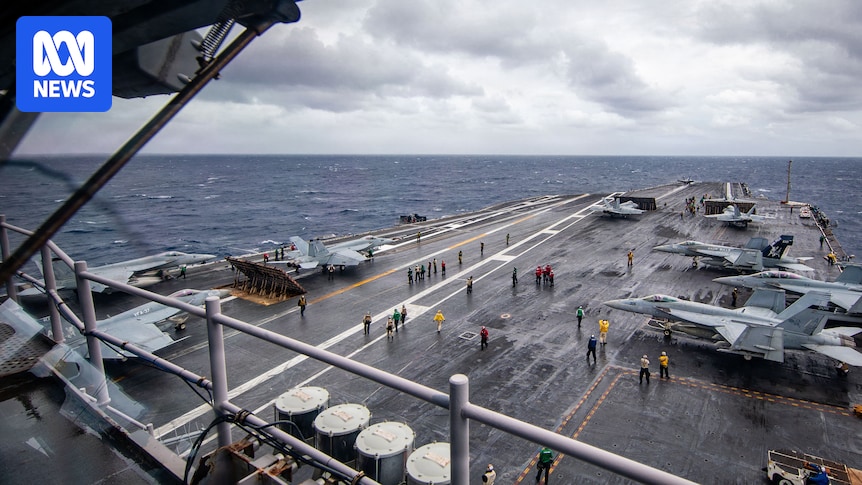
The United States is set to redeploy the aircraft carrier USS Gerald R. Ford from the Caribbean Sea to the Middle East, as tensions with Iran continue to escalate. This strategic move will see the USS Gerald R. Ford joining the USS Abraham Lincoln, which has been stationed in the region since January. The decision comes amid ongoing negotiations between Washington and Tehran over Iran’s nuclear program, with former President Donald Trump warning of “very traumatic” consequences should Iran fail to reach an agreement.
Reports from major US media outlets, including The Wall Street Journal and The New York Times, indicate that the Pentagon is preparing for the deployment of the world’s largest aircraft carrier to bolster US military presence in the Middle East. The USS Gerald R. Ford, accompanied by its escort ships, will enhance the existing strike group in the region.
Context of Rising Tensions
The redeployment of the USS Gerald R. Ford underscores the heightened tensions between the United States and Iran. These tensions have been fueled by Iran’s nuclear ambitions and its recent crackdown on anti-government protests. The USS Abraham Lincoln was sent to the Gulf late last month as part of a broader strategy to pressure Iran, which has been met with mixed reactions from the international community.
Washington and Tehran have engaged in indirect talks aimed at resolving the nuclear standoff. However, President Trump’s stern warning of potential “traumatic” consequences for Iran highlights the precarious nature of these negotiations. The presence of two aircraft carriers in the region is a clear signal of the US’s readiness to exert military pressure, should diplomatic efforts fail.
Historical Parallels and Expert Opinions
This development draws parallels to previous US-Iran tensions, such as the 2019 standoff following the US withdrawal from the Iran nuclear deal. Experts suggest that the redeployment of the USS Gerald R. Ford is part of a broader strategy to deter Iranian aggression and reassure US allies in the region.
Military analysts have noted that the presence of multiple aircraft carriers in the Middle East serves as a powerful deterrent. According to defense expert Michael O’Hanlon, “The deployment of additional carriers sends a strong message to Iran and other regional actors that the US is committed to maintaining stability in the region.”
Implications and Future Prospects
The implications of this redeployment are significant, as it could either pave the way for a diplomatic breakthrough or escalate into a military confrontation. Israeli Prime Minister Benjamin Netanyahu expressed hope that President Trump’s actions would create conditions conducive to a peaceful resolution with Iran.
However, the duration of the USS Gerald R. Ford and USS Abraham Lincoln’s deployment in the Middle East remains uncertain. The strategic importance of the region, coupled with the ongoing nuclear negotiations, suggests that US military presence will continue to play a critical role in shaping the future of US-Iran relations.
As the situation unfolds, the international community will be closely monitoring developments, with the hope that diplomatic efforts will prevail over military conflict. The redeployment of the USS Gerald R. Ford serves as a stark reminder of the fragile state of global geopolitics and the enduring complexities of US-Iran relations.