




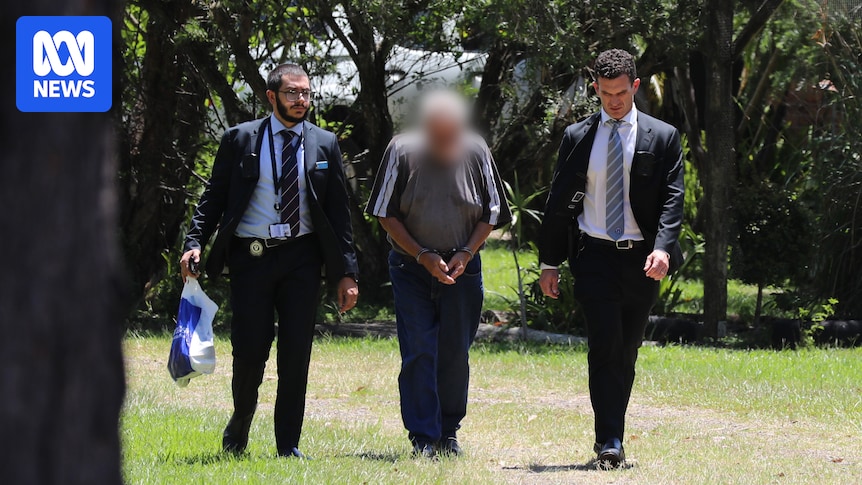
Police in New South Wales have made a significant breakthrough in a series of historical sexual assault cases, utilizing cutting-edge DNA technology that previously identified a notorious US serial killer. On Wednesday, detectives from the Sex Crimes Squad arrested 77-year-old Robert Kwan in South Kempsey, linking him to alleged assaults dating back to the 1990s.
The alleged crimes, which occurred in Wollongong, Dubbo, and Sydney, were revisited using forensic investigative genetic genealogy (FIGG). This technology compares DNA from crime scenes with public databases, identifying suspects through distant relatives. Detective Superintendent Jayne Doherty, commander of the Sex Crimes Squad, noted that this marks the first time NSW Police have employed FIGG to secure an arrest.
“It’s a breakthrough technology,” she stated. “The greater we can build up these DNA databases, the more people that allow us to access their DNA, the more of these unsolved crimes we can have an impact on. You could be helping us to solve those serious violent crimes.”
Unraveling a 35-Year-Old Case
The alleged attacks span over three decades, beginning in 1991 with the assault of an 11-year-old girl in Glendinning, Western Sydney. Five years later, in 1996, a 16-year-old girl was attacked after accepting a ride from a stranger in Kanahooka, Wollongong. Police allege the teenager was sexually assaulted before being dropped off in nearby Warrawong. The series of assaults continued in 2002 when a 26-year-old woman was attacked in Dubbo after being driven to a remote campsite by an unknown man.
A review in 2022 confirmed that DNA samples from these crime scenes matched a single male DNA profile. Using FIGG, investigators identified a close relative of the alleged offender by comparing his DNA profile with those on public genealogy databases, GEDmatch and FamilyTreeDNA. This led to the arrest of Mr. Kwan, who now faces multiple charges of sexual assault and kidnapping.
In an online bail court appearance, Mr. Kwan’s defense lawyers did not apply for bail but indicated plans to do so in the coming weeks. He was refused bail and is scheduled to appear in court in Kempsey in April.
The Role of FIGG in Modern Policing
The use of FIGG technology in solving cold cases gained international attention in 2018 with the arrest of the “Golden State Killer” in the United States. Joseph James DeAngelo, a former police officer, was apprehended after investigators matched his DNA with profiles on a public genealogy website, GEDmatch. He was subsequently convicted of 13 murders and over 50 rapes.
Detective Superintendent Doherty highlighted the advantages of FIGG over traditional DNA technology, which only provides a limited number of DNA markers. FIGG, however, can generate hundreds of thousands of markers, enabling connections to be made as far as third or fourth cousins.
“That allows us to connect family relationships as far away as third or fourth cousins,” she explained. “We then use traditional genealogy techniques to investigate and build that family tree [and] eliminate people who couldn’t have committed [the] crime. We keep working it down. This just gives us that little thread.”
Implications and Future Prospects
The arrest of Robert Kwan underscores the transformative potential of FIGG in criminal investigations, particularly in solving cold cases. As more individuals participate in public DNA databases, the scope for identifying suspects in unsolved crimes grows exponentially. This development represents a significant shift in how law enforcement agencies approach historical cases, offering renewed hope for justice to victims and their families.
Looking ahead, the integration of FIGG into routine investigative processes could redefine the landscape of criminal justice. However, it also raises ethical questions about privacy and consent, as individuals may inadvertently implicate relatives by submitting their DNA to public databases.
As the legal proceedings against Mr. Kwan unfold, the case will likely serve as a benchmark for the application of genetic genealogy in Australia. The outcome may influence future policies and practices regarding the use of DNA technology in law enforcement, balancing the pursuit of justice with the protection of individual rights.