




February 15, 2026 — 1:30pm
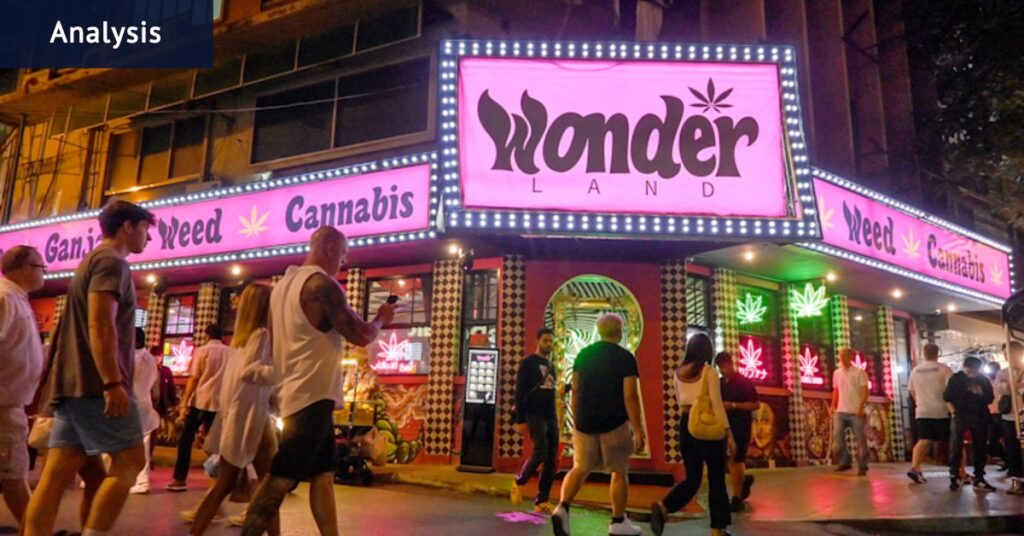
BANGKOK: If you’ve wandered the streets of Bangkok recently, you would have likely caught the unmistakable scent of marijuana. Since Thailand became the first Asian country to decriminalize cannabis in 2022, the landscape has transformed with around 18,000 marijuana parlours sprouting across the nation. These establishments, as ubiquitous as pubs in London, are marked by their distinctive green neon signs.
The decriminalization move was intended to bolster Thailand’s image as a wellness destination, provide farmers with a lucrative new crop, and alleviate overcrowding in prisons. Emerging from the COVID-19 pandemic, the strategy seemed poised to rejuvenate the economy, with tourism accounting for approximately 15% of Thailand’s GDP.
Political Shifts and Industry Uncertainty
The political landscape has been a key driver of this transformation. Tycoon-turned-politician Anutin Charnvirakul, a pro-business advocate, championed the decriminalization initiative. Since September, he has served as Thailand’s prime minister in a caretaker capacity. In a surprising turn of events, his Bhumjaithai Party secured the most seats in the recent snap elections, suggesting his continued leadership.
One might assume this political victory bodes well for the cannabis industry’s future. However, the reality is more complex. The cannabis trade, initially booming with minimal regulation, quickly spiraled into chaos. The lack of oversight led to widespread availability, even among minors, and deterred family tourists from visiting areas saturated with the drug’s aroma.
Regulatory Challenges and Market Dynamics
In response to the growing backlash, the ruling Pheu Thai party imposed restrictions in mid-2025, mandating that cannabis could only be sold with a doctor’s prescription. This sudden policy shift devastated the burgeoning industry, leaving many businesses struggling to survive.
Shops faced an oversaturated market with low-priced cannabis and dwindling customer numbers. Some establishments began circumventing prescription requirements, fueling a black market that operates openly under neon signs. To adapt, businesses like one in Sukhumvit have rebranded to resemble pharmacies, while others offer creative solutions like telehealth consultations for prescriptions.
“If you purchase the flower, you’ll be consulting with a doctor. The doctor will diagnose you, asking ‘what do you need it for and how much do you need?'” — A server at Cloud Nine
This innovative approach highlights the industry’s resilience, but uncertainty remains. The server at Cloud Nine, who requested anonymity, explained that while they adhere to prescription laws, many customers express frustration at the inconsistency across shops.
Future Prospects and Industry Implications
The future of Thailand’s cannabis industry hinges on the Bhumjaithai Party’s next moves. While the party’s electoral success suggests potential support for the industry, it remains unclear whether they will maintain the prescription requirement or introduce new regulations.
Experts argue that a balanced regulatory framework is essential to ensure the industry’s sustainability and prevent the issues that plagued its initial boom. As Thailand navigates this complex landscape, the implications for tourism, agriculture, and public health remain significant.
The Thai government’s cannabis experiment, marked by rapid growth and regulatory challenges, serves as a cautionary tale for other nations considering similar paths. As the industry awaits further political developments, stakeholders continue to adapt, hoping for a more stable and supportive environment.
For now, the cannabis industry in Thailand stands at a crossroads, with its future dependent on the delicate balance of political will, regulatory oversight, and market dynamics.