



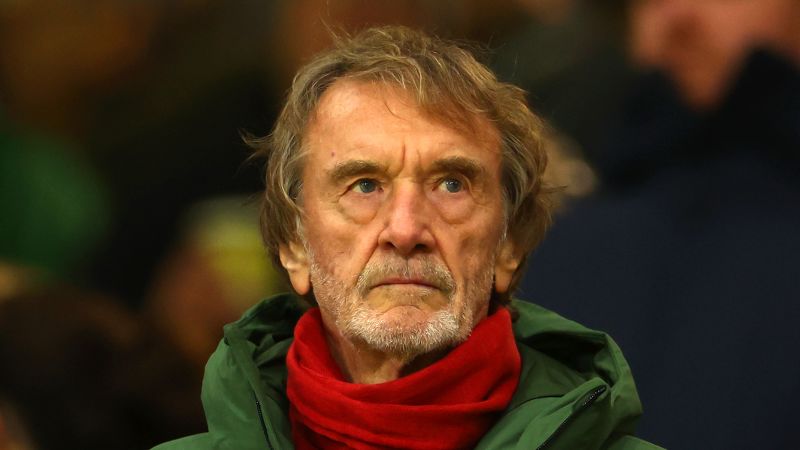
Jim Ratcliffe, the billionaire co-owner of Manchester United, has ignited a firestorm of criticism after claiming that the UK has been “colonized by immigrants.” His remarks, made during an interview with Sky News on Wednesday, have been widely condemned by club supporters, political leaders, and the public, with Prime Minister Keir Starmer demanding an apology.
Ratcliffe, who founded the petrochemical giant Ineos and ranks among Britain’s wealthiest individuals, issued an apology on Thursday for his “choice of language.” However, the apology came only after significant backlash from senior politicians and football fans, highlighting the divisive nature of his comments.
Controversial Comments and Immediate Backlash
During the interview, Ratcliffe expressed concerns about the British economy, stating, “You can’t have an economy with nine million people on benefits and huge levels of immigrants coming in. I mean, the UK has been colonized. It’s costing too much money. The UK has been colonized by immigrants, really, hasn’t it?” His statement included incorrect population figures, claiming a rise from 58 million in 2020 to 70 million today, whereas the UK’s population has actually increased from 67 million to 69.5 million, according to the Office for National Statistics.
The comments drew immediate criticism, including from Prime Minister Starmer, who labeled them “offensive and wrong,” emphasizing that “Britain is a proud, tolerant, and diverse country.” The Football Association is reportedly examining whether Ratcliffe’s statements have brought the sport into disrepute.
Political and Social Reactions
Ratcliffe’s remarks have resonated with some political figures, aligning with the rhetoric of Britain’s right-wing populist Reform UK party. Nigel Farage, the party’s leader, echoed Ratcliffe’s sentiment, stating, “Britain has undergone unprecedented mass immigration that has changed the character of many areas in our country.”
However, Manchester Mayor Andy Burnham condemned Ratcliffe’s words as “inaccurate, insulting (and) inflammatory,” highlighting the positive contributions of immigrants to Greater Manchester. “Footballers who have arrived from all over the world to play in Greater Manchester have enhanced the life of our city-region,” Burnham noted, emphasizing the role of immigrants in essential services and industries.
Football Community’s Response
The controversy has also sparked outrage among Manchester United’s global fanbase. The Manchester United Supporters Trust declared that the club “belongs to all of its supporters,” asserting that no fan should feel excluded due to their race, religion, nationality, or background. “Comments from the club’s senior leadership should make inclusion easier, not harder,” the Trust added.
The Stretford Sikhs supporters club emphasized the contributions of immigrants to Manchester, warning against language that alienates those who have built and supported the city and the club. Similarly, the Manchester United Muslim Supporters Club criticized the use of the word “colonized,” noting its association with far-right narratives that portray migrants as threats. “Such rhetoric has real-world consequences,” the group stated, citing increases in hate crimes, including Islamophobia and racially motivated attacks.
Historical Context and Economic Implications
Ratcliffe’s comments come amidst ongoing debates over immigration in the UK, a topic that has been a political flashpoint for successive governments. Net migration reached record levels in 2022, influenced by the war in Ukraine and the lifting of pandemic-related travel restrictions, but has since decreased sharply.
Ratcliffe, who moved to tax-free Monaco in 2020, is no stranger to controversy. In December 2025, his company Ineos accepted a £120 million ($164 million) support package from the British government to prevent the closure of its chemical plant in Grangemouth, Scotland, safeguarding 500 jobs. Ineos also invested £150 million ($205 million) into the site, demonstrating the complex relationship between Ratcliffe’s business interests and the UK economy.
The current debate over immigration reflects broader global trends, with many Western countries grappling with similar challenges. The UK government’s pledge to reduce immigration mirrors efforts in other nations to balance economic growth with social cohesion.
Looking Ahead
As the backlash against Ratcliffe’s comments continues, the focus will likely remain on how public figures and institutions address issues of immigration and diversity. The Football Association’s investigation and potential consequences for Ratcliffe could set a precedent for how similar situations are handled in the future.
In the meantime, the conversation around immigration in the UK is poised to remain a contentious and highly charged topic, with implications for both political discourse and social dynamics.