

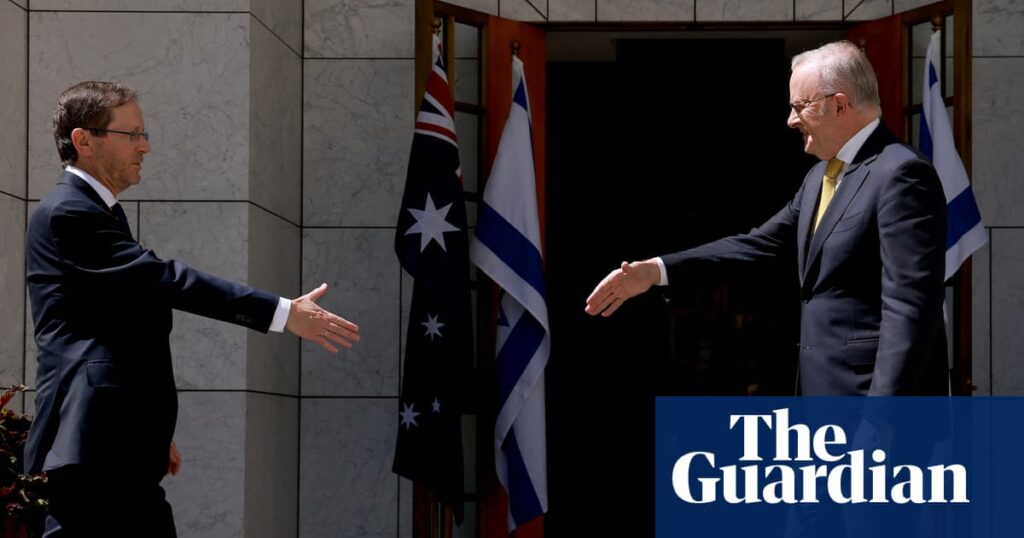
This week, Israeli President Isaac Herzog’s visit to Australia unfolded amidst a backdrop of controversy and heightened security. The visit, marked by clashes between police and protesters in Sydney, has prompted an independent investigation into the violence. Herzog’s journey, conducted under a veil of secrecy, aimed to offer solidarity to Australia’s Jewish community, particularly in the wake of the Bondi Beach terror attack that claimed 15 lives during a Hanukkah celebration.
Australian Prime Minister Anthony Albanese emphasized the visit’s potential to foster unity. He highlighted Herzog’s mission to extend “sympathy and solidarity” to those mourning and to support the Jewish community. Herzog, buoyed by his experiences, told Melbourne’s Jewish community that he felt “hope” and would return to Israel “empowered” by the beauty he witnessed.
Community Reactions: Support and Skepticism
While Herzog’s visit garnered significant support within parts of Australia’s Jewish community, it also sparked serious debate. Alex Ryvchin, co-chief executive of the Executive Council of Australian Jewry, described the visit as a “tremendous success,” particularly for the families affected by the Bondi massacre. He noted the emotional impact, stating,
“I could see some of them weeping in his arms and the arms of the first lady.”
David Ossip, president of the NSW Jewish Board of Deputies, echoed this sentiment, calling Herzog’s visit “an important practical step towards peace.” Herzog himself highlighted a diplomatic objective, aiming to strengthen relations between Israel and Australia despite recent tensions over Australia’s recognition of the state of Palestine.
Voices of Dissent and Division
However, Herzog’s visit was not without its detractors. Jesse McNicoll from Jewish Voices of Inner Sydney expressed strong opposition, arguing that the visit was divisive and created “serious angst” within Palestinian and Arab communities. He warned of the dangerous notion of dual loyalty and highlighted a growing divide within the Jewish community.
McNicoll stated,
“It saddens me that a lot of people in the Jewish community are [engaging in] what people sometimes describe as intra-communal violence.”
He emphasized the need for Jews who oppose Israeli policies to find solidarity and community, separate from the actions of the state.
Personal Stories of Conflict
Herzog’s visit even sparked division within families. Sarah, who withheld her last name, described a rift with her parents, who attended Herzog’s event while she joined protests. She expressed frustration over being labeled a “self-hating Jew” and condemned for her views.
Sarah remarked,
“I feel grateful to be able to go to protests against the war in Gaza. The genocide continues.”
Her story underscores the complex and often painful dynamics within the Jewish community regarding Israeli politics.
The Broader Implications
The controversy surrounding Herzog’s visit highlights the broader challenges facing Jewish communities worldwide. As debates over Israel’s policies continue to unfold, the visit serves as a microcosm of the tensions and alliances shaping Jewish identity and solidarity.
Looking forward, the implications of Herzog’s visit may extend beyond immediate diplomatic relations. It raises questions about the role of diaspora communities in international politics and the ways in which global events resonate on a personal level for individuals and families.
As Australia and Israel navigate their bilateral relationship, Herzog’s visit will likely be remembered as a pivotal moment of both unity and division, reflecting the complex tapestry of contemporary Jewish life.