



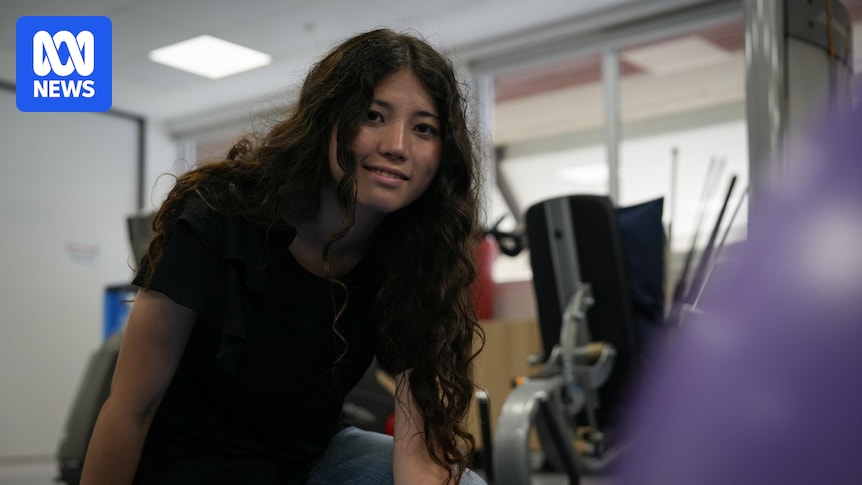
At the tender age of six, Allure Harley witnessed a life-changing event when her younger sister Ai was severely injured in a car accident. This traumatic memory has lingered with Harley, now 18, and inspired her decision to pursue a degree in physiotherapy, which she is set to begin shortly.
“She got really injured, and at one time she was struggling to walk,” Ms. Harley recalls. “But because of all the physiotherapists, now she’s totally healthy. I want to be a person who helps other people like that and brings smiles to their faces again.”
Health Courses Lead University Enrolments
Ms. Harley is among over 265,000 students who have secured undergraduate positions at Australian universities. Early data from the country’s tertiary admissions centres reveal that health courses continue to be the most popular, accounting for over 22 percent of offers this year. Following closely are society and culture courses, which include degrees in law, arts, and psychology, at just over 21 percent. Management, commerce, and sciences each stand at 12.9 percent.
Engineering courses have seen the largest proportional increase, rising by 0.6 percent to make up 8.9 percent of total offers. A survey of Year 12 students in New South Wales and the ACT indicates that more than 65 percent prioritized employment prospects when selecting their courses, the highest percentage in five years.
Teresa Tjia, Chief Executive of the Australasian Conference of Tertiary Admissions Centres (ACTAC), notes a significant rise in students opting for health courses since the COVID-19 pandemic. She attributes this trend to the pandemic’s spotlight on health and the strong career pathways within the industry.
“Australia’s ageing population, job security, demand, and career prospects were also key considerations for Ms. Harley when choosing her undergraduate degree.”
Upon graduation, Ms. Harley aspires to work in a hospital setting, helping to rehabilitate patients post-surgery. “I do think there’s a lot of jobs for physiotherapists,” she explained. “Also, I don’t think it will be taken over by AI [artificial intelligence] or anything like that because it’s like one-to-one … it’s helping a person directly.”
Decline in IT Course Enrolments
Conversely, data from ACTAC indicates a decline in students enrolling in standalone Information Technology (IT) courses, which include AI and computer science. This year, IT degrees account for less than 3 percent of offers, a 0.7 percent decrease from the previous year. Despite increasing industry demand, the reason for this “steady decline” remains unclear, according to Ms. Tjia.
One potential explanation is the shift towards completing IT, AI, and cybersecurity as micro-credentials, TAFE courses, or as components of other degrees. “Given the developments in AI and cybersecurity and the requirements for quite a lot of professionals in those areas – I think it’s an area which needs to be monitored,” Ms. Tjia said.
“I think there needs to be consideration about how you might transition current workers in similar fields or even recent graduates … because those areas of cyber[security] and AI, they’re just growing.”
The Future of AI in Education and Employment
For Aryaman Sharma, a University of Technology Sydney (UTS) student, the decision to enroll in a Bachelor of Artificial Intelligence was driven by burgeoning career opportunities, despite initial uncertainty. “Back in 2021, when I was looking for courses, ChatGPT was just introduced,” he explained. “I knew this was going to be a big thing … it’s not just a smart search assistant, it’s going to be a thing which learns and understands you.”
Now in his third year, Sharma is eager to enter the job market, hoping to leverage his AI expertise to solve problems or even launch a start-up, ideally in the medical field. “AI is everywhere, every app that you see … every company needs AI,” he said. He appreciates AI’s versatility, noting its applicability across fields from medical to finance, and even as a study aid.
Throughout his studies, Sharma has also delved into the ethics of AI use, maintaining that all graduates should be “AI-literate.” Jobs and Skills Australia commissioner Barney Glover echoes this sentiment, emphasizing the necessity for graduates to possess AI skills, which he describes as a “crucial skill set” for the future labor market.
“It doesn’t matter whether you’re doing a law degree, a social work degree, a medical degree, an engineering degree, or an IT degree, you are going to need to be familiar with … AI to future-proof your own career,” he explained.
Data from last year supports the growing demand for workers in the healthcare and social assistance sector, projected to grow by 28 percent over the next decade. IT is the second-largest growth area within the professional sector, with a projected growth of 25 percent. Notably, the occupation with the single largest projected growth is physiotherapy, expected to increase by 33.6 percent within a decade.
The announcement comes as educational institutions and industry leaders continue to navigate the evolving landscape of career opportunities, balancing traditional fields with emerging technologies. As students like Ms. Harley and Mr. Sharma embark on their educational journeys, the choices they make today will shape the workforce of tomorrow.