



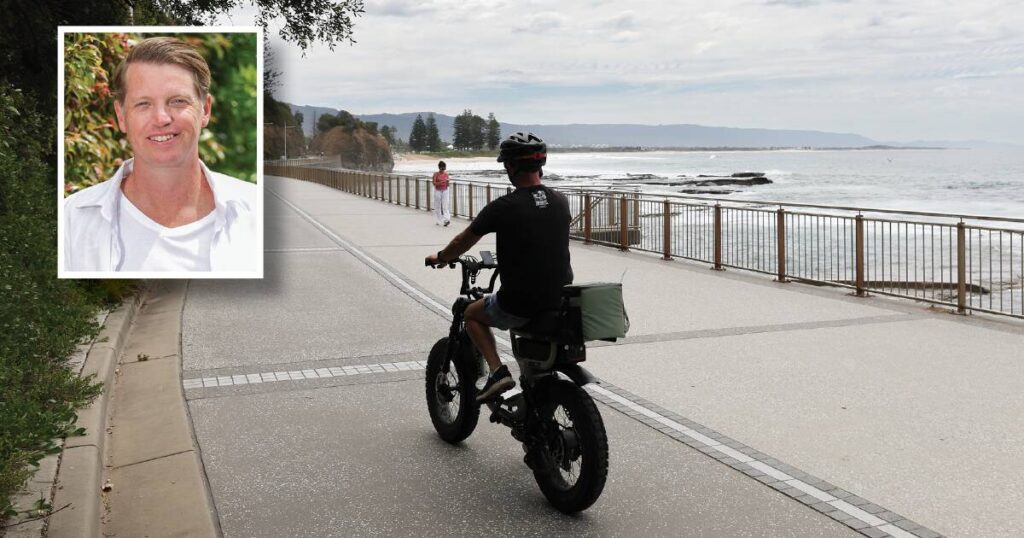
Wollongong City Council is contemplating the creation of compounds to store seized illegal e-bikes as part of a broader initiative to support the New South Wales Government’s crackdown on these vehicles. Councillor Dan Hayes has been vocal about the need for local government involvement, citing a “tipping point” in community concerns over e-bike safety.
The announcement comes as the state government unveiled plans to simplify the process for confiscating and destroying illegal e-bikes. Currently, police face a complex legal framework to seize and crush these vehicles, but the proposed changes aim to streamline enforcement.
Community Concerns and Council’s Response
Cr Dan Hayes has reached out to Wollongong’s general manager, Greg Doyle, to explore how the council can assist in enforcing the new reforms. Suggestions include promoting the Crime Stoppers service, establishing locations for storing confiscated e-bikes, and enhancing public awareness through signage and education.
“One of the most common issues I hear from community members is the concern around e-bikes,” Cr Hayes stated. “Whether it’s older members of the community or families walking along footpaths, they all have stories about near-misses with e-bikes.”
Public Reaction to E-Bike Crackdown
The government’s decision has sparked mixed reactions from the public. Some residents, like Shane Mason, support the crackdown, arguing that parents knowingly purchase illegal e-bikes for their children, aware of the legal implications. Others, however, feel the measures are too harsh.
“I think it’s a bit far to take a $4000 plus bike from someone and just crush it,” commented Jamie Errington on social media.
Wollongong councillor Jess Whittaker also expressed reservations about the proposal to crush e-bikes. She suggested issuing infringement notices instead and proposed modifying seized bikes to comply with regulations, thus maintaining their utility as a sustainable transport option.
Debate Over Legal and Illegal E-Bikes
The debate over e-bikes extends to their legal classification. Under the European safety and quality standard EN-15194, legal e-bikes are limited to a maximum power of 250 watts and require the rider to pedal. Bikes that rely solely on a throttle or are petrol-powered are deemed illegal for public roads.
Retailers are permitted to sell non-compliant e-bikes for use on private property but must not mislead customers about their legality. This has led to confusion and frustration among consumers who may unknowingly purchase illegal models.
Expert Opinions and Industry Perspective
Industry experts argue that the focus on e-bikes is disproportionate compared to the injuries caused by other vehicles. Tadana Maruta, operations manager at Pedl, criticized the selective enforcement against e-bikes, suggesting that similar scrutiny should be applied to cars and trucks.
“You can’t just pick one mode of transport and say, ‘we are going to crush this,'” Maruta stated.
However, some residents counter that unlike cars, e-bikes do not require insurance or registration, complicating accountability and enforcement.
Looking Forward: Potential Solutions and Next Steps
As the debate continues, potential solutions include better regulation and education around e-bike use. Some community members advocate for a system of registration and licensing similar to that for motor vehicles, which could help address safety concerns while preserving the benefits of e-bikes as a green transport alternative.
Meanwhile, the Wollongong City Council’s consideration of compounds for seized e-bikes represents a proactive step in supporting state-level enforcement efforts. The council’s decisions in the coming weeks will likely shape the local approach to managing the e-bike issue.
The situation underscores the complexities of integrating new technologies into existing regulatory frameworks, highlighting the need for balanced policies that address safety without stifling innovation.