



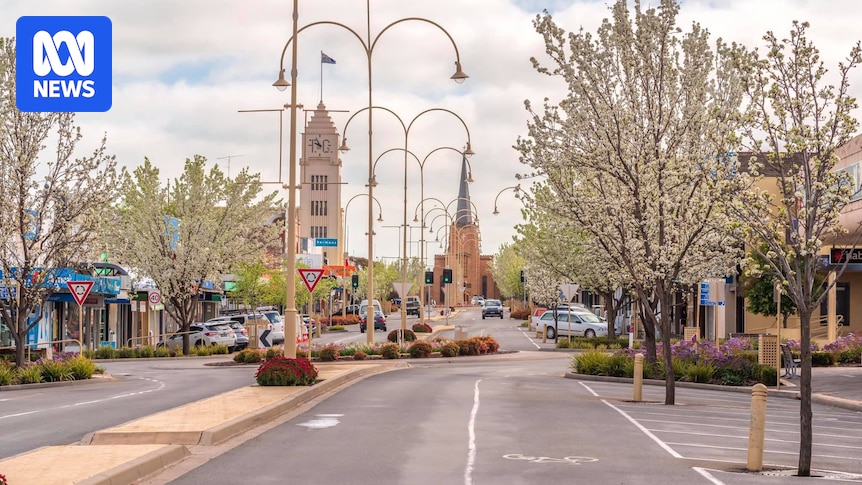
When the Horsham Rural City Council decided to remove parking meters from the town’s main street last year, local shop owner Ray Hermans noticed an immediate impact. “We’ve had more visitors in the store, and those customers spent more time in the store,” Mr. Hermans remarked. “We also found an increase in dollars through the till.” This change has been a boon for Hermans and other local retailers, but in other parts of the region, the story is quite different.
The move by Horsham’s council to eliminate paid street parking has sparked a broader discussion about the role of parking fees in country towns. While some councils have followed Horsham’s lead, others maintain that paid parking is essential for managing traffic flow and supporting municipal finances.
The Debate Over Paid Parking
Mr. Hermans described the previous paid parking system, which required users to navigate a phone app, as awkward and frustrating. “Quite often people would not use that and therefore run into the shop, quickly have a look at what they needed to get, and get out,” he explained. It wasn’t the cost that deterred customers, but the inconvenience.
Under the old system, parking was free for the first 30 minutes, then cost $1.50 per hour. “In retail, all I want is everything to be as positive and easy-going as it can possibly be, so people enjoy the shopping experience in a country town,” Hermans added. The removal of meters has been a “really positive” change, according to Horsham Rural City Council Mayor Brian Klowss, who noted that it revitalized the city and was well-received by both shopkeepers and residents.
“The shopkeepers and just the townspeople in general are saying it has been one of the best things that has actually happened in our CBD in Horsham for years,” said Mayor Klowss.
Financial Implications and Community Impact
In the state’s west, Ararat Rural City Council made a similar decision in mid-2020. Mayor Bob Sanders explained that maintaining the meters was a financial drain. “By the time we paid someone to collect the money, [and since] we were always using old [and] used parking meters, which always broke down, the repair of them became quite a costly business,” he said. The council opted to enforce a two-hour parking limit instead, which has also been met with positive feedback from locals.
In contrast, Swan Hill continues to uphold its paid parking system. Mayor Stuart King argues that paid parking encourages turnover, preventing long-term occupation of parking spaces. “The high turnover of parking is good for our retailers and it creates more availability of car parks,” he stated. During the COVID-19 pandemic, when paid parking was temporarily suspended, retailers observed an increase in long-term parking, highlighting the benefits of the system.
“That was a real eye-opener to what happens if we took away paid parking spaces,” noted Mayor King.
Varied Approaches Across the Region
In Swan Hill, the revenue generated from parking meters is reinvested into maintaining and building new car parks. Steve Colombo from Swan Hill Incorporated acknowledged the challenges of ensuring parking availability, especially when businesses are thriving. “Everyone wants free parking, and free parking is great, but the one issue that we always see is people overstaying the short-term stay, whether that’s paid or non-paid,” he said.
Meanwhile, in far north-west Victoria, Mildura has never implemented paid parking. Mildura Rural City Council Mayor Ali Cupper mentioned that it has never been a pressing issue for the city. “It hasn’t ever really been pitched to us by officers, and certainly councillors have never indicated or expressed any real appetite to make it a feature of our city,” she explained.
Looking Ahead
The differing strategies among regional councils highlight the complexities of managing parking in country towns. While some areas benefit from the removal of paid parking, others find it essential for regulating space and supporting municipal budgets. As these councils continue to navigate the balance between convenience and control, the experiences of towns like Horsham, Ararat, and Swan Hill provide valuable insights into the potential impacts of these decisions.
As regional councils assess their approaches, the ongoing debate underscores the importance of tailoring parking policies to the unique needs and dynamics of each community. Whether through free parking or managed systems, the ultimate goal remains to enhance the local economy and community well-being.