




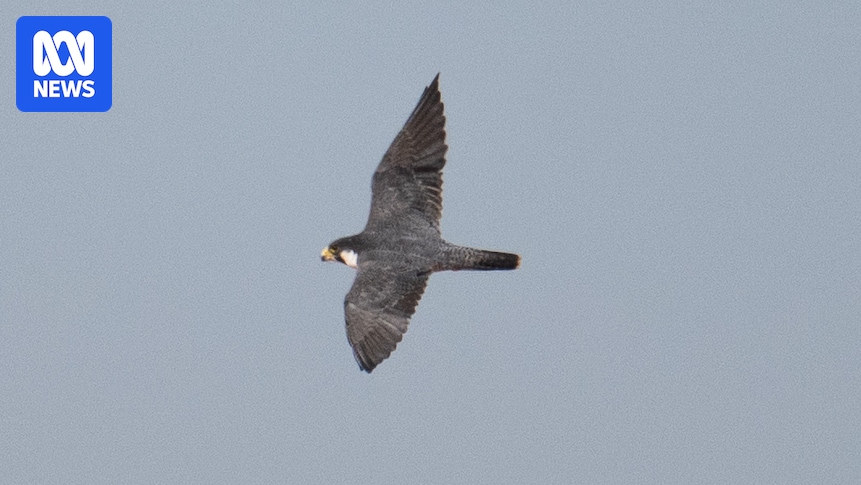
The world’s fastest animal has made an unprecedented appearance over the Central Australian outback, setting two new records. Ecologist Tim Henderson was astonished to capture a clear photograph of the Siberian Peregrine Falcon, known for reaching speeds of up to 300 km/h, more than twice the speed of a cheetah, at Newhaven Wildlife Sanctuary.
Initially, the bird’s rapid movement made it difficult for Dr. Henderson to identify the species. However, upon reviewing his photographs, the significance of the sighting became apparent. The image, taken on Ngalia-Walpiri and Luritja country near Alice Springs, marks the furthest inland sighting of a Siberian Peregrine Falcon and its first recorded presence in Australia’s arid zone.
Unprecedented Sighting in the Outback
Speaking on ABC Radio Alice Springs, Dr. Henderson expressed his amazement at the clarity of the photograph. “I was amazed the photo didn’t look blurry,” he remarked. The Siberian Peregrine Falcon, one of over a dozen subspecies, generally migrates south after spending the summer in the northern hemisphere. While sightings are “quite common” along Australian coastlines and ranges, their breeding grounds in the Arctic tundra leave their visits to Australia largely undocumented.
“We sometimes get rare migrants or vagrants, that come from elsewhere in the world,” Dr. Henderson explained. “So I’m always keeping an eye out for any sort of interesting facial patterns that might be different [between subspecies].”
Why the Falcon Chose the Desert
The falcon’s unexpected visit to the outback may be linked to recent heavy rains, which have transformed the typically dry landscape into temporary wetlands, attracting prey and a variety of raptors. Dr. Henderson noted the region isn’t “a very often birded place,” but growing interest in birdwatching and the accessibility of digital cameras are changing that.
“I think the more and more people that are out and about taking photos, the more likely you are to see a bird like this,” Dr. Henderson said, highlighting the role of citizen scientists in documenting rare wildlife occurrences.
Implications for Wildlife Observation
The sighting of the Siberian Peregrine Falcon in Central Australia underscores the dynamic nature of wildlife patterns, influenced by environmental changes and human activity. As more individuals engage in birdwatching, the potential for discovering rare species increases, contributing valuable data to ecological studies.
This development follows a trend of unusual wildlife sightings across the globe, as climate change and habitat alterations push species into new territories. The falcon’s presence in the outback may prompt further research into the environmental factors influencing migratory patterns and the potential impact on local ecosystems.
Meanwhile, the growing community of birdwatchers and ecologists continues to play a crucial role in expanding our understanding of these phenomena. As digital technology advances, the ability to capture and share high-quality images of wildlife becomes an invaluable tool for conservation efforts.
As the world grapples with the implications of climate change, sightings like that of the Siberian Peregrine Falcon in Central Australia serve as a reminder of the interconnectedness of global ecosystems and the importance of preserving biodiversity.