


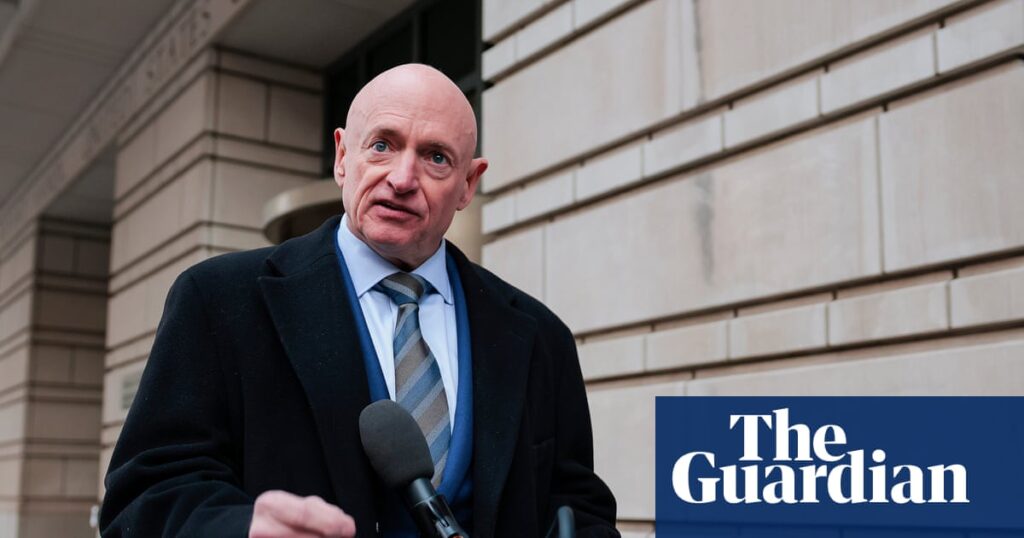
A US judge has blocked the Pentagon’s attempt to reduce Senator Mark Kelly’s retired military rank and pension, following his participation in a video urging troops to reject unlawful orders. The ruling, issued on Thursday by Judge Richard Leon, a George W. Bush appointee, marks another setback for former President Donald Trump’s efforts against perceived political adversaries.
Senator Kelly, a retired navy captain and former astronaut representing Arizona, appeared in a November video alongside five other congressional Democrats. The video emphasized the duty of service members to refuse illegal orders, with Kelly asserting, “Our laws are clear: you can refuse illegal orders.” The video emerged amid Democratic criticism of Trump’s deployment of national guard troops in US cities and authorization of lethal force against suspected drug smuggling vessels.
Legal and Political Repercussions
Defense Secretary Pete Hegseth responded by issuing a censure letter on January 5, accusing Kelly of undermining military discipline, a violation applicable to both active and retired personnel. Kelly subsequently filed a lawsuit against Hegseth’s efforts to downgrade his rank and pension.
This week, a grand jury in Washington DC declined to indict Kelly and his fellow congressional members featured in the video, including Michigan Senator Elissa Slotkin and House members Jason Crow, Maggie Goodlander, Chris Deluzio, and Chrissy Houlahan. The grand jury’s decision, coupled with Judge Leon’s ruling, serves as a significant rebuke of the Trump administration’s attempts to criminalize dissent.
“It’s just a sad moment when anonymous grand jurors, just citizens called at random in Washington DC, have more bravery to uphold [the] basic rule of law and stand for that than some of our colleagues here in the Senate,” said Slotkin.
Judicial Perspectives and Constitutional Implications
Trump administration lawyers had urged the dismissal of Kelly’s lawsuit, labeling it a “quintessential matter of military discipline not within the judiciary’s purview.” They also argued the lawsuit was premature, as Kelly had not been formally censured and should have addressed the allegations through administrative channels.
In his ruling, Judge Leon criticized Hegseth’s actions, stating they “trampled” on Kelly’s First Amendment rights and threatened the constitutional liberties of millions of military retirees. He admonished the handling of the issue, suggesting that Hegseth and others should appreciate the contributions of retired servicemembers to public discourse on military matters.
“If so, they will more fully appreciate why the Founding Fathers made free speech the first amendment in the Bill of Rights,” Leon wrote. “Hopefully this injunction will in some way help bring about a course correction in the defense department’s approach to these issues.”
Historical Context and Forward-Looking Analysis
The case highlights ongoing tensions between military discipline and free speech, a debate with deep roots in American history. The Founding Fathers enshrined free speech as a fundamental right, recognizing its importance in a democratic society. This legal battle underscores the delicate balance between maintaining military order and protecting constitutional freedoms.
As the legal proceedings continue, the implications for military retirees and their ability to participate in public discourse remain significant. The ruling may set a precedent for how military regulations are applied to retired personnel, potentially influencing future cases involving free speech and military discipline.
Looking ahead, the defense department may need to reassess its approach to handling similar issues, ensuring that actions taken align with constitutional protections. For now, the injunction serves as a reminder of the enduring importance of free speech and the role of the judiciary in safeguarding fundamental rights.