

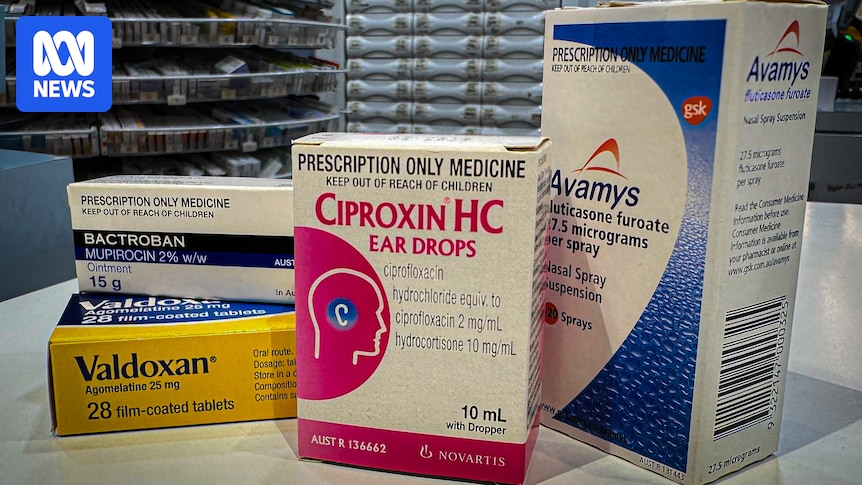
Patients across Australia are facing significant financial burdens due to the high costs of essential medications that are not subsidized under the country’s Pharmaceutical Benefits Scheme (PBS). This situation stems from structural flaws in the subsidy system, which leaves many common prescription drugs outside the reach of government support.
The ABC has compiled a list of everyday medicines that are dispensed as private scripts, meaning they do not benefit from the PBS’s $25 maximum price cap introduced last month. The PBS, designed to cover life-saving and disease-prevention medications, currently funds over 900 medicines across more than 5,000 brands. However, numerous essential drugs, including painkillers and hormone replacement therapies, remain unsubsidized.
Gaps in the Pharmaceutical Benefits Scheme
Health advocates have raised concerns about the PBS’s failure to cover certain regularly purchased medications. These include incontinence treatments, ear drops, eczema creams, inhalers, and hormone replacement therapies. While these medications often sell for $20 to $100, the long-term necessity of their use results in substantial cumulative costs for patients.
According to the ABC’s findings, the issue is not that these medicines fail to meet scientific and cost-benefit standards required for PBS subsidy. Rather, pharmaceutical companies often do not apply for PBS listing due to business considerations. This leaves pensioners and disadvantaged groups unable to access these medications at the $7.70 concession price, with no relief under the PBS safety net for long-term use.
Elizabeth Deveny, chief executive of the Consumers Health Forum of Australia, stated, “For patients with chronic illness, the costs of private scripts can add up to a significant financial burden.”
Economic and Regulatory Challenges
Some pharmaceutical companies opt not to apply for PBS listing due to the high costs associated with the process. Elizabeth Deveny explained that companies might avoid the nearly half a million dollars required for application in Australia’s small market, finding it more profitable to sell medicines privately.
Medicines Australia, representing pharmaceutical companies, acknowledged that the small patient cohort in Australia sometimes does not justify the listing. Additionally, some medicines are cheaper than the new $25 co-payment but still more expensive than the $7.70 concession price.
Liz de Somer, chief executive of Medicines Australia, commented, “We do think there are some things that we can do to the system to improve equity of access.”
Impact on Patients and Medical Professionals
Specialist doctors have identified urinary incontinence patients as a particularly affected group. Up to one in three Australians over 15 suffer from this condition. While there are at least six drugs on the market to help manage it, only oxybutynin is funded under the PBS. However, oxybutynin poses a risk of dementia, making it unsuitable for many aging women.
Adelaide nurse Amanda Braund, who takes oxybutynin, expressed concern about the potential risk, given her family history of dementia. “I’ve seen what my mum went through, but if you’re taking a medication that may exacerbate dementia, that’s the last thing I want to do,” she said.
Dr. Ashani Couchman, vice-president of the Urological Society of Australia, noted that many patients are forced to pay up to $80 a month for alternatives, amounting to nearly $1,000 annually. The financial strain often leaves patients unable to afford necessary medications, increasing their risk of falls, skin ulcers, and social isolation.
Calls for Reform and Government Response
The ABC’s investigation highlights instances where drug ownership changes have led to PBS listing lapses, or where companies assume the Pharmaceutical Benefits Advisory Committee (PBAC) would not favorably review their drugs due to prescribing trends. Medicines Australia has urged the government to expedite reforms to the PBS funding process, as outlined in the recent Health Technology Assessment (HTA) review.
Statistically, only one in four new medicines introduced to the global market receive subsidies in Australia. The Therapeutic Goods Administration approves up to 1,000 drugs over a decade, but many are rejected by the PBAC. Liz de Somer emphasized that the PBS system has not kept pace with scientific advances, often using outdated comparators for economic assessments.
Health Minister Mark Butler stated that since 2022, the government has added or changed 385 products on the PBS, including new treatments for contraception, menopause, and endometriosis. The government is working through HTA review recommendations with consumer and medical experts to improve patient engagement and streamline medicine assessments.
“We know patients want fast access to cutting-edge medicine and treatments,” Butler said, highlighting the government’s commitment to addressing these challenges.