




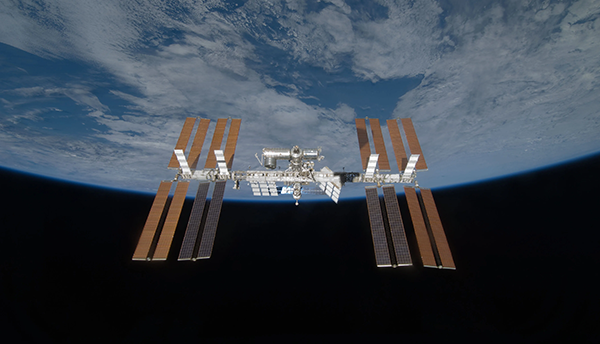
Wrapped snugly in a custom container, seven carefully chosen materials left Earth on August 24, 2025, traveling at 17,500 mph. Nestled at the top of a Falcon 9 rocket, house dust, freeze-dried human liver, and cholesterol joined four other scientific specimens on a journey to the International Space Station (ISS). These materials, known as reference materials, have been thoroughly studied on Earth and will now serve critical roles in understanding the effects of outer space on everyday objects as space increasingly becomes a place for living, research, and commerce.
Getting these reference materials into orbit was a collaborative effort among the National Institute of Standards and Technology (NIST), the National Oceanic and Atmospheric Administration (NOAA) Office of Space Commerce, and the biotech company Rhodium Scientific. The mission aims to advance U.S. leadership in the space sector by fostering innovative commercial and scientific capabilities. This initiative aligns with recent executive orders on U.S. space activities.
Understanding Reference Materials
Stored in a Maryland warehouse, over a thousand different reference materials, ranging from spinach to cement, are shipped globally to support research and industry. These materials, maintained by NIST, allow labs to compare measurements and calibrate devices, ensuring accuracy. For instance, NIST’s cholesterol reference material is crucial for medical labs to verify their instruments’ accuracy in monitoring cholesterol levels, a vital health measure.
Six of the seven materials sent to space are standard reference materials (SRMs), meeting NIST’s highest measurement standard. These include cholesterol, tripalmitin, house dust, creatinine, urea, and uric acid. The seventh, human liver, is a reference material of the next-highest standard. These materials are essential for ensuring consistent scientific communication and experimentation across time and space.
The Rationale for Space Deployment
Space affects people and objects in unforeseen ways. The low-gravity environment can lead to bone density loss and cardiovascular weakening in astronauts. Above Earth’s protective magnetic field, cosmic radiation poses additional challenges. A 2023 school project highlighted this when epinephrine, a drug for allergic reactions, transformed into toxic benzoic acid when exposed to cosmic radiation.
However, space can also offer positive outcomes. Microgravity facilitates the growth of protein crystals, as seen in the development of the cancer drug Keytruda on the ISS. The drug’s crystals formed more evenly in space, leading to a more convenient injectable form. “There are opportunities for whole categories of research and manufacturing in space, and standards will play an important role out there, just like on Earth,” said NIST research chemist Dianne Poster.
Health Implications and Research Potential
Scientists still have much to learn about space’s impact on molecules vital to human health. Space may induce subtle yet significant changes in organic molecules, such as those in liver tissue. “If people are going to be in space for any extended time, they’re going to have to do medical testing, and we’ll need to know how stable their cholesterol and urine molecules are in space and on Earth,” explained NIST scientist Kate Rimmer.
The selected reference materials are crucial for human health and relatively easy to launch. They are dry powders that remain stable at room temperature, unlike blood plasma, which requires extreme cold storage. These materials are among NIST’s best-measured, with five being “primary chemistry standards,” known for their purity and stability.
Looking Ahead: The Future of Space Standards
Upon their return, some samples will be stored in Rhodium’s Space BioBank for future research, facilitating faster and more efficient space studies. “Sending a sample to space for research can take years and cost millions of dollars,” explained Rhodium CEO Olivia Holzhaus. The BioBank aims to have ready-to-test samples, accelerating space research.
Other samples will return to NIST for analysis. Scientists will use advanced techniques to detect any chemical changes during their time in space. “There aren’t really any physical artifact reference materials for space right now,” said Rimmer. “We’re hoping to help develop the first.”
Standardizing biological and chemical measurements in space is vital for creating a resilient ecosystem where research and commerce can thrive. As space becomes more populated and commercial space stations emerge, the study of reference materials will be pivotal in understanding and managing the space environment.