


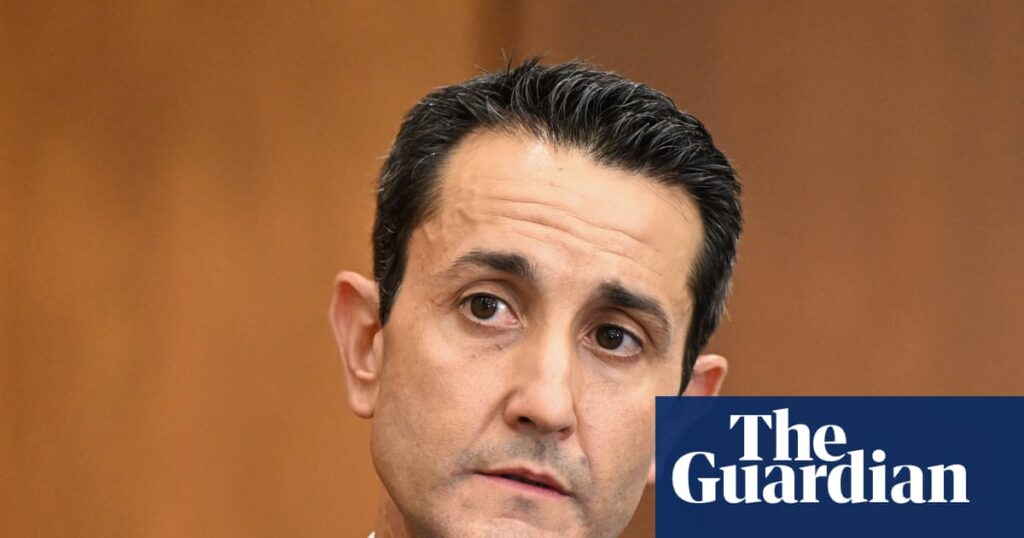
In an era where conservative parties often seem intent on self-destruction, David Crisafulli’s leadership of Queensland’s Liberal National Party (LNP) has been a notable exception. The Queensland Premier inherited a party fraught with factional infighting and a history of electoral defeats. Under his guidance, the LNP has maintained a semblance of unity. However, on Tuesday morning, a significant crack appeared, potentially heralding broader implications beyond state borders.
The fissure emerged when Nigel Dalton, the LNP member for Mackay, crossed the floor on a procedural motion aimed at lifting a gag on parliamentary debate about abortion. Dalton described his decision as “deeply personal,” yet struggled to articulate its broader implications for the LNP’s internal dynamics.
Abortion Debate: A Test of Party Cohesion
The LNP’s approach to abortion highlights Crisafulli’s pragmatic leadership style. The party’s grassroots membership, with an average age of 72, largely favors repealing laws that enable access to abortion. This stance, however, conflicts with the political interests of urban voters, who have historically been alienated by the LNP’s hard-right, religious rhetoric.
Facing significant pressure during the state election, Crisafulli sought to prevent parliamentary debate on abortion during his term. He urged the party’s cultural conservatives to remain quiet, fearing that vocal opposition could jeopardize a second term. Yet, with One Nation gaining traction in national polls, this position may prove untenable.
“Queensland is a hotbed of fringe politics – the birthplace of One Nation and many other parties that have found a comfortable battleground at the right fringe of the Liberal National Party.”
Gun Control and Regional Politics
The national debate on gun control, reignited by the recent Bondi attack, presents another complex challenge for the LNP. The party finds itself caught between the urban voters it needs to retain power and the regional constituents where One Nation is expected to perform well. The LNP’s proposed gun control measures have been criticized as the “weakest in the nation,” potentially satisfying no one.
Complicating matters further, the LNP’s pre-election promise to reinstate optional preferential voting remains vague. Some party members worry this could inadvertently aid One Nation in securing regional seats.
Historical Parallels and Current Strategies
Historically, the LNP has struggled when forced to contend with right-wing challengers. In the 1998 state election, One Nation captured 11 seats, contributing to the conservative coalition’s defeat. This historical context underscores the difficulty of the LNP’s current balancing act.
In response, the LNP has returned to its successful “law and order” platform, planning to legislate further on youth crime. Crisafulli’s narrative of a youth crime “crisis” helped the party outmaneuver Labor in the previous election. However, the rise of One Nation, unencumbered by the need to appeal to moderate urban voters, could further complicate this strategy.
Implications for the Future
Nigel Dalton’s decision to cross the floor on the abortion issue is more significant than it might initially appear. Crisafulli now faces a critical choice: allow open dissent within the party or enforce strict conformity. Both options carry risks for a party striving to maintain its ideological coherence.
The LNP’s perceived stability has largely stemmed from its members’ ability to set aside differences in pursuit of a common goal: defeating Labor. However, for regional MPs like Dalton, the political landscape is shifting. Beating Labor is only part of the battle, as One Nation’s influence continues to grow.
As Queensland’s political scene evolves, the LNP’s ability to navigate these challenges will be crucial. The party’s internal cohesion, policy positions, and electoral strategies will all be tested in the coming months.