



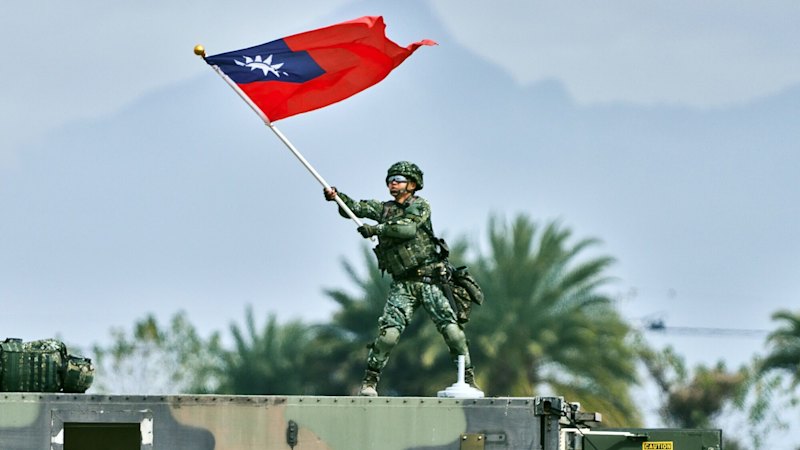
Australia is being urged to deepen its defense and economic ties with Taiwan, despite potential backlash from China, according to a group of leading foreign affairs and national security experts. The call for a stronger relationship with the self-governing island comes as Australia navigates its strategic interests in a region marked by increasing geopolitical tensions.
While acknowledging the delicate nature of enhancing relations with Taiwan—a territory China considers an integral part of its domain—most experts agree that Australia’s current engagement with Taiwan is underdeveloped, especially when compared to other nations like Japan. However, dissent exists among the experts, with some warning that increased military cooperation with Taiwan could severely damage Australia’s relationship with China.
Challenges and Opportunities in Australia-Taiwan Relations
The University of Sydney’s United States Studies Centre is set to release a comprehensive report in Canberra, highlighting the potential risks and benefits of strengthening ties with Taiwan. The report, spearheaded by senior defense adviser Peter Dean and La Trobe Centre for Global Security director Bec Strating, suggests that while there are short-term economic and political risks with Beijing, the long-term strategic benefits could outweigh them.
“Strengthening ties with [the Taiwanese capital] Taipei is likely to incur short-term economic and political risks for Canberra with Beijing,” the report states. “Nevertheless, the deterioration of Australia’s strategic outlook calls for Canberra to explore all policy options that would develop and reinforce an environment conducive to serving its long-term interests.”
Taiwan, known for its robust democracy and significant technological prowess, is a key player in the global semiconductor industry. The report argues that Australia’s engagement with Taiwan has not kept pace with its growing importance, particularly in areas such as regional trade and cybersecurity.
Political Sensitivities and Economic Implications
China’s ambassador to Australia, Xiao Qian, has reiterated that China’s stance on Taiwan is non-negotiable, underscoring the potential diplomatic fallout of closer Australia-Taiwan ties. The ambassador’s comments reflect the complex political landscape that Australia must navigate as it considers its foreign policy options.
The report also highlights missed opportunities for Taiwanese investment in Australia, noting that Canberra’s cautious approach may deter Taiwanese businesses. This cautious stance, driven by concerns over China’s reaction, has reportedly led to a chilling effect on Taiwanese companies, particularly in emerging technologies.
“Taiwanese companies in emerging technologies do not feel confident operating in Australia or carrying out their business inquiries,” the report notes. “This has filtered through to broader Taiwanese industry, which is unsure how best to progress investments in Australia without upsetting the Australian government.”
Debate Among Experts
Not all experts agree on the path forward. Peter Varghese, a former head of the Department of Foreign Affairs and Trade, cautioned against expanding defense ties with Taiwan, arguing that it could have serious repercussions for Australia’s relationship with China without delivering proportional benefits.
“Defence-to-defence relations takes us right up to the boundary line of a state-to-state relationship and in the end that is a risky change to the status quo,” Varghese wrote.
Despite these concerns, most experts on the panel, including former Australian Signals Directorate boss Rachel Noble and National Security College head Rory Medcalf, advocate for appointing de facto defense attachés in Taipei and Canberra. This move would align Australia with similar actions taken by Japan, the United Kingdom, the Philippines, and the United States.
Looking Forward
The debate over Australia’s relationship with Taiwan is emblematic of broader strategic challenges facing Canberra in the Indo-Pacific region. As Australia seeks to balance its economic ties with China against its security interests and alliances, the decisions made in the coming months could have lasting implications for its foreign policy.
The Albanese government, which has worked to restore diplomatic and trade relations with Beijing, now faces the complex task of navigating these competing interests. As the situation evolves, Australia’s approach to Taiwan will likely serve as a litmus test for its broader regional strategy.