




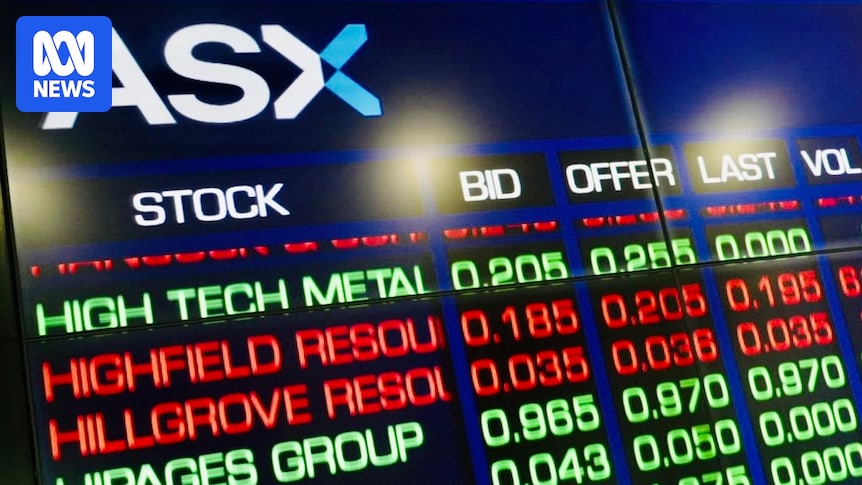
The Australian Securities Exchange (ASX) showed positive movement today, with the ASX 200 index rising by 0.16% to reach 8,882 points. This uptick was largely driven by gains in the mining sector, although banking stocks experienced a decline. Meanwhile, the Australian dollar fell by 0.18% to 70.78 US cents, reflecting ongoing market volatility.
Global markets also presented mixed results. The Dow Jones saw a marginal increase of 0.01% to 50,119 points, while the S&P 500 rose by 0.5% to 6,964 points. The Nasdaq outperformed with a 0.9% rise to 23,235 points. European markets followed suit, with the FTSE climbing 0.2% to 10,386 points and the EuroStoxx gaining 0.7% to 621 points. Commodity prices showed fluctuations, with spot gold dropping 0.83% to $US5,021 per ounce and Brent crude slipping 0.2% to $US68.9 per barrel.
Inflation Concerns Amid Economic Constraints
Shane Oliver, AMP Capital’s chief economist, has weighed in on the recent interest rate hike, highlighting the political debate surrounding government spending and its impact on inflation. Oliver expressed optimism that the inflation surge might be temporary but warned that the economy is facing capacity constraints due to increased household and business spending, coupled with high public expenditure.
“The best things governments can do to help lower inflation is reduce the level of spending in the near term and help boost the supply side of the economy in the long term,” Oliver stated.
Federal government spending as a share of GDP has risen from 24.3% in 2022-23 to a forecast 26.9% this financial year, exacerbating capacity pressures as the private sector increases its spending.
International Tensions and Economic Policies
In international news, the Wall Street Journal reports that the Trump administration plans to overturn an Obama-era scientific finding, which serves as the legal basis for federal greenhouse-gas regulation. This move is part of broader geopolitical tensions, including Russia’s criticism of U.S. policies towards Cuba. The Kremlin has accused the U.S. of employing “suffocating tactics” that exacerbate Cuba’s fuel crisis, pledging support for Cuba and Venezuela.
Meanwhile, Australian lithium miner PLS Group announced a two-year offtake agreement with Chinese battery manufacturer Canmax Technologies, boosting its shares by 1.8%. The deal underscores the growing demand for lithium amid the global shift towards renewable energy sources.
Corporate Developments and Market Movements
Treasury Wine Estates (TWE) saw its share price jump over 6% following a settlement agreement with U.S. distributor Republic National Distributing Company (RNDC). The agreement involves TWE repurchasing inventory in California, with expected financial impacts detailed in their upcoming interim results.
On the consumer front, the latest Westpac-Melbourne Institute Consumer Sentiment survey showed a 2.6% decline, reflecting concerns over rising interest rates. Despite the Reserve Bank of Australia’s recent rate hike, the impact on sentiment was less severe than historical averages, possibly due to the anticipated nature of the decision.
Optus continues to address a software issue affecting mobile services, with most customers regaining connectivity after restarting their devices. The company has assured that emergency services remain accessible.
Future Outlook and Market Analysis
Looking ahead, market analysts are closely monitoring the impact of artificial intelligence on various sectors. Recent research by Microsoft highlights jobs most vulnerable to AI disruption, emphasizing the need for industries to adapt to technological advancements.
Additionally, the timber sector in Victoria’s East Gippsland faces uncertainty as the local community navigates changes following government decisions to reduce native logging. This situation mirrors broader challenges faced by communities reliant on traditional industries.
As the ASX continues to navigate these complex dynamics, stakeholders remain focused on balancing growth opportunities with economic and geopolitical challenges. The evolving landscape underscores the importance of strategic planning and adaptability in the face of global uncertainties.