


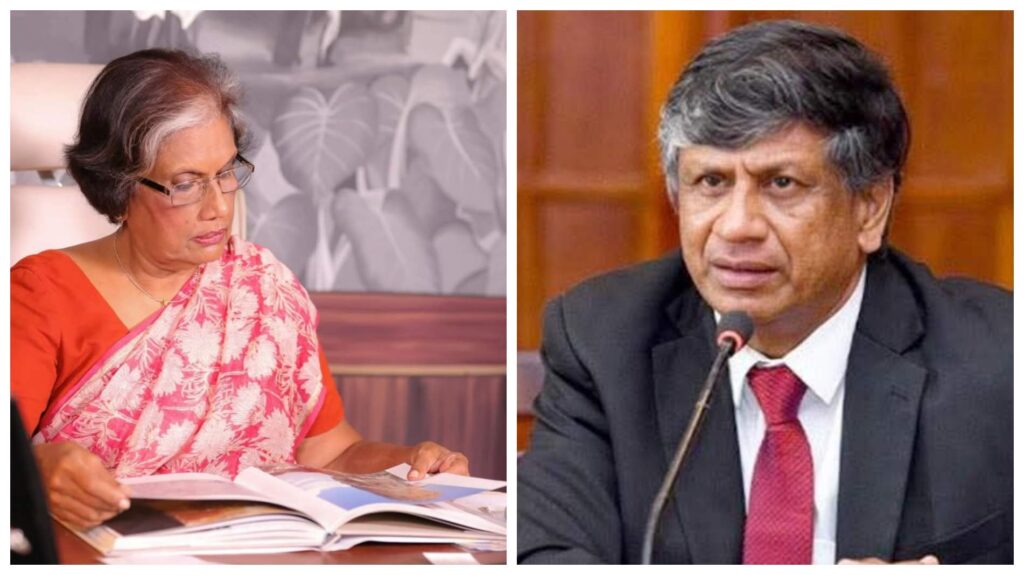
Former President Chandrika Bandaranaike Kumaratunga has raised alarm over what she perceives as the erosion of Sri Lanka’s professional public service. In a recent statement, she warned that selective justice and politically driven governance are undermining the very foundations of the State.
Kumaratunga took to her Facebook page to express her concerns, sharing excerpts from an article titled “When Justice Becomes Selective.” She emphasized that the issues highlighted in the article have significant implications for the country’s governance system. Describing the article as thoughtful and well-reasoned, she particularly praised its examination of integrity within the public service.
Concerns Over Saman Ekanayake’s Case
The former president specifically referred to the case of former Presidential Secretary Saman Ekanayake, who is currently in remand custody. Ekanayake is accused of approving funds for a foreign visit by then-President Ranil Wickremesinghe in 2023. Kumaratunga, who knows Ekanayake personally, described him as a scrupulously honest and highly professional public servant.
“A government cannot function without a professional, efficient, and honest public service,” Kumaratunga stated, adding that while political leaders may not need extensive administrative experience, they must exhibit unshakeable integrity and rely on career public servants for effective governance.
Political Influence and Public Service Integrity
Kumaratunga warned that the current government seems to be dismantling the remnants of the country’s public service, replacing qualified professionals with party loyalists lacking necessary experience. This trend, she argued, threatens to further weaken democratic governance.
The former president linked the 2022 Aragalaya protest movement to a growing public awareness of governance failures, noting that citizens took to the streets after realizing the severe deterioration in governance standards.
Sri Lanka continues to suffer the consequences of nearly two decades of poor governance, and the country could descend into further chaos unless the current approach to governance is changed.
Historical Context and Future Implications
The erosion of public service integrity is not a new issue in Sri Lanka. Historically, political interference has often been cited as a major challenge in maintaining a neutral and effective public service. Experts argue that this trend undermines public trust and hampers the implementation of policies that are in the public interest.
According to political analysts, the dismantling of professional public service structures could lead to long-term instability. The reliance on party loyalists may result in inefficiencies and a lack of accountability, ultimately affecting the country’s development and governance.
Call for Public Involvement
Echoing the conclusions of the Vox Civis article, Kumaratunga emphasized that the responsibility for reversing this decline lies with the people. She urged citizens to question decisions, understand the long-term consequences, and make informed democratic choices to rebuild the nation.
The former president’s statements come at a critical time when the country is grappling with economic challenges and a need for robust governance. As Sri Lanka navigates these turbulent times, the role of a professional and independent public service is seen as crucial in steering the nation towards stability and growth.
Moving forward, it remains to be seen how the government will respond to these concerns and whether steps will be taken to restore confidence in the public service. The unfolding situation will undoubtedly have significant implications for Sri Lanka’s political landscape and governance model.