
Hundreds of public schools across New South Wales (NSW) have installed synthetic turf on their grounds, as revealed by a recent survey conducted by the Department of Education. This disclosure comes amid growing concerns about the health implications for children and the environmental risks associated with these surfaces.
The survey, which assessed 1,600 of the state’s 2,200 public schools late last year, found that 58 percent had synthetic turf. This marks the first time the department has publicly shared data on the prevalence of this controversial material in school playgrounds.
While synthetic turf is often promoted as a low-maintenance alternative to natural grass, public opposition has intensified. Critics point to evidence suggesting that the plastic material can reach extreme temperatures, posing health risks, and leach harmful chemicals and microplastics into the environment.
Environmental and Health Concerns
A Department of Education spokesperson acknowledged that synthetic turf has been installed over many years, with coverage ranging from small patches to full-size soccer fields. “We are aware that air temperature above artificial turf has the potential to exceed comfortable levels and contributes to the urban heat island effect,” the spokesperson stated. Efforts to mitigate these effects include shading, material choices, and irrigation.
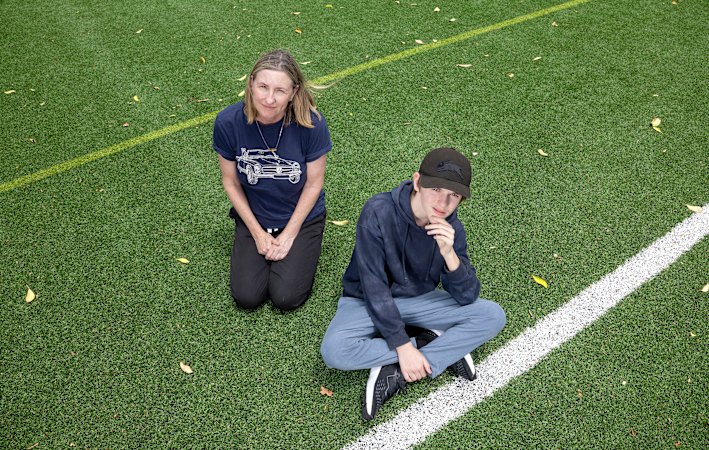
Despite these measures, parents and advocacy groups remain concerned. Catriona Carver, a Sydney mother and co-founder of the National Turf Alliance, spent two years independently estimating the number of schools with synthetic turf in Greater Sydney. Her research concluded that at least one-third of schools, including 150 in high bushfire risk zones, had synthetic surfaces, which are known bushfire hazards.
“[Synthetic turf] has some benefits to play, but it’s got too many negatives for long-term health for children, and too much is unknown,” Carver said.
Scientific Findings and Recommendations
A 2023 report by the NSW chief scientist and engineer recommended against synthetic sports fields in areas prone to bushfires and extreme flooding. The report highlighted the presence of biological pathogens and toxic chemicals in plastic grass, raising concerns about microplastic ingestion.
Further research by the CSIRO and the University of New South Wales found that synthetic turf contained toxic and carcinogenic chemicals that could be absorbed through direct contact, inhalation, and ingestion. While typical users of these fields face low immediate health risks, ongoing studies are needed to assess potential long-term effects.
Impact on School Environments
Professor Sebastian Pfautsch of Western Sydney University has been studying the effects of heat and synthetic turf in schools since 2019. His research with nearly 1,000 students in western Sydney revealed that synthetic turf is “the hottest material you will find in schools,” with temperatures often soaring to 75 degrees Celsius, compared to 37 degrees for natural grass.
At Granville Boys High School, where synthetic turf and asphalt dominate the grounds, temperatures reached 48.2 degrees Celsius. The heat not only affects outdoor activities but also increases indoor temperatures, necessitating more air-conditioning.
“When you go for recess and your lunch break, and it’s very hot when you get back to the classroom, it takes much longer to find concentration again,” Pfautsch noted.
Community and Policy Responses
In response to these findings, a NSW School Infrastructure spokesperson stated that natural turf is preferred whenever possible, with synthetic materials considered only in high-use or shaded areas where natural grass struggles to grow. The department regularly inspects synthetic turf to ensure it remains safe and functional, and feedback from schools is guiding updates to facility standards.
Meanwhile, local councils are also reconsidering their use of synthetic turf. Ku-ring-gai Council is debating whether to remove synthetic turf at Charles Bean Oval, used by Lindfield Learning Village, after discovering harmful substances in the material. Parents have voiced concerns about increased abrasions and excessive heat, with some children afraid to play on the fields.
“That’s unacceptable, that in a school environment, you’re having to make those decisions to avoid an area to make your kids feel safe,” said parent Julia Hobson.
The Path Forward
As the debate over synthetic turf continues, the Department of Education confirmed that natural turf replacements will be considered when synthetic surfaces reach the end of their useful life. However, advocates like Carver argue that the only true solution to the heat problem is the removal of synthetic turf altogether.
“Heat is the biggest thing that nobody can change. You either cover it all up, or you don’t have it. There’s no other way because you can’t do anything about it,” Carver emphasized.
The ongoing discourse surrounding synthetic turf in NSW schools highlights the need for careful consideration of both immediate and long-term impacts on student health and environmental sustainability.