

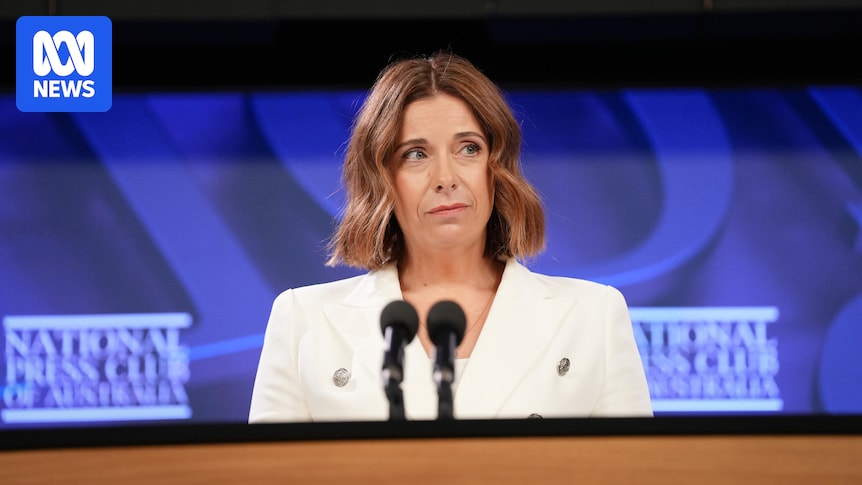
Business class flights to New York for Communications Minister Anika Wells and her staffer were initially set to cost taxpayers tens of thousands of dollars before the Optus crisis necessitated last-minute travel changes. The trip, intended for a United Nations event on child safety, ultimately saw costs rise significantly, sparking scrutiny over government spending.
Ms. Wells’ three-day work trip to the United States in September, where she introduced speakers at an online child safety event, came under fire when it was revealed that the flights and accommodation bill exceeded $120,000. The high cost was partly due to the Optus Triple Zero outage, which disrupted Ms. Wells’ plan to travel one-way with Prime Minister Anthony Albanese on the federal government’s special purpose aircraft.
Escalating Costs and Initial Plans
The ABC has uncovered through Freedom of Information (FOI) documents that return flights from Australia to New York, totaling $65,995.68, were initially booked for Ms. Wells and her deputy chief of staff about ten days before her planned departure on September 20. However, changes to the itinerary increased the final cost to $72,592.44.
The remainder of the trip’s expenses, disclosed in Senate estimates, included $22,236 in flights for the assistant secretary for online safety and approximately $24,000 for accommodation and transport. Despite the high costs, correspondence between the Independent Parliamentary Expenses Authority (IPEA) and the Commonwealth’s travel agent, CTM, did not highlight these expenses as unusual.
The average cost of a Qantas flexible business class fare between Brisbane and New York ranges between $20,000 and $30,000 return.
Optus Crisis Forces Itinerary Changes
The trip’s costs were further complicated by the Optus Triple Zero crisis, which delayed Ms. Wells’ departure. Originally, she was to travel with Prime Minister Albanese from Sydney on September 20. However, the day before departure, Optus announced a failure in its Triple Zero service, linked to two deaths, prompting Ms. Wells to stay in Australia for two more days to address the crisis.
FOI documents reveal a CTM team member emailed IPEA on September 20, seeking confirmation to book a new flight for Ms. Wells to the US two days later. The email, marked as “urgent,” explained that Ms. Wells’ office required a flight for Monday, as the special purpose aircraft was no longer an option due to domestic issues.
“The fares are fully refundable, and they already have a ticket booked for the return,” the email stated.
The last-minute changes included an Air New Zealand business class flight from Brisbane to New York via Auckland, costing $16,424.07 for Ms. Wells. Her adviser’s airfare cost $17,536.07, with differences attributed to fare types. These adjustments brought the total travel cost for Ms. Wells to $34,426.58 and for her staffer, $38,165.86.
Defending the Expenditure
In response to criticism, Ms. Wells defended the expenditure, emphasizing the importance of the event. She stated that the trip was crucial for promoting Australia’s social media age ban at the UN, which she claimed had sparked global momentum.
“That event fueled a global momentum in this space,” Ms. Wells said. “You have seen a number of different jurisdictions come out from that moment to announce that they are going to do exactly what Australia is doing.”
Opposition communications spokesperson Melissa McIntosh criticized Ms. Wells’ decision to attend the “PR trip” during the Triple Zero crisis, arguing she should not have left her post.
“I have always said the minister for communications should never have left her post during the Triple Zero crisis,” Ms. McIntosh remarked.
Looking Ahead
The cost of hosting the child safety event at the UN was approximately $70,000, funded by the department responsible for communications. As scrutiny over government spending continues, Ms. Wells has since referred all her expenses to IPEA for an audit, aiming to ensure transparency and accountability.
This incident highlights the challenges faced by government officials in balancing international obligations with domestic responsibilities, especially in times of crisis. As the debate over public spending persists, the government may need to reassess its travel policies to prevent similar controversies in the future.