



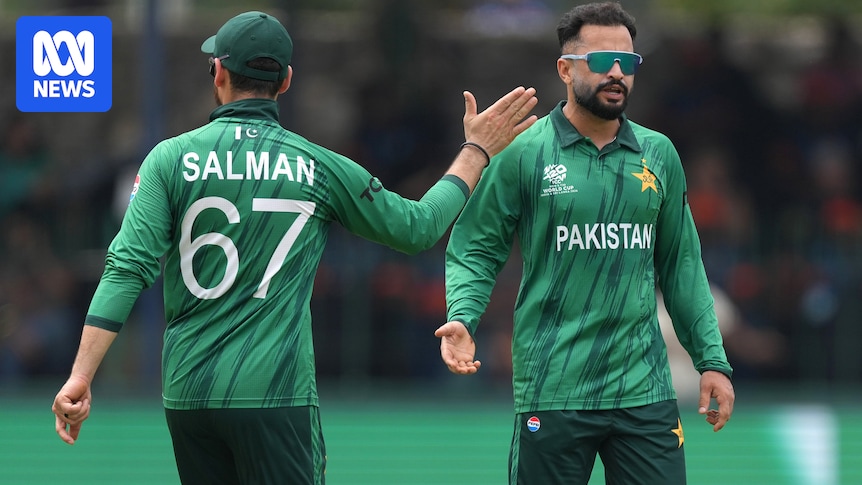
In a dramatic reversal, Pakistan has decided to participate in the highly anticipated T20 World Cup match against India, scheduled for February 15 in Colombo, Sri Lanka. This decision comes after Pakistan initially announced a boycott due to escalating political tensions in the region.
The announcement was made by the Pakistani government on Monday night, bringing relief to cricket governing bodies worldwide, including Cricket Australia. The fixture is crucial not only for its sporting significance but also for its financial implications, as it underpins the International Cricket Council’s (ICC) $4.4 billion Indian broadcast deal. The agreement was contingent on India and Pakistan meeting at least once during the tournament.
Background and Political Tensions
The initial boycott by Pakistan followed the ICC’s decision to replace Bangladesh with Scotland in the tournament. Bangladesh had requested to move their matches from India to Sri Lanka, citing political tensions. This request was denied by the ICC, leading to Bangladesh’s withdrawal from the tournament.
The tensions were further exacerbated when the Board of Control for Cricket in India (BCCI) ordered the Kolkata Knight Riders to release Mustafizur Rahman, the only Bangladeshi player in the Indian Premier League. This move was seen as a response to the political climate, further straining relations between the cricketing nations.
Diplomatic Efforts and Resolution
In a series of diplomatic maneuvers, the Bangladesh Cricket Board (BCB) requested Pakistan to reconsider their boycott. This request followed a meeting in Lahore involving representatives from the ICC, BCB, and the Pakistan Cricket Board. During the meeting, the ICC assured that no penalties would be imposed on Bangladesh for their refusal to play in India.
Additionally, it was announced that Bangladesh would host an ICC event before the 2031 50-over World Cup, which will be co-hosted by India and Bangladesh. This development played a significant role in easing tensions and facilitating Pakistan’s decision to participate.
“We are deeply moved by Pakistan’s efforts to go above and beyond in supporting Bangladesh during this period … I request Pakistan to play the game on 15 February against India for the benefit of the entire cricket ecosystem,” said Bangladesh Cricket Board president Mohammad Aminul Islam.
Shortly after this statement, Pakistan officially called off the boycott. A social media post from the Pakistani government confirmed the team’s participation, citing “the outcomes achieved as well as the request of friendly countries” as reasons for the reversal.
Implications and Looking Forward
The match between India and Pakistan is not only a sporting spectacle but also a significant event in terms of international relations and financial stakes. Both teams have already played one match each in the tournament, with Pakistan defeating the Netherlands and India securing a win against the United States.
As the cricketing world eagerly awaits the showdown, the resolution of this diplomatic standoff highlights the intricate relationship between sports and international politics. The decision to proceed with the match underscores the importance of cricket as a unifying force, capable of bridging divides and fostering dialogue.
Moving forward, the focus will be on the game itself and the performances of the teams. The outcome of this match could have lasting implications for the tournament and for the broader cricketing landscape.
As the countdown to February 15 continues, fans and analysts alike will be watching closely to see how this historic rivalry unfolds on the field, set against the backdrop of recent diplomatic breakthroughs.