




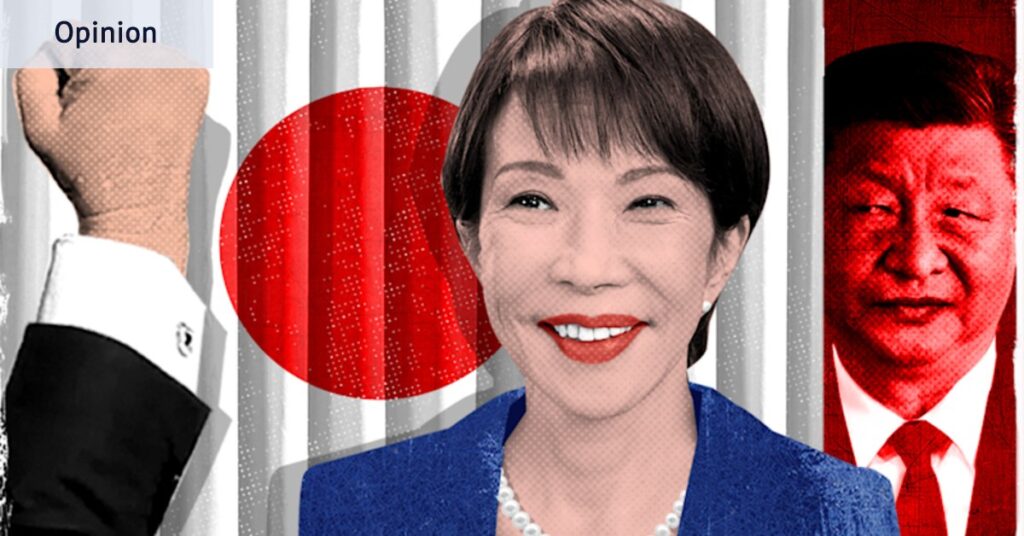
A geopolitical earthquake has struck the north-west Pacific. Japan has elected its first female prime minister, Sanae Takaichi, who has achieved a historic victory by securing more seats than any Japanese leader since World War II. Her triumph in the general election, where she won a super-majority in Japan’s lower house, grants her the power to potentially rewrite the nation’s pacifist Constitution.
This landmark victory is not just a reflection of Takaichi’s personal popularity but also a significant moment for Japan’s political landscape. “It’s a stunning result,” remarked Yoichi Kato, a scholar at Waseda University’s Institute of Asia-Pacific Studies. “This enormous victory is a reflection of her personal popularity, not necessarily support for the Liberal Democratic Party.”
Japan at a Crossroads
The election result marks a pivotal moment for Japan, a nation that has experienced prolonged economic stagnation and political drift since the burst of its “bubble economy” in 1989. Despite being the world’s fourth-largest economy, Japan has often been overlooked as a global force. However, Takaichi’s leadership promises a revival of economic strength and military power.
Mike Green, a Japan expert from the US Studies Centre at Sydney University, notes, “Japan’s defence spending is in the top five in the world and will probably surpass Britain’s to become No.1 among US allies.” Takaichi’s policies include suspending the 8% consumption tax on food and providing more support for women, carers, and families.
The Rise of Sanae Takaichi
Takaichi’s ascent to power is not only a political breakthrough but also a cultural one, as she breaks through Japan’s traditionally sexist barriers. “She wasn’t elected leader of the LDP and therefore prime minister because she’s a woman,” points out Kato. Her victory is attributed to her strategic political maneuvers and charismatic appeal, which have sparked a “sanakatsu” or “sana-mania” among her supporters.
Her image as a strong leader has been reinforced by her firm stance against China. When Takaichi declared that a Chinese attack on Taiwan could trigger Japan’s right to military action, Beijing’s punitive response only boosted her popularity. “She plans to confront Xi Jinping, not kowtow to him,” says Green, highlighting her departure from the typical Japanese leader’s cautious approach.
Implications for Australia and Beyond
According to Mike Green, Takaichi’s leadership is a “very, very big deal for Australia.” Her commitment to strengthening the US-Japan alliance could influence Australia’s foreign policy, especially in terms of trade and economic security. “She’ll be encouraging Australia to push Trump to get his act together on trade policy, economic security, and engagement with South-East Asia,” Green predicts.
As Japan positions itself more assertively on the global stage, Takaichi’s leadership could redefine its role in international affairs. Her victory not only signals a potential shift in Japan’s domestic policies but also has far-reaching implications for geopolitical dynamics in the Asia-Pacific region.
Looking ahead, Takaichi’s administration will face the challenge of delivering on her promises while navigating the complexities of international relations. Her success could inspire other nations to reconsider their own political landscapes, as Japan’s transformation under her leadership unfolds.