


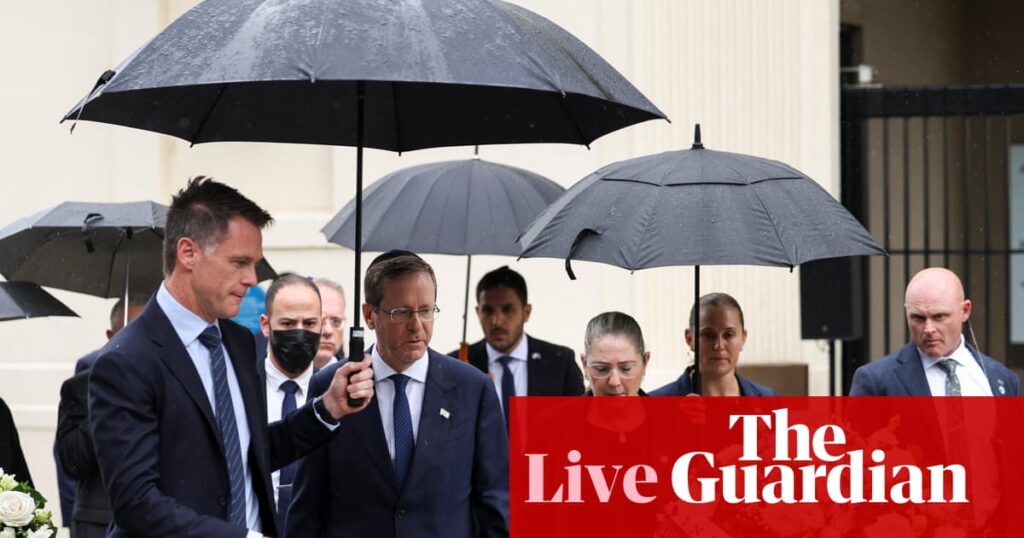
The Israeli President, Isaac Herzog, paid tribute to the victims of the Bondi Beach terrorist attack by laying a wreath at the memorial site in Sydney on a drizzly morning. Accompanied by New South Wales Premier Chris Minns, Herzog honored the 15 victims of the attack that shook the nation last December. The ceremony, attended by dignitaries including Yaakov Hagoel and Doron Almog, was broadcast live on ABC.
Herzog’s visit marks the beginning of his four-day tour in Australia, during which he plans to address the rising concerns of antisemitism, both locally and globally. His statement at the ceremony emphasized the universal threat of hatred, stating, “It is an Australian problem and a global problem.”
Security Measures and Legal Challenges
Meanwhile, Herzog’s visit has sparked legal debates over the special powers granted to police by the Minns government. These powers, typically reserved for major events, allow police to conduct searches and manage public gatherings in Sydney’s CBD and Eastern suburbs. The Palestine Action Group has challenged these measures in the Supreme Court, arguing they are excessively broad and unjustified for Herzog’s visit.
Peter Lange SC, representing the group, contended that the event does not meet the criteria for such powers, which are usually applied to geographically and temporally specific events.
“There must be specificity of groups of individuals or spectators who can be identified in a coherent fashion,”
Lange argued.
Political Reactions and Public Safety
NSW Premier Chris Minns defended the invocation of these powers, citing the need for heightened security during Herzog’s visit. He compared the situation to past international events in Sydney, such as APEC, emphasizing the importance of maintaining safety and order. “Sydney’s on the international stage here,” Minns remarked, urging calm and respect during planned protests.
Herzog, addressing the media, reiterated the importance of combating antisemitism, calling it a global emergency. He praised Australia’s efforts post-Bondi attack and urged leaders to consistently oppose hate speech.
“Silence in the face of hatred is complicity,”
he warned.
Historical Context and Ongoing Investigations
The Bondi Beach attack, described by Herzog as an assault on democratic values, remains a poignant reminder of the threat of terrorism. The attack, which targeted a Hanukkah celebration, has been labeled the deadliest in Australia’s history. Herzog reflected on the solidarity shown by Australians and Israelis in the aftermath, highlighting the shared values and resilience of both nations.
The attack’s investigation continues to draw attention, particularly with the airing of an ABC Four Corners episode scrutinizing the events leading up to the tragedy. ASIO has expressed concerns over the program, warning against unsubstantiated claims that could impact ongoing legal proceedings and the Royal Commission on Antisemitism and Social Cohesion.
Future Implications and Community Response
As Herzog’s visit progresses, the spotlight remains on the broader implications of antisemitism and public safety in multicultural societies. The legal challenges and political discourse surrounding his visit underscore the delicate balance between security and civil liberties.
Herzog’s presence in Australia serves as a reminder of the global fight against intolerance and the importance of unity in the face of adversity. His call for action against antisemitism resonates beyond the Jewish community, urging all sectors of society to stand against hate.
The outcomes of the legal challenges and the public’s response to Herzog’s visit will likely influence future policies on security and public assembly in Australia, setting precedents for handling international dignitary visits amid rising global tensions.