

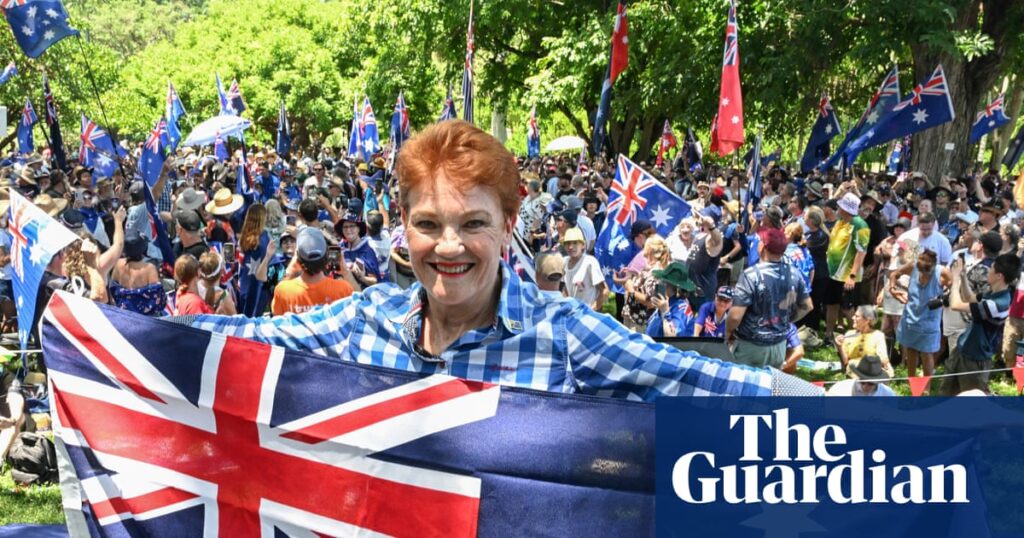
The crowd, clad in orange One Nation T-shirts and waving Australian flags, appeared confident of their impending victory, chanting “prime minister” in a fervent display of support. This enthusiastic gathering welcomed Pauline Hanson and her latest ally, former Liberal and Sky News commentator Cory Bernardi, in Adelaide on Tuesday, buoyed by news of a surge in the polls.
South Australia’s upcoming March election will serve as the first significant test of the rising One Nation vote, which seems to be capitalizing on the disarray within the federal Coalition. Historically, Hanson has been a polarizing figure, known for inspiring unwavering devotion that often ends in abrupt departures, organizational chaos, disqualifications, and accusations of authoritarian leadership.
Testing the Political Waters in South Australia
The question remains whether Hanson’s strategies will resonate in South Australia, where the Liberal Party is struggling, and the Labor vote remains robust. According to retired ABC election analyst Antony Green, One Nation’s polling at the federal level indicates that of “the first 25 seats to watch,” 12 are in Queensland, with only one in South Australia.
This lone seat, Barker, is currently held by Liberal Tony Pasin, an ally of conservative backbencher Alex Antic. The national figure of a 22% primary vote for One Nation may not translate effectively in South Australia. October polling placed state Labor on a two-party preferred lead of 66 to the Liberal Party’s 34, suggesting a landslide victory for Premier Peter Malinauskas. However, the recent resignation of opposition leader Vincent Tarzia in favor of moderate Ashton Hurn could alter these dynamics.
Strategies and Aspirations
Bernardi and Hanson expressed optimism about securing seats in the lower house. With enhanced financial backing, improved campaigning, and stronger candidates, they believe they might capitalize on the shifting political mood and the unpredictability of three-way contests. Their primary ambition, however, lies in winning one or two positions in the state’s upper house, aiming to become the opposition.
“Whether we have one seat, we have five seats or 22 seats, we will be the strongest voice of opposition that this government has ever faced,” Bernardi stated.
He further emphasized their commitment, saying, “We’re going to contest every seat. We’re going to have a full ticket in the upper house. We’re going to work very hard for our candidates, and I hope they’re all rewarded.”
Political Landscape and Challenges
The upper house presents 11 seats up for grabs, with a diverse array of candidates, many echoing One Nation’s platform. Bernardi is not the only former Liberal in the race. Former Liberal member turned Family First senator Bob Day plans to field candidates in both houses for the Australian Family Party. Additionally, Day’s former chief of staff Rikki Lambert is running for the Nationals, and the Family First candidate is former Liberal candidate Deepa Mathew. Jing Lee, who left the Liberals after a controversial right-wing abortion bill, is running as an independent.
One Nation’s rise introduces an element of unpredictability. The party’s anti-woke, anti-Islam, anti-immigration, anti-multiculturalism, and anti-renewables stance has found resonance in March for Australia protests and through One Nation. However, there may be a segment of voters who hesitate to support One Nation when casting their ballots, potentially influenced by campaign developments.
Press Conference Tensions
At Tuesday’s press conference, the initially jubilant crowd’s mood shifted when Hanson faced a challenging question from Guardian Australia’s Sarah Martin regarding her failure to declare flights on billionaire Gina Rinehart’s private jet. Hanson struggled to respond coherently, and her supporters reacted with anger, questioning the press’s motives.
“What is your agenda?” Carlos Quaremba, the One Nation state president, repeatedly asked, highlighting the tension in the room.
However, the most alarming response came from a crowd member who was overheard saying, “She’s going to get lynched,” underscoring the volatile atmosphere surrounding the party’s campaign.
As the South Australian election approaches, the political landscape remains fluid. One Nation’s ability to convert polling numbers into actual votes will be closely watched, offering insights into the broader Australian political climate and the electorate’s appetite for change.