




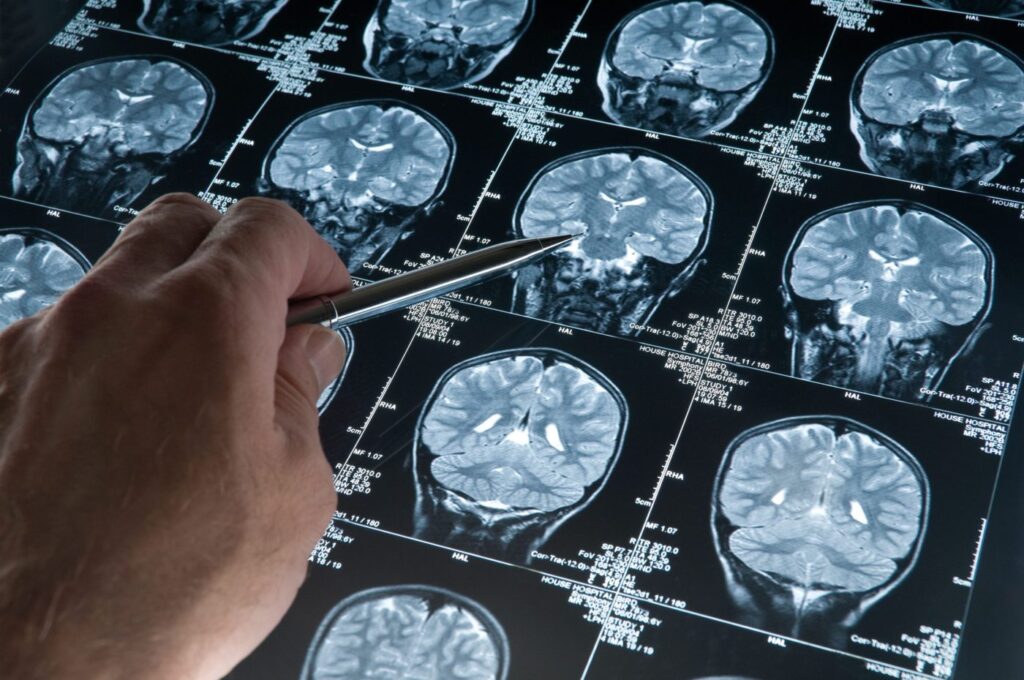
For decades, brain MRIs have stood as a cornerstone of neurological diagnostics. However, the increasing demand for these scans has outpaced the capacity of neuroradiology services, leading to delays and disparities in access to care. A groundbreaking study from the University of Michigan introduces Prima, an AI model that could transform this landscape by reading brain MRIs and providing diagnoses in mere seconds.
Published in Nature Biomedical Engineering, the research outlines how Prima, trained on extensive health system data rather than limited datasets, marks a significant shift towards AI models that can operate effectively in real-world clinical settings. “As the global demand for MRI rises and places significant strain on our physicians and health systems, our AI model has potential to reduce burden by improving diagnosis and treatment with fast, accurate information,” said Dr. Todd Hollon, a senior author and neurosurgeon at University of Michigan Health.
From Task-Specific Tools to System-Scale Intelligence
Current AI tools in neuroimaging are often limited to specific tasks, such as detecting a single abnormality. Prima, however, was trained on over 220,000 MRI studies, encompassing 5.6 million imaging sequences, along with clinical histories and physician imaging indications from routine care at University of Michigan Health. This comprehensive training allows Prima to function more like a radiologist, integrating patient history and imaging data for a holistic understanding of health.
“Prima works like a radiologist by integrating information regarding the patient’s medical history and imaging data to produce a comprehensive understanding of their health,” explained Samir Harake, co-first author and data scientist in Hollon’s Machine Learning in Neurosurgery Lab. This design reflects actual clinical practice, where images are interpreted in context rather than isolation.
Accuracy and Speed: A New Standard in Clinical Triage
In a year-long evaluation involving nearly 30,000 MRI studies, Prima demonstrated exceptional diagnostic performance across 52 neurological conditions, achieving a mean area under the curve of 92%. In certain categories, its accuracy reached 97.5%, surpassing current state-of-the-art medical AI systems.
“Accuracy is paramount when reading a brain MRI, but quick turnaround times are critical for timely diagnosis and improved outcomes,” said Yiwei Lyu, MS, co-first author and postdoctoral fellow in computer science and engineering at U-M.
Prima not only excels in accuracy but also in determining the urgency of cases. It can flag time-sensitive scans and recommend the appropriate subspecialist, such as a stroke neurologist, effectively acting as an intelligent triage layer within radiology workflows.
Bridging the Gap in Global Healthcare Access
The potential impact of Prima extends beyond academic hospitals. With millions of MRI scans conducted globally each year, access to neuroradiology expertise remains uneven, particularly in rural and low-resource settings. “Whether you are receiving a scan at a larger health system that is facing increasing volume or a rural hospital with limited resources, innovative technologies are needed to improve access to radiology services,” stated Dr. Vikas Gulani, chair of radiology at U-M Health.
Prima’s training on real-world clinical data positions it for deployment across diverse practice environments. The study also highlights algorithmic fairness across demographic groups, a crucial factor as AI systems advance toward broader clinical adoption.
Augmenting, Not Replacing, Human Expertise
While Prima offers remarkable capabilities, the researchers emphasize its role as an adjunct, not a replacement, for radiologists. “Like the way AI tools can help draft an email or provide recommendations, Prima aims to be a co-pilot for interpreting medical imaging studies,” Hollon noted.
Future research will explore integrating richer electronic medical record data and extending Prima’s capabilities to other imaging modalities, such as mammography and chest X-rays. This foundational model approach could eventually support a wide range of diagnostic workflows.
As precision medicine increasingly relies on timely, data-rich interpretations, Prima exemplifies how AI, trained at a health-system scale, could reshape diagnostics. By mirroring clinical reasoning—integrating context, prioritizing urgency, and supporting decision-making—Prima represents a significant advancement in medical AI.