

A groundbreaking trial of personalized vaccines for children suffering from deadly brain cancers is set to commence across eight hospitals in Australia later this year. The trial, which will span four years and involve approximately 70 children with dire prognoses, aims to test the safety and effectiveness of this experimental treatment. The vaccines are designed to harness the immune system to produce killer T cells, or “medical missiles,” to target and destroy the child’s tumor.
Scientific lead Brandon Wainwright from the University of Queensland (UQ) explained that small samples of each child’s tumor will be genetically sequenced to identify individual cancer markers. These markers will then be used to create a customized vaccine for each participant within about eight weeks of their enrollment in the trial. The children will receive eight doses of the vaccine, administered bi-weekly, followed by a booster shot a few months later.
Revolutionary Approach to Childhood Brain Cancer
Professor Wainwright, who has dedicated 30 years to researching childhood brain cancers, emphasized that the trial is open to children who have exhausted all other therapeutic options. “Because these diseases are so serious at the point at which they’ll enter the trial, we will know whether there has been a response in any one individual patient within 12 months of them starting,” he stated. The primary goal is not only to increase survival rates but also to improve the quality of life for these young patients.
Brain cancer is the deadliest of all pediatric cancers, claiming the lives of about 40 Australian children each year.
The trial will employ messenger RNA (mRNA) technology, which was proven effective in COVID-19 vaccines. Professor Wainwright collaborated with Providence Therapeutics, a Canadian mRNA medicines platform company, and other partners to adapt this technology for childhood brain cancer treatment. Personalized mRNA cancer vaccines have already shown promising results in adults with pancreatic cancer and melanoma.
Clinical Trials and Ethical Considerations
Hospitals in New South Wales, Victoria, Queensland, South Australia, and Western Australia will recruit children for the study. Childhood cancer specialist Jordan Hansford, the clinical lead of the trial from the Women’s and Children’s Hospital in Adelaide, noted the trial’s focus on children with newly diagnosed diffuse midline glioma and relapsed, unresponsive high-grade brain tumors, including medulloblastoma and ependymoma.
“We hope to see some amazing responses, like we have in pancreatic cancer,” Professor Hansford remarked. “We’re hopeful from the adult studies that at least half of our kids who will be eligible for the study may have some sort of immune response.”
“We don’t use placebos. We think that’s unethical in children who have very, very poor outcome disease,” Professor Hansford added.
The trial, funded by the Medical Research Future Fund (MRFF), will test the safety and optimal dosing of the personalized vaccines in the first seven to ten patients before progressing to phase two to assess effectiveness. All participants will receive a personalized vaccine, ensuring no child receives a placebo.
Personal Stories and Community Support
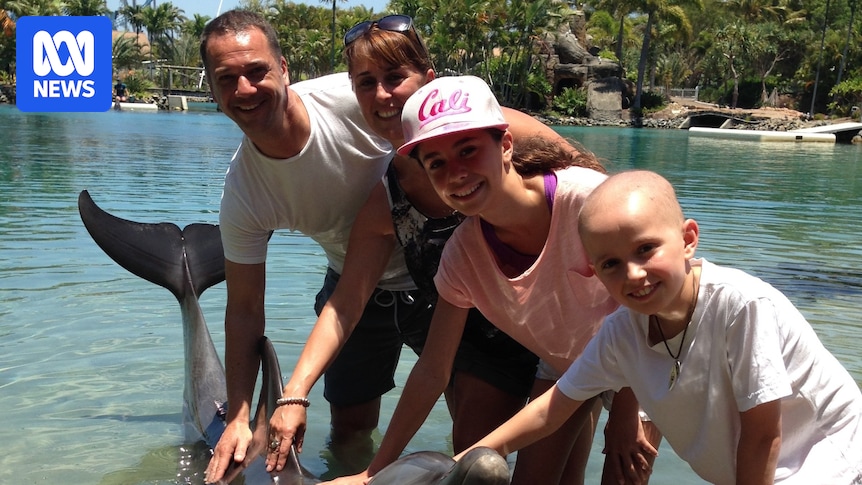
The trial has garnered significant support, including funding from the Marcus Rosin Fund, established by Melbourne mother Marisa Rosin after her son Marcus succumbed to brain cancer in 2014. Marcus was diagnosed with an ependymoma tumor at age four and underwent extensive treatment, including a 15-hour surgery and radiation, but the cancer returned. He passed away at nine years old.
“It was devastating,” Ms. Rosin shared. “We knew in our hearts that we tried everything.” She expressed bittersweet feelings about the trial, wishing it had been available earlier. “If they can just give these kids a little bit more time — whether it be one year, two years, three years with their parents, we’ve done our job,” she added.
Future Implications and Broader Applications
The personalized vaccines will be produced by Southern RNA, a company based on the Gold Coast. The Australian and New Zealand Children’s Haematology/Oncology Group (ANZCHOG) will oversee the trial, ensuring rigorous standards are met. Griffith University Professor of Medical Sciences, Nigel McMillan, who is not involved in the trial, praised the study’s design as a “really appropriate approach to take to what is a really devastating disease.”
“This allows the immune system to now recognize what is cancer in your body and to go to work,” Professor McMillan explained.
The trial’s success could pave the way for similar treatments for other types of cancer, offering hope to countless families worldwide. As the trial progresses, the medical community and families alike will be watching closely, hopeful for breakthroughs that could transform the landscape of pediatric cancer treatment.