




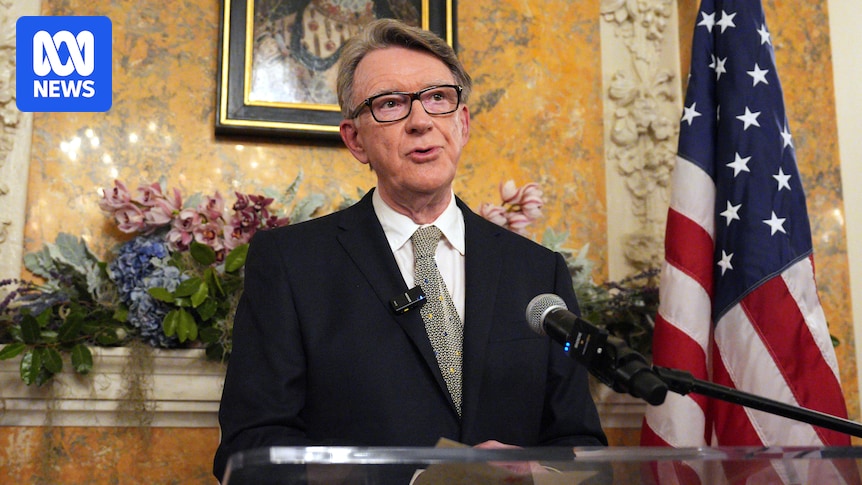
British politician Peter Mandelson reportedly kept convicted sex offender Jeffrey Epstein informed about the campaign against then-Australian Prime Minister Kevin Rudd’s proposed mining tax, according to documents released by the US Department of Justice (DOJ). The revelations come amid new scrutiny of Mandelson’s ties to Epstein, leading to his resignation from the UK Labour Party.
The documents reveal that Lord Mandelson sent an email to Epstein in June 2010, discussing the proposed Resources Super Profit Tax, which aimed to levy a 40 percent tax on the “super profits” of mining companies. This email came just a month after Rudd introduced the tax, sparking a fierce backlash from the mining industry.
Background on the Mining Tax Proposal
The Resources Super Profit Tax was announced by Prime Minister Kevin Rudd in May 2010 as part of a broader economic reform to ensure that Australians received a fair share of the country’s mineral wealth. The tax targeted the substantial profits of mining companies, intending to redistribute the wealth generated by Australia’s natural resources.
However, the proposal was met with immediate opposition from the mining sector, which launched an aggressive campaign to either dilute or abolish the tax. The campaign gained traction, leading to the replacement of the tax with the less stringent Minerals Resource Rent Tax (MRRT) under Julia Gillard’s government in July 2010. Ultimately, the MRRT was repealed in 2014 by Tony Abbott’s Coalition government.
Mandelson’s Communication with Epstein
Emails from the DOJ document dump, dating back to mid-2010, show that Mandelson forwarded an email from Mick Davis, then CEO of Xstrata, to Epstein. Davis’s email detailed the mining industry’s response to the tax, including Xstrata’s decision to suspend over half a billion dollars in planned investments in Queensland. Davis highlighted the media coverage of this decision as a pivotal moment in the debate over the tax.
“The announcement resulted in widespread media coverage as the most definitive evidence to date of the impact of the Resources Super Profit Tax,” Davis wrote. He further noted, “The overall tone of the coverage reflected many commentators’ view that this announcement marked a turning point in the debate.”
Mandelson’s email to Epstein suggested building “the broadest possible coalition” to oppose the tax, cautioning against framing it as a battle between the Australian government and mining companies. He advised reaching a compromise that would allow the industry to contribute more to society without undermining governmental authority.
Potential Roles and Financial Ties
In addition to the mining tax discussions, the DOJ documents reveal that Ivan Glasenberg, CEO of Glencore, expressed interest in having Mandelson chair the commodities group following its merger with Xstrata in 2013. Glasenberg’s email to Mandelson discussed the potential role and thanked him for his insights into political and regulatory trends.
Mandelson’s ties to Epstein have long been controversial. The DOJ documents indicate that Epstein sent Mandelson 75,000 British pounds between 2003 and 2004, raising questions about the nature of their relationship. A spokesperson for Mandelson stated that he had no recollection of receiving these payments and questioned the authenticity of the documents.
Implications and Future Considerations
The release of these documents has reignited debate over the influence of powerful individuals and corporations on government policy. Mandelson’s involvement with Epstein, a convicted sex offender, further complicates the narrative, drawing attention to the ethical considerations of political and business relationships.
As the details of these communications continue to unfold, questions remain about the extent of Epstein’s financial interests in Australian mining and the broader implications of such international political entanglements. The revelations underscore the need for transparency and accountability in political and corporate dealings.
With Mandelson’s resignation from the Labour Party, the focus now shifts to how these revelations will impact ongoing investigations into Epstein’s network and the broader discourse on political ethics and corporate influence.