



Market Snapshot: The Australian Securities Exchange (ASX) saw a slight decline today, with the ASX 200 index dropping by 0.2% to 8,924 points. This downturn comes on the heels of unexpected inflation data that has spurred concerns about potential interest rate hikes. Meanwhile, the Australian dollar fell by 0.3% to 69.92 US cents.
In global markets, Wall Street presented a mixed picture with the Dow Jones Industrial Average down by 0.8%, while the S&P 500 and Nasdaq Composite posted gains of 0.4% and 0.9%, respectively. European markets showed resilience, with the FTSE 100 and Stoxx 600 both climbing by 0.6%, though Germany’s DAX slipped by 0.2%.
Commodities also experienced fluctuations: spot gold rose by 0.6% to $US5,222 per ounce, Brent crude oil increased slightly by 0.2% to $US67.68 per barrel, and iron ore fell by 0.5% to $US104.61 per tonne. Bitcoin saw a modest rise of 0.2% to $US89,334.
Amazon’s Entry into Australian Fresh Food Market
Amazon’s recent partnership with Harris Farm Markets marks its first foray into fresh grocery delivery in Australia. The collaboration aims to deliver fresh produce to 80 suburbs in Sydney, leveraging Harris Farm’s established presence in the region.
Despite the potential for disruption, Citigroup’s analysts predict that the entry of Amazon into this sector will not significantly affect supermarket giants Woolworths and Coles in the short term. Harris Farm, which generates approximately $1 billion in sales, primarily serves the Sydney market. The partnership is projected to generate $50 million to $100 million in sales over time.
“However, should the joint venture expand to other states, the impact on the supermarket chains could be more meaningful,” Citi analysts noted.
This move by Amazon could set the stage for further expansion into other Australian markets, potentially reshaping the grocery landscape in the coming years.
US-Taiwan Economic Dialogue Highlights AI Cooperation
In international news, senior officials from the United States and Taiwan convened for high-level discussions on cooperation in artificial intelligence (AI), technology, and drones. These talks, part of the US-Taiwan Economic Prosperity Partnership Dialogue, underscore the strategic importance of Taiwan in global tech supply chains.
The dialogue resulted in agreements on the Pax Silica Declaration, aimed at securing AI and semiconductor supply chains, and further economic cooperation. The US State Department emphasized Taiwan’s critical role in the AI revolution due to its advanced manufacturing capabilities.
“Taiwan is a vital partner on these and other important economic initiatives,” the State Department stated.
This partnership highlights the growing geopolitical significance of technology and supply chain security in international relations.
Inflation Concerns and Interest Rate Speculations
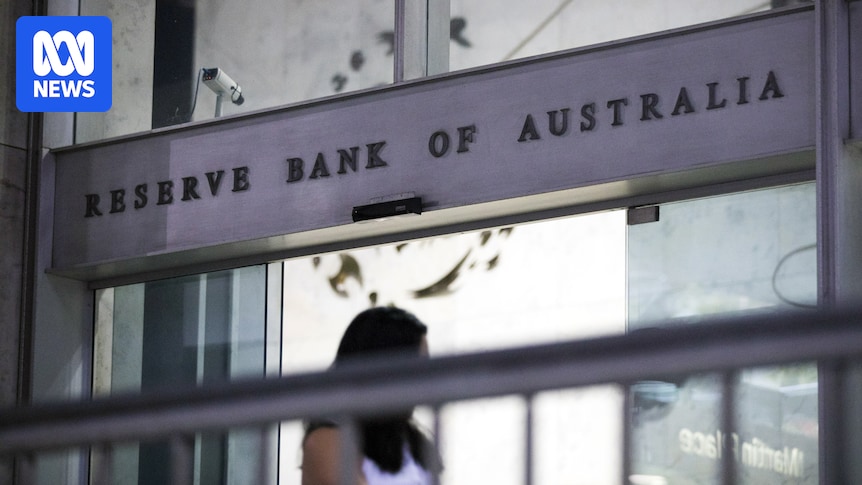
The Reserve Bank of Australia (RBA) faces mounting pressure to address rising inflation, which has reached 3.8% as of December 2025. This figure exceeds the RBA’s target range, prompting speculation about potential interest rate hikes.
Economists from major banks, including Westpac and ANZ, have revised their forecasts, now anticipating a 0.25 percentage point rate hike in the near future. Westpac’s chief economist, Luci Ellis, noted that the December quarter inflation data was pivotal in this decision.
“Further rate hikes possible but ‘one-and-done’ as a base case,” Ellis stated in her analysis.
Similarly, ANZ’s Adam Boyton suggested that the RBA might implement a single “insurance” tightening to address persistent inflationary pressures.
Meanwhile, Betashares’ chief economist David Bassanese argued that the RBA has “little choice” but to raise rates, citing ongoing inflationary pressures and a tight labor market.
Australian Wine Exports Hit by Declining Chinese Demand
In the agricultural sector, Australian wine exports have suffered due to a significant reduction in Chinese demand. The value of exports to China, Australia’s largest market, fell by 17% last year, contributing to an overall 8% decline in wine export value to $2.34 billion.
According to Peter Bailey of Wine Australia, Chinese consumers are drinking less alcohol, influenced by wellness trends and economic pressures. This decline follows a period of strong sales in 2024, when trade barriers were lifted.
“The Chinese wine market is one-third of the size it was five years ago,” Bailey remarked.
This trend poses challenges for Australian winemakers, who must navigate trade barriers and shifting consumer preferences.
As the RBA prepares for its upcoming meeting, all eyes will be on its decision regarding interest rates, which could have far-reaching implications for the Australian economy. The evolving landscape of international trade and domestic market dynamics continues to shape the economic outlook for 2026.