




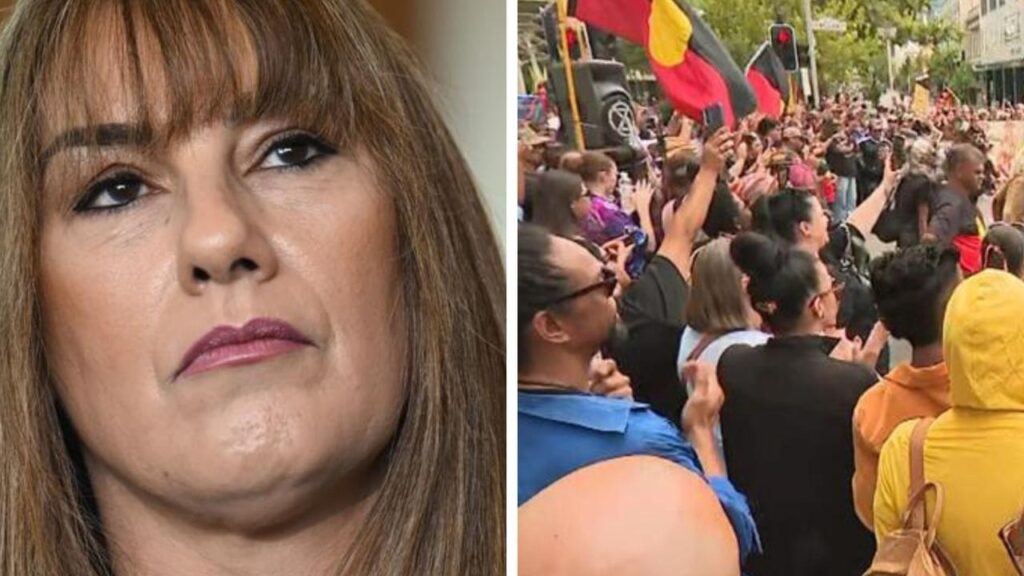
In a move set to resonate across Australia, the federal parliament is poised to formally condemn the attempted bombing of an ‘Invasion Day’ rally in Perth. The incident, which occurred on January 26, involved an alleged homemade explosive device being thrown into a crowd of First Nations people and their allies. This group was protesting the celebration of Australia Day, a date fraught with historical pain for Aboriginal and Torres Strait Islander communities.
Senator Lidia Thorpe has been vocal about the inadequate response to the attack, criticizing the lack of immediate national attention and the delayed establishment of a terror probe. Speaking to the ABC, she described the incident as a traumatic event that has not been met with the seriousness it deserves.
“Well it’s our Invasion Day and our Day of Mourning, where we have gathered for decades on the 26th of January, to come together,” she said. “And to have (an alleged) homemade fragmentation bomb packed with screws and ball bearings thrown into a crowd of families, and the nation falls silent, I think, is an absolute double standard and disrespectful to all of those families that are still traumatised and reeling in the hurt that this one lone man (allegedly) created for many people.”
National Conversation and Government Response
The alleged attack has sparked a broader conversation about racial violence and the government’s response to such incidents. Senator Thorpe emphasized the need for this to become a national dialogue, criticizing what she perceives as a tepid federal response.
“It’s all been watered down, compared to … other acts of violence … if it was a synagogue or a mosque, or what we saw at Bondi, (where) sadly, you know, too many people lost their lives,” she said. “But if that bomb had gone off, it would have been just as bad.”
Senator Thorpe is set to move a motion in the Upper House, urging parliamentarians to support a condemnation of the attempted bombing. She is in discussions with the Labor party to secure backing for the motion in the Senate.
Historical Context and Rising Tensions
The events of January 26 have deep historical roots, with Australia Day marking the arrival of the First Fleet in 1788, a date that many Indigenous Australians associate with the beginning of colonial violence and dispossession. The ‘Invasion Day’ rallies have become a platform for expressing the pain and injustices faced by First Nations communities.
Senator Thorpe’s motion aims to not only condemn the attempted bombing but also to highlight the rising tide of racism and hate directed at First Peoples. She has called for a unified response from parliament to address these issues.
“The motion I will put forward condemns the attempted bombing, expresses solidarity with those affected, and acknowledges the deep trauma it caused,” she stated. “It makes clear that racism and hate directed at First Peoples are real, rising, and must be taken seriously by this parliament.”
Implications and the Path Forward
The condemnation motion represents a significant step towards acknowledging and addressing racial violence in Australia. Senator Thorpe has expressed a desire for the parliament to present a united front, emphasizing the importance of solidarity with First Peoples, particularly Noongar Elders and communities.
“This motion is about recognition, responsibility, and peace. First Peoples just want to live safely, with dignity, and without fear. The whole parliament should stand with them in solidarity,” she said.
The alleged bombing incident has highlighted the urgent need for leadership and a clear stance against all forms of violence and racism. As the parliament prepares to debate the motion, the nation watches closely, hoping for a decisive and united response that acknowledges the pain of the past and commits to a more inclusive future.