




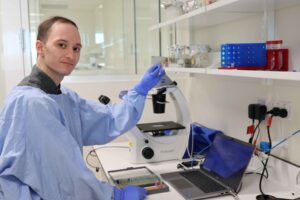
As global concerns mount over the impact of microscopic plastic particles on human health, researchers at Flinders University have spearheaded a groundbreaking study examining the potential for nanoplastics to accumulate in the kidneys, the body’s primary blood filtration system. This research, published in the esteemed journal Cell Biology and Toxicology, highlights the urgent need for further investigations into the long-term risks posed by high levels of nanoplastics, warning that such accumulation could severely compromise kidney cell health and function.
The study’s lead author, Hayden Gillings, a PhD candidate specializing in Nanoplastics and Health at Flinders University, emphasized the significance of their findings. “The findings demonstrate that while lower concentrations of NPs (less than 1 micron or 0.001mm in diameter) may not result in immediate toxicity to the kidney cells, particularly in terms of short-term exposure, higher burdens can compromise overall cell health and function, causing changes to the cell shape, survival, and cell regulation,” he stated.
Understanding the Study and Its Implications
The research team conducted laboratory tests on kidney cells, exposing them to varying concentrations and sizes of nanoplastics derived from commonly used polymers such as polystyrene (PS), poly(methyl methacrylate) or PMMA, and polyethylene (PE). The study was a collaborative effort, supported by medical scientists from Monash University and Flinders University’s College of Medicine and Public Health.
According to Gillings, the effects of nanoplastics are influenced not only by their concentration but also by the polymer composition and particle size. “The results also indicate that the effects are influenced not only by concentration but also by polymer composition and particle size, with some combinations inducing significant cellular changes even at relatively low doses,” he explained. This nuanced understanding underscores the complexity of nanoplastic interactions within biological systems.
Broader Context and Historical Parallels
The study’s findings arrive at a time when environmental scientists and public health experts are increasingly alert to the pervasive presence of microplastics and nanoplastics in the environment. These particles, often byproducts of industrial processes and consumer goods, have been detected in water sources, soil, and even the air we breathe. The potential health implications of such widespread exposure remain a critical area of inquiry.
Historically, the scientific community has drawn parallels between the current concerns over nanoplastics and past environmental health crises, such as the dangers of asbestos and lead exposure. In both instances, initial skepticism was eventually overcome by mounting evidence, leading to significant regulatory changes and public health interventions.
Expert Opinions and Future Directions
Experts in the field of toxicology and environmental health have called for a proactive approach in addressing the potential risks associated with nanoplastics. Dr. Emily Carter, an environmental toxicologist at Monash University, remarked, “We are only beginning to understand the full scope of nanoplastics’ impact on human health. This study is a crucial step in identifying potential risks and guiding future research.”
The research team at Flinders University advocates for comprehensive studies to evaluate the long-term effects of nanoplastic exposure, particularly focusing on chronic exposure scenarios and potential accumulation in human tissues. They emphasize the importance of interdisciplinary collaboration in tackling this complex issue.
By the Numbers: “Sustained or repeated damage to regulatory kidney cells could impair kidney function, reduce filtration efficiency, clearance capacity, and lead to their potential buildup of NPs in kidney tissue over time.” – Flinders University Research Team
Looking Ahead: Implications and Next Steps
As the scientific community continues to unravel the complexities of nanoplastic exposure, regulatory bodies and policymakers are urged to consider precautionary measures to mitigate potential health risks. This includes stricter regulations on plastic production and waste management, as well as increased funding for research into alternative, biodegradable materials.
The findings from Flinders University represent a significant contribution to our understanding of nanoplastics and their potential health impacts. As research progresses, it will be essential to translate these insights into actionable policies that protect public health and the environment.
In conclusion, the study serves as a clarion call for increased vigilance and research into the environmental and health implications of nanoplastics. The road ahead will require concerted efforts from scientists, policymakers, and the public to address this emerging challenge.