


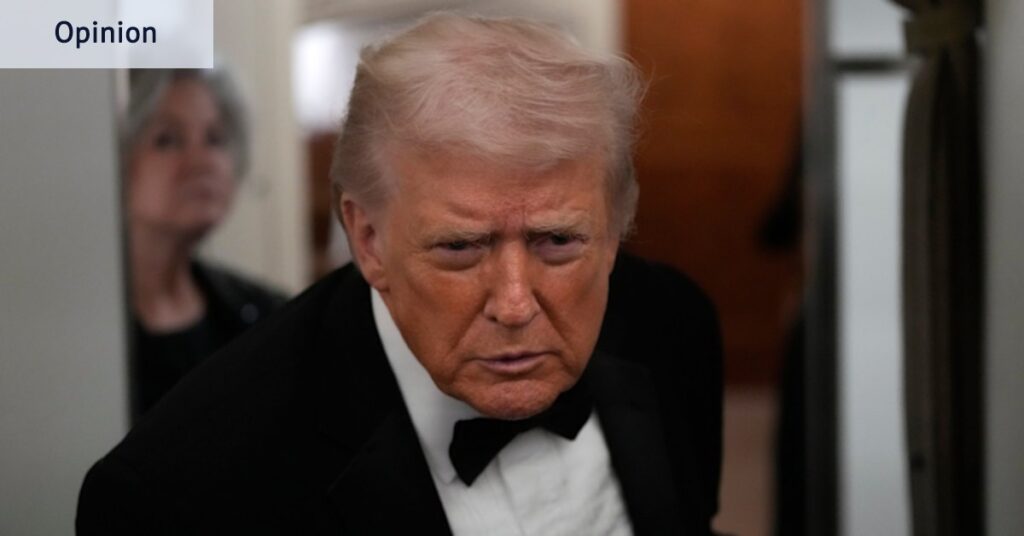
In a surprising yet calculated move, former President Donald Trump made headlines last Thursday with an unusual Oval Office appearance alongside rapper and vaccine conspiracy theorist Nicki Minaj. The meeting marked yet another instance of Trump seemingly retreating from a controversial stance, this time related to a weeklong turmoil in Minnesota where government agents were involved in the deaths of two demonstrators. The protests that followed forced Trump to step back, a pattern that has become a hallmark of his political strategy.
While some view these retreats as a sign of weakness, branding them under the acronym TACO, or “Trump Always Chickens Out,” a closer examination reveals a more deliberate approach. These cycles of aggression followed by retreat are not accidents but rather a calculated method of governance, akin to a corporate takeover strategy. Trump initiates with an extreme position, compelling his opponents to respond, thereby shifting the conversation to his terms.
Trump’s Negotiation Tactics
Trump’s approach to governance mirrors his business tactics, as outlined in his book, The Art of the Deal. He advocates for making an outrageous first offer, which makes subsequent negotiations appear more reasonable. This tactic is evident in his presidency, where he frequently introduced bold initiatives, only to scale them back after provoking public and political reactions.
For instance, the administration’s announcement of a desire to take over Greenland caused international panic, only to end in a non-committal framework. Similarly, Trump’s decision to allow a 43-day government shutdown disrupted millions of lives before he eventually relented. These actions illustrate a pattern of using shock tactics to test the limits of his authority and to normalize extreme measures.
Testing Democratic Norms
Trump’s presidency has been marked by a series of power plays aimed at expanding his influence. Deployments of ICE in cities like Chicago, Los Angeles, Portland, and Minnesota have triggered protests, which Trump used as opportunities to assert control by deploying armed forces. Each instance pushes the boundaries of democratic norms, gradually shifting the perception of what is acceptable.
“Trump’s strategy involves prodding the soft underbelly of democratic norms, seeing how far they can be stretched,” said a political analyst.
These maneuvers are not mere distractions but deliberate attempts to consolidate power. Even when faced with limits, each action sets a precedent, making the next move less shocking and more palatable to the public.
International Implications
On the international stage, Trump’s tactics have been equally bold. Proposals like the US takeover of the Gaza Strip to create a “Riviera of the Middle East” or the kidnapping of Venezuela’s president demonstrate a willingness to engage in high-stakes brinkmanship. These actions, while often walked back, serve to unsettle global norms and create leverage for the United States.
According to Trump’s Treasury Secretary, Scott Bessent, the strategy is about achieving maximum negotiating leverage before engaging in serious discussions. This approach has reshaped the traditional game of American power, focusing less on global governance and more on emulating authoritarian control.
The Future of American Power
The danger of Trump’s strategy lies not in a sudden seizure of absolute power but in the incremental erosion of democratic constraints. By continually pushing boundaries, Trump has redefined the role of the presidency, challenging the conventions that have historically limited executive power.
Cory Alpert, a PhD researcher at the University of Melbourne and former White House staffer, notes that while Trump’s tactics offer a chance to rethink governance for the 21st century, they also present significant risks. “The concern is not just about what Trump does, but how these actions become normalized, altering the fabric of American democracy,” Alpert explains.
As Trump continues to navigate his post-presidency with the same bold tactics, the question remains: how far can he push before the system pushes back? The implications for future administrations and the resilience of democratic institutions are profound, requiring careful consideration and vigilance.