



Minneapolis, a city already familiar with the weight of tragedy, finds itself at the epicenter of a new wave of grief and anger. Local activist and chef Michael Wilson led a crowd in a tribute to nurse Alex Pretti, whose death at the hands of federal immigration agents has sparked outrage. As mourners gathered in the freezing cold, a spontaneous chant erupted: “All. Nurses. Want. Peace.”
The atmosphere was charged with emotion as Wilson reminded the crowd of Pretti’s role as a medic for veterans. “They’re telling us a nurse for the VA was a domestic terrorist,” he exclaimed, highlighting the disbelief and despair felt by many. Pretti’s death follows the recent killing of Renee Good, another American citizen, by federal agents, adding to the community’s sense of injustice.
Community Outcry and Calls for Change
Debbie Claypool, a resident from Fridley, expressed her grief over what she sees as a threat to democracy. “This is fascism,” she stated, drawing parallels to her mother’s experiences in Nazi Germany. The sentiment is echoed throughout Whittier, where graffiti and protest posters dominate the landscape, calling for the abolition of ICE.
The Trump administration’s focus on Minneapolis has intensified tensions, with 3,000 ICE agents deployed and accusations against state leaders for allegedly inciting hysteria. Vice President JD Vance commented on the situation, attributing the chaos to “far-left agitators” working with local authorities.
A City Under Siege
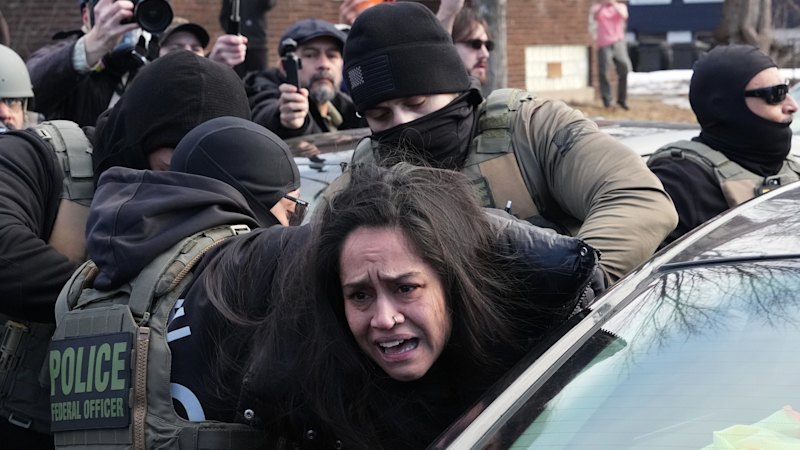
Minneapolis, despite its picturesque winter setting, feels besieged. The presence of masked federal agents and the conflict between local and federal authorities have created an atmosphere of fear and uncertainty. Residents like Liz Lee describe the unsettling reality of living in a city where armed agents could appear at any moment.
“It’s just wild,” Lee said. “We’re not getting involved, and we’re still at risk of getting detained. It just seems against everything that this country was built for.”
Meanwhile, some, like a recent transplant from New York, question the protests. “I don’t understand the protesters’ argument,” he said, noting a lack of clear communication from the left about immigration policies. However, he acknowledged concerns over the conduct of ICE agents.
Historical Context and Political Divides
The situation in Minneapolis is reminiscent of past civil rights struggles, where federal intervention and local resistance clashed. The city’s current turmoil reflects broader national divides, with differing views on immigration and law enforcement.
Carolyn Pare, a former Minnesota resident, returned to protest, emphasizing the need to speak out against injustice. “Nobody deserves to die,” she asserted, challenging the narrative that protesters were responsible for their own deaths.
“The reality is what we’re doing to people is just awful,” Pare said, highlighting the moral imperative to address these issues.
Looking Forward
As Minneapolis grapples with these events, the community’s response could shape the national conversation on immigration and federal authority. The city’s experience serves as a microcosm of the broader American divide, where differing ideologies and historical grievances intersect.
For many, the hope is that this moment of grief and anger will lead to meaningful change. As the city mourns Alex Pretti and others, the call for peace and justice remains strong, echoing through the streets of Minneapolis and beyond.