




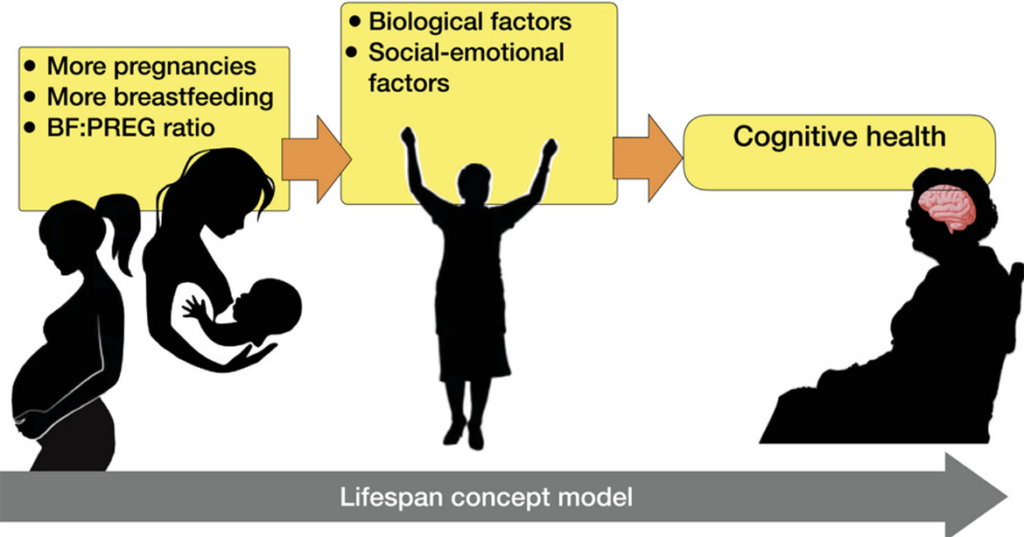
In a groundbreaking study, researchers from UCLA have uncovered a significant link between pregnancy, breastfeeding, and enhanced cognitive abilities in postmenopausal women. Led by anthropology professor Molly Fox, the study was published in the journal Alzheimer’s & Dementia and highlights the long-term cognitive benefits associated with reproductive history.
The research utilized data from the Women’s Health Initiative Memory Study and the Women’s Health Initiative Study of Cognitive Aging, which tracked over 7,000 women aged approximately 70 for up to 13 years. The findings reveal that increased cumulative time spent pregnant and breastfeeding correlates with improved cognition, verbal memory, and visual memory in later life.
Understanding the Cognitive Benefits
Historically, the structural and functional changes in female brains during pregnancy have been well-documented, yet the cognitive health implications remained largely unexplored. The study conducted by Fox and her team aimed to fill this gap, especially considering that women are disproportionately affected by Alzheimer’s disease, a disparity not entirely explained by lifespan differences.
“Any ways in which we can focus public health outreach or clinical interventions toward higher-risk populations leads to more effective and efficient efforts,” Fox stated.
The researchers hypothesized that longer breastfeeding periods, more pregnancies, and a greater ratio of the two would correspond with better cognitive function in postmenopausal women. Their results supported this hypothesis, demonstrating that women who were pregnant for an average of 30.5 months had a 0.31% higher global cognition score compared to those who had never been pregnant. Similarly, women who breastfed for an average of 11.6 months had a 0.12% higher global cognition score.
Statistical Insights and Comparisons
The study’s results indicated that each additional month of pregnancy was associated with a 0.01-point increase in overall cognitive ability, while each additional month of breastfeeding showed the same increase, along with a 0.02-point rise in verbal and visual memory scores. Although these effect sizes are modest, they are comparable to other known protective factors such as non-smoking and high physical activity.
By the Numbers: Women who had been pregnant had 0.60-point higher cognitive ability scores, and those who breastfed had 0.19-point higher scores and 0.27-point higher verbal memory scores compared to women who never experienced these reproductive events.
These findings suggest that even small changes in a person’s risk of developing Alzheimer’s are significant, given the disease’s prevalence and the challenges in prevention and treatment.
Exploring Biological and Sociocultural Factors
While the study supports a connection between reproductive history and long-term brain resilience, questions remain about the underlying biological and sociocultural mechanisms. The researchers propose that having more adult children might contribute to increased cognitive health, as supportive relationships could buffer stress, promote well-being, or encourage healthy behaviors.
The team is now focused on identifying the mechanisms that link reproductive histories to cognitive resilience. This information could lead to new therapeutic opportunities that replicate or enhance the protective effects observed in women with specific reproductive histories.
“If we can figure out, as a next step, why those reproductive patterns lead to better cognitive outcomes in old age, then we can work toward figuring out how to craft therapies — for example, new drugs, repurposed drugs or social programs — that mimic the naturally-occurring effect we observed,” Fox explained.
Implications for Future Research and Public Health
The study’s findings may pave the way for advancements in preventative strategies targeting women at greater risk of Alzheimer’s disease. At a population level, understanding these patterns could inspire further research into how changing fertility behaviors might affect trends in brain aging.
Studies like the one led by Fox contribute to a growing body of evidence suggesting that pregnancy and breastfeeding may play a crucial role in brain function, with lasting implications for women’s health across generations. Data from the Women’s Health Initiative Memory Study and the Women’s Health Initiative Study of Cognitive Aging were instrumental in supporting these findings, with postmenopausal women participating in reproductive history interviews and annual cognitive assessments.
This research was conducted by the Women’s Health Initiative and received partial funding from the National Heart, Lung, and Blood Institute under the National Institutes of Health, with additional support for Fox from the National Institute on Aging.