


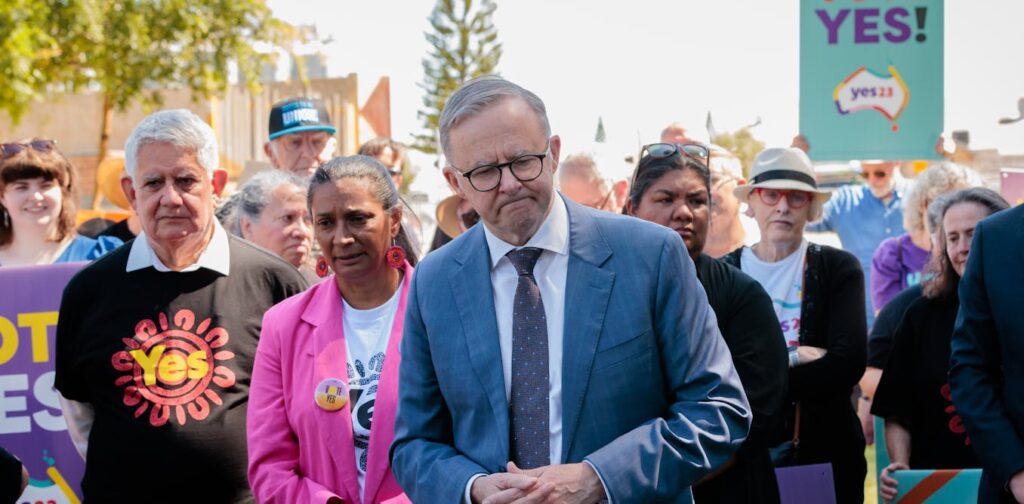
More than two years have passed since the failure of the referendum on an Aboriginal and Torres Strait Islander Voice, yet its story remains a critical lesson in political missteps and missed opportunities. Initially perceived as a tale of inevitable defeat, the referendum’s failure was not preordained. It was a carefully developed proposal for constitutional reform, nurtured over a decade under various federal administrations.
Despite the groundwork, the Albanese government’s approach was marred by a lack of preparation and genuine engagement with First Nations people. This misstep was compounded by a misunderstanding of the political landscape post the Coalition’s 2022 election defeat. The No campaign, driven by misleading political rhetoric, further complicated the environment, highlighting the need for regulated political discourse.
The Roots of the Referendum’s Failure
The Voice referendum was not doomed from inception. It was a product of extensive deliberation and bipartisan oversight. However, the Albanese administration’s decision to announce the referendum before adequately preparing for it set a precedent for failure. The government’s overconfidence and reluctance to consult with First Nations stakeholders who had championed the reform for years were significant missteps.
Political scientist Professor Chris Wallace identified a pattern in Prime Minister Anthony Albanese’s leadership style: a tendency to overestimate his political acumen while disregarding alternative perspectives. This approach was evident in the rushed and flawed preparation for the Voice referendum, where critical groundwork like civics education and referendum legislation reform was neglected.
Outsourcing and Overconfidence
The government’s strategy involved outsourcing the political heavy lifting to First Nations people, a decision that undermined the referendum’s potential success. As economist Professor John Quiggin noted, Albanese often makes announcements and leaves the challenging tasks to others. This was evident in the Voice campaign, where the responsibility for garnering bipartisanship was shifted away from the government.
The Voice was not merely symbolic; it was a substantive reform emerging from the First Nations Regional Dialogues and the Uluru Statement from the Heart. Yet, the government’s reluctance to engage with those intimately involved in the process left it unprepared to articulate the Voice’s purpose or defend it against opposition.
The Ongoing Need for Reform
Despite the referendum’s defeat, the necessity for a Voice remains. The government’s focus has returned to economic empowerment and Closing the Gap, but without addressing the structural issues that perpetuate these disparities. The absence of a durable representative institution for Indigenous participation highlights the need for constitutional guarantees insulated from majoritarian politics.
Some state governments have taken steps towards addressing these challenges. Victoria, for instance, enacted legislation to establish a statewide treaty, creating a stable representative body, Gellung Warl, to engage with government on matters affecting Aboriginal people. This mirrors the federal Voice’s logic, underscoring the ongoing demand for reform.
Preparing for Future Constitutional Change
Australia’s democracy cannot afford stagnation. The lessons from the 2023 referendum must inform future attempts at constitutional change. Sustained civics education and modernised referendum legislation are crucial, as is the establishment of a standing constitutional commission to research and develop future proposals.
Ultimately, structural reform should not be treated as a political maneuver but as a process essential for enhancing Australian democracy. It requires preparation, humility, and sustained engagement to ensure all Australians can participate in meaningful change.
As inklings of constitutional change inevitably emerge, the hope is that Australia will have developed the constitutional maturity that was lacking in 2023. This maturity will be vital for embracing reforms that reflect the diverse and evolving nature of Australian society.