


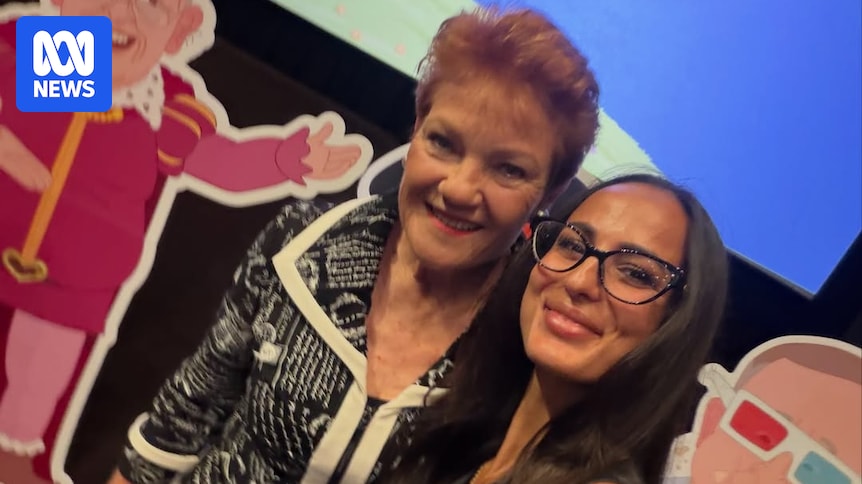
A One Nation party official’s video, filmed on the streets of Melbourne, has sparked significant controversy by suggesting the city “doesn’t look like a Western nation at all.” Bianca Colecchia, the Victorian state secretary for One Nation, has called for Australia to limit its intake of migrants from “non-culturally cohesive countries.” The video, which was posted online last month, has drawn criticism from multicultural groups and politicians across the political spectrum, who accuse the minor party of attempting to divide the nation.
The footage, captured on New Year’s Eve, features Ms. Colecchia inviting viewers to “spot the Westerner” among the crowds in Melbourne’s CBD. She argues that the scenes depict a failure of multiculturalism, claiming it erodes cultural identity and cohesion. “Because no matter how individually they might be good people, it is a problem at the collective level,” she stated. Ms. Colecchia, an Italian immigrant to Australia, contends that those “supposed to be in the minority” are now a larger demographic group, suggesting that “all of a sudden we are in the minority.”
Political and Public Backlash
The video has been met with strong opposition from various political and community leaders. Liberal NSW senator Maria Kovacic criticized One Nation for “thriving on dividing Australians” without offering real solutions. “They conveniently forget that Australia was built by millions of different faces and many different cultures,” she said, pointing out that issues like housing shortages are due to policy failures, not migrants.
Multicultural Affairs Minister Anne Aly emphasized that modern Australia is a place where everyone is “free to live without division, no matter their background.” She asserted that undermining this principle is un-Australian and has no place in the nation. Farah Farouque, CEO of the Ethnic Communities’ Council of Victoria, labeled the video “utterly ridiculous” and “provocative,” dismissing it as clickbait.
“Migration is foundational to Australia’s success,” said Ms. Farouque. “Enter any busy hospital and see the global talent pool we rely on.”
One Nation’s Immigration Policy
One Nation’s immigration stance, which includes capping visas at 130,000 annually and an eight-year waiting period for citizenship, has been a focal point of their platform. The party also advocates withdrawing from the UN Refugee Convention. A recent survey by Redbridge revealed that 35% of voters support One Nation’s migration policies, highlighting the party’s growing influence.
Ms. Colecchia defended her video, arguing that if demographic changes in Melbourne are seen as “harmful,” it indicates an uncomfortable truth needing discussion. She referenced Europe as a cautionary example of migration from “culturally incompatible” countries without integration.
Expert Opinions and Community Impact
Peter Doukas, chair of the Federation of Ethnic Communities’ Councils of Australia, dismissed One Nation’s claims about multiculturalism as a failure. He emphasized that no single ethnic or cultural tradition holds a monopoly over Australian patriotism. Democracy in Colour’s national director, Noura Mansour, described the video as “harmful” and a tactic to divide migrant communities.
“The video attempts to create a hierarchy of migrants,” stated Ms. Mansour. “We reject this obviously, because we believe everyone has the right to seek safety and better living conditions.”
Ms. Mansour also noted a “sharp increase” in attacks against multicultural communities, including Islamophobia and antisemitism, linked to anti-migrant rhetoric. She reminded Australians that unless they are First Nations, they are migrants on this land.
Looking Forward
As One Nation’s support appears to grow, the party’s immigration policies and rhetoric continue to be scrutinized. Ms. Colecchia claims that Australians are seeking leaders who prioritize them, linking migration issues to housing and health affordability. However, the backlash from political leaders and multicultural advocates suggests that the conversation around immigration and cultural identity in Australia remains complex and contentious.
The debate over multiculturalism and migration policies is likely to intensify as Australia approaches upcoming elections, with parties vying to address voter concerns while maintaining the country’s diverse and inclusive ethos.