


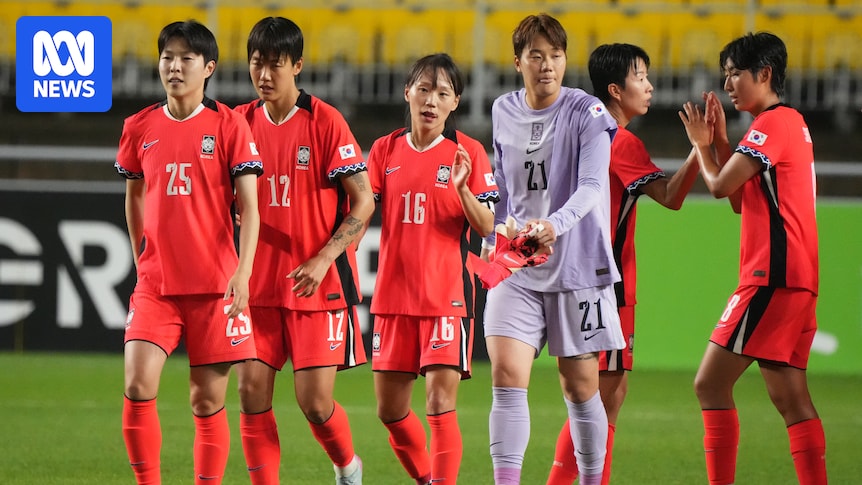
A potential boycott of the forthcoming Asian Cup by South Korea’s women’s football team could have “devastating” repercussions, according to Matildas legend Sarah Walsh. The South Korean players have threatened to withdraw from the tournament, set to take place in Australia, citing “harsh and unreasonable conditions” imposed by their national federation.
The controversy stems from a statement signed on September 26 last year, in which the Korea Football Association (KFA) was accused of deeming “equal treatment with the men’s national team as unreasonable.” The players demanded a response by October 17, ahead of the tournament’s commencement on March 1. Although the KFA responded on the deadline day, the players’ union claimed in a subsequent statement on January 23 that no further dialogue had occurred.
Background and Current Developments
Parts of the original statement were leaked to local media, escalating tensions between the players and the federation. The Matildas are scheduled to face South Korea, the team that ended their last Asian Cup campaign in 2022, in the group stages on March 8 in Sydney.
Sarah Walsh, a former Matildas striker and now chief operating officer of the tournament’s local organizing committee, emphasized that the issue is outside their jurisdiction. “We don’t have a lot to do with that. The AFC (Asian Football Confederation), as the competition owner, is responsible for bringing in all the teams,” Walsh stated. “I’m watching it very closely. Obviously, it will be devastating if the team were unable to travel.”
“Having been a part of many CBAs, I expect there to be a resolution one way or another. It’s a Korean Football Association matter to solve, but AFC will be watching very closely.” — Sarah Walsh
The Role of the AFC and the Organizing Committee
The potential withdrawal of South Korea from the tournament poses significant challenges for the AFC, which is responsible for the overall organization of the event. Walsh assured that the local organizing committee is prepared to provide state-of-the-art facilities for all participating nations. “What we are responsible for is running the matches once they’re here,” she explained. “For us, when they’re on the ground, they’re in our care. We make sure that they have some of the best hotels and training grounds they’ve ever had.”
Meanwhile, Football Australia interim chief executive Heather Garriock, who was part of Australia’s trophy-winning Asian Cup run in 2010 alongside Walsh, stated that the Matildas are focusing on their preparation and not on potential disruptions. “We’re focused on ourselves,” Garriock said. “We are proud at Football Australia that we have gender equity. It took a long time to get there, but we’re there, and we’re proud to say that. And for South Korea, we just can’t wait to play them, whatever the team.”
Implications and Future Outlook
The potential boycott highlights ongoing issues of gender inequality in sports, particularly in football, where disparities in treatment and compensation between male and female players remain a contentious issue. The situation in South Korea echoes similar struggles faced by women’s teams worldwide, including the United States, where female players have fought for equal pay and conditions.
As the deadline for resolving the dispute approaches, the football community is watching closely. The outcome could set a precedent for how similar issues are handled in the future. The AFC’s response and the KFA’s willingness to engage in meaningful dialogue will be crucial in determining whether the situation can be resolved amicably.
The Asian Cup, a significant event in the women’s football calendar, is not only a platform for showcasing talent but also an opportunity to advance the cause of gender equality in sports. The resolution of this conflict will be a test of the commitment of football’s governing bodies to uphold these values.
As the tournament draws near, all eyes will be on the AFC and the KFA to see how they navigate this crisis. The hope is that a resolution can be reached that satisfies the players’ demands for fair treatment, allowing the focus to return to the pitch and the beautiful game.