




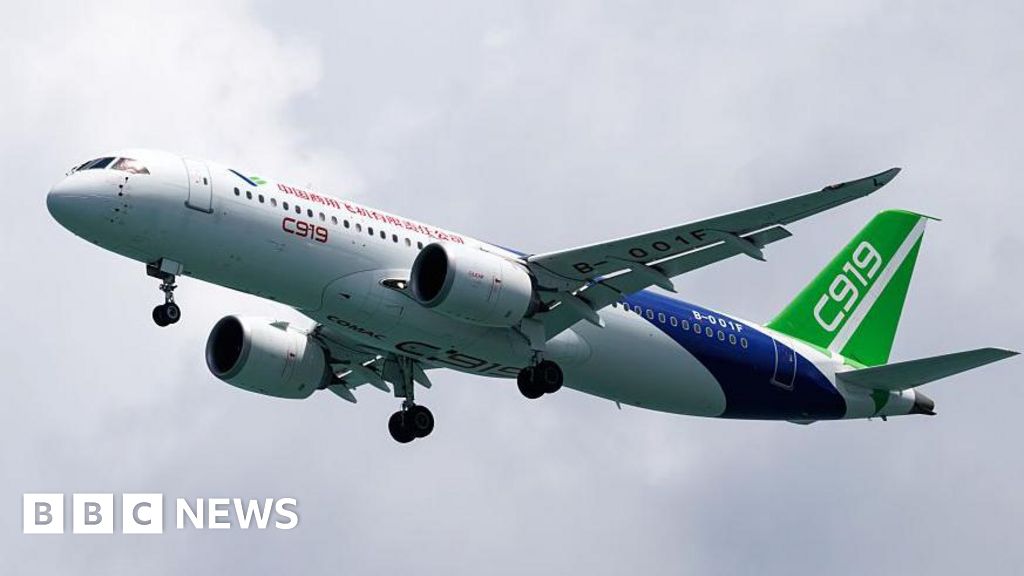
At the Singapore Airshow, one booth is capturing significant attention: Comac, China’s state-owned aircraft manufacturer, which has been making notable progress since its C919 passenger jet embarked on its maiden international journey to Singapore two years ago. For Comac, this event is an opportunity to establish itself as a formidable contender to industry giants Airbus and Boeing in the Asia-Pacific region, the world’s fastest-growing aviation market. This comes at a time when airlines are struggling with delivery delays and strained supply chains.
Willie Walsh, director general of the International Air Transport Association (IATA), expressed optimism about Comac’s future, stating, “I think in time, Comac will be a global competitor… but it’s going to take them time.” He further predicted, “I think 10 years, 15 years from now, we’ll be talking about Boeing, Airbus and Comac… But without question, they will be a considerable player in the future.”
Challenges and Opportunities in the Aviation Market
According to IATA data, global airlines are experiencing unprecedented delays in receiving new aircraft, which is pushing up the average age of fleets and increasing operating costs due to the inefficiency of older planes. Walsh noted that Asia-Pacific airlines could experience double-digit growth by 2026 if aircraft were more readily available. “It’s incredibly frustrating for airlines. The wait between making an order and taking delivery is about seven years,” he remarked.
Currently, over 150 Comac jets are operational within China, with additional aircraft serving in Laos, Indonesia, and Vietnam. Notably, Brunei’s GallopAir has placed a substantial order for Comac planes, and Cambodia plans to acquire approximately 20 aircraft.
“We need more suppliers in the supply chain,” said Subhas Menon, director general of the Association for Asia Pacific Airlines (AAPA). “The problem with this industry is that the supply chain is an oligopoly and sometimes even a duopoly.”
Strategic Positioning and Market Expansion
Comac benefits from robust government support and competitive pricing, which makes its aircraft attractive to budget airlines in emerging markets. Mike Szucs, CEO of low-cost Philippine carrier Cebu Pacific, commented, “In the future we welcome all newcomers. We are keen to see more competition. Comac has got its certification process to go through and at some point in the 2030s, we see that it will be an offering that would be attractive to ourselves and other carriers.”
Beyond Asia-Pacific, Comac is also seeking European certification, with regulators currently conducting test flights on its C919 model. Achieving this certification would enable Comac to penetrate the European market, a move anticipated to take until 2028 or even 2031, according to regulators.
Technical and Logistical Hurdles
Despite its ambitions, Comac faces several technical challenges, including harmonizing a mix of Chinese and Western parts, flight controls, and software for international orders. Additionally, building maintenance and repair infrastructure, as well as establishing pilot training programs, remain significant hurdles. These are areas where established manufacturers like Boeing and Airbus have long-standing systems and infrastructure.
Competitive Landscape and Future Prospects
Meanwhile, Boeing and Airbus continue to maintain a strong presence at the Singapore Airshow and across the region. Both manufacturers are signaling to local carriers that the persistent aircraft delivery delays, which have long frustrated airlines, are beginning to improve.
The emergence of Comac as a potential competitor represents a significant shift in the global aviation industry. As the company continues to expand its reach and overcome technical and logistical challenges, it could reshape the competitive dynamics of the market, offering airlines more options and potentially driving innovation and efficiency.
As Comac navigates the complexities of international expansion, the aviation industry will be closely watching its progress. The next decade promises to be a transformative period for the sector, with the potential for new players to redefine the landscape.