




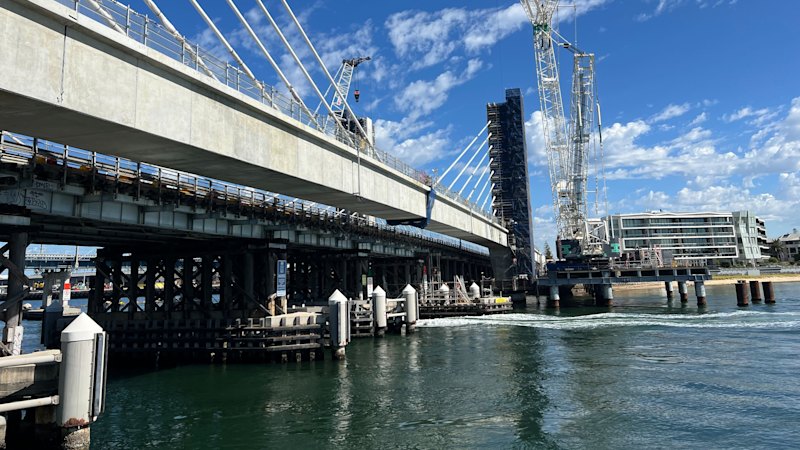
On February 1, 2026, the historic Fremantle Traffic Bridge, a fixture since 1939, officially closed to make way for a modern replacement. The decision, announced by Transport Minister Rita Saffioti, marks the beginning of a significant transition for one of Perth’s busiest transport corridors.
The closure of the bridge, which has been reinforced over the years to extend its lifespan beyond the original 60-year estimate, paves the way for a new $430 million cable-stayed structure. This new bridge is expected to become an iconic crossing over the Swan River when it opens in 12 months. However, the interim period without this crucial river crossing is expected to pose significant challenges.
Historical Context and Current Developments
When the Fremantle Traffic Bridge was inaugurated in 1939, the decision to use timber instead of concrete and steel was met with skepticism. The Labor Willcock government at the time justified the choice by estimating a 60-year lifespan. Yet, thanks to concrete reinforcements, the bridge served the community for 87 years.
Now, as the old structure is set for demolition, the new bridge project has already begun to take shape. The construction site is a hive of activity, with the new bridge’s cross-sections already visible. This transition is part of a broader strategy to modernize Perth’s infrastructure.
Impact on Local Transport
The closure of the Fremantle bridge is the longest road network shutdown undertaken by the current government. Minister Saffioti acknowledged the disruption, stating, “When everyone supported this alignment, they knew that it involved the closure of the existing traffic bridge.” She expressed confidence that the new bridge would be operational by February next year, emphasizing the off-site construction work to minimize delays.
Meanwhile, the government has implemented significant changes to the local road network to manage traffic flow. The Stirling Highway bridge is expected to bear the brunt of redirected traffic, prompting alterations to the surrounding roadways, including the removal of east-west travel along Canning Highway at the Stirling Highway intersection.
Government Measures and Public Response
To mitigate the impact of the bridge closure, the government has increased public transport services. Additional bus routes to western suburbs schools and extra Transperth services are in place, with buses receiving priority at intersections. Furthermore, bicycles are allowed on the Fremantle line during peak hours, and 100 new car bays at Fremantle Station have been made available free of charge.
Minister Saffioti highlighted the government’s success in shifting freight from road to rail, stating that the percentage of freight moved by rail has increased from 13% to 26%.
Criticism and Concerns
Despite these efforts, the opposition has voiced concerns over the government’s handling of the situation. Shadow Transport Minister Steve Martin criticized the lack of detailed planning, stating, “The Minister’s one-sentence plan on freight, ‘working with industry to discuss options’ and generic lines about increased rail usage with no figures, point to a lack of preparation.”
“Repeating ‘Fremantle is still open for business’ is not a plan. Fremantle small business owners deserve more than that.” — Steve Martin, Shadow Transport Minister
Additionally, Greens leader and former Fremantle Mayor Brad Pettitt has been vocal about the need for better provisions for cyclists and pedestrians. He has called for reduced speed limits in Fremantle and East Fremantle and improvements to the bike path along the Stirling Highway bridge.
Looking Ahead
The closure of the Fremantle Traffic Bridge is a significant milestone in Perth’s infrastructure development. As the community navigates the challenges of the transition, the focus remains on ensuring that the new bridge meets the needs of a growing city. The government’s ability to manage the interim period effectively will likely influence public perception of this ambitious project.
With the new bridge set to open in a year, the coming months will be crucial in determining the success of this infrastructure overhaul. The community, local businesses, and government officials will be closely monitoring the situation, hoping for a smooth transition to a new era of connectivity across the Swan River.