




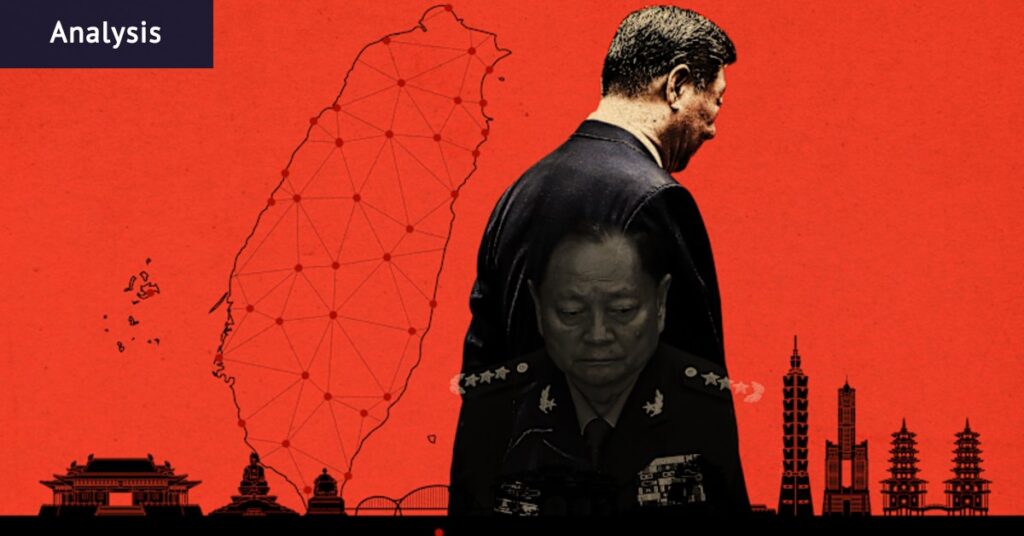
As geopolitical tensions simmer in the Indo-Pacific, the question of whether Chinese President Xi Jinping will move to annex Taiwan by 2027 looms large. This date has become a focal point for defense strategists and policymakers, particularly in the United States, where it serves as a catalyst for military preparedness and funding. Dr. Zack Cooper, an expert in US-China strategy at the American Enterprise Institute, notes, “2027 grabbed politicians in a way that nothing else had.”
The significance of 2027 as a potential flashpoint is underscored by Xi’s military ambitions and political maneuvers. At the 2023 APEC summit in San Francisco, Xi assured then-US President Joe Biden of China’s preference for peaceful unification with Taiwan, dismissing rumors of a military deadline. However, the Chinese leader has made it clear that he wants the “Taiwan question” resolved during his tenure, hinting at a possible fourth term in 2027.
Military Buildup and Strategic Purges
Since taking power in 2012, Xi has overseen a significant expansion of China’s military capabilities. The People’s Liberation Army (PLA) has doubled its nuclear warhead stockpile to 600 since 2019, with projections to reach 1,000 by 2030. The PLA Navy now boasts the world’s largest maritime force, consisting of 234 warships compared to the US Navy’s 219, though it still lags in certain capabilities.
Despite these advancements, China’s military lacks combat experience, having not engaged in war since its 1979 conflict with Vietnam. The PLA’s recent war games around Taiwan, including its largest military drills to date, reflect an ongoing strategy of intimidation.
Xi’s recent purges of top military officials, including the removal of generals Zhang Youxia and Liu, have sparked speculation about internal dissatisfaction with the PLA’s progress. Analyst K. Tristan Tang suggests these purges were due to conflicting views on the 2027 timeline, with Zhang reportedly favoring a longer-term approach.
“This means China’s military cannot fight, as it has a broken chain of command and relative absence of war-fighting-related experience,” says Wen-Ti Sung of the Atlantic Council.
US and Taiwanese Responses
The US has responded to the perceived threat by approving a record $15.8 billion arms package to Taiwan. The Pentagon’s December report reaffirms the importance of the 2027 milestone, emphasizing China’s potential readiness to engage militarily by then.
In Taiwan, the 2027 timeline has become a key consideration in defense planning. Taiwanese military drills simulate scenarios of a Chinese invasion, and President Lai Ching-te has cited this timeline in advocating for increased defense spending.
“We won’t let the downfall of any one person make us lower our guard,” Taiwan Defence Minister Wellington Koo stated.
The Broader Implications
The fixation on 2027 raises questions about the broader geopolitical landscape. While some analysts argue that the focus on this date may distract from other strategic considerations, others believe it serves as a useful benchmark for assessing China’s intentions.
Yun Sun of the Stimson Centre notes a shift in Chinese attitudes towards Taiwan, influenced by perceptions of US commitment under former President Trump. She warns that a move by Beijing could be imminent if provoked by Taiwan.
“A military conflict over Taiwan would risk massive economic disruption, catastrophic military losses, significant social unrest, and devastating sanctions,” warns China expert Bonnie Glaser.
Meanwhile, China continues its campaign of grey-zone tactics, from cyberattacks to military patrols around Taiwan, aimed at wearing down the island’s defenses.
As the world watches, the question remains whether Xi will act on his ambitions by 2027 or if the complexities of military action and international diplomacy will prompt a more cautious approach. The coming years will be pivotal in determining the future of cross-Strait relations and the broader balance of power in the region.