




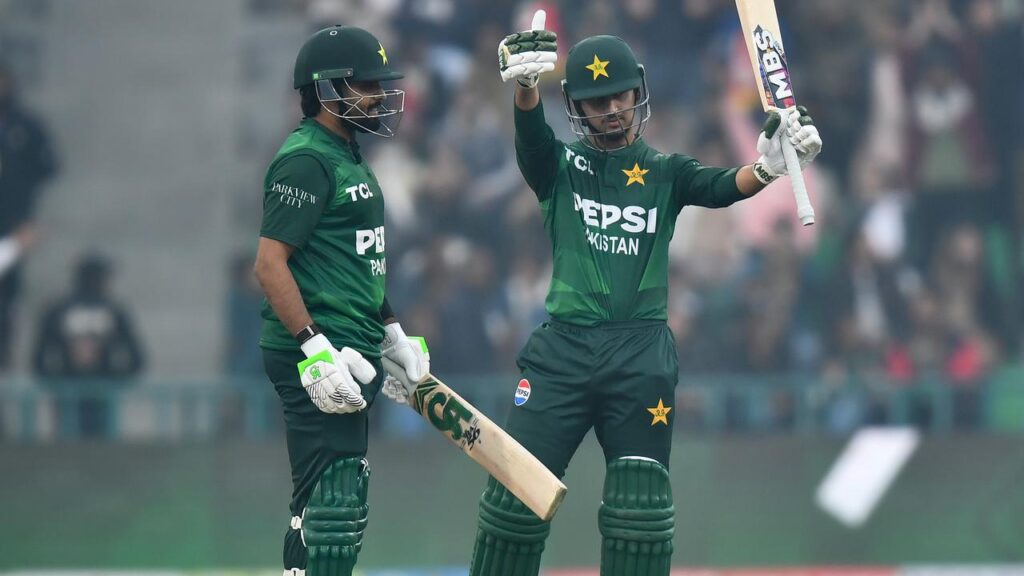
Pakistan’s decision to boycott its T20 World Cup match against arch-rivals India could result in a financial loss exceeding a quarter of a billion dollars for the global cricket community. The announcement was made by Pakistan’s Shahbaz Sharif-led coalition government on Sunday, confirming that the national team would not participate in the group-stage match scheduled for February 15 at Colombo’s R. Premadasa Stadium.
The decision follows a week of intense speculation regarding Pakistan’s participation in the International Cricket Council (ICC) tournament. Last week, Pakistan Cricket Board (PCB) chief Mohsin Naqvi threatened a boycott after the ICC dismissed Bangladesh’s request to relocate their matches to Sri Lanka due to security concerns. Bangladesh was subsequently excluded from the tournament and replaced by Scotland.
Naqvi criticized the ICC for “double standards,” citing the organization’s previous decision to allow India to skip traveling to Pakistan for the Champions Trophy last year, labeling it as an “injustice.” The ICC has urged the PCB to reconsider the boycott, highlighting the “significant and long-term implications” for the global game and fans worldwide, including millions in Pakistan.
Financial Stakes and Broadcast Rights
Pakistan and India have not engaged in bilateral cricket since 2012 due to ongoing political tensions, only competing against each other in multi-nation events. Their matches are pivotal to the broadcast rights value of ICC tournaments. Last year’s Champions Trophy match between the two nations attracted an audience of 206 million viewers.
According to The Age, each India-Pakistan match from 2023 to 2027 is valued at approximately US$250 million (AU$358 million) as part of a US$3 billion deal between the ICC and host broadcaster JioStar.
Sami Ul Hasan, former ICC head of media and communications, explained to Al Jazeera, “It’s all about maximizing eyeballs and tournament revenue. Organizers ensure India and Pakistan face each other at least once in every ICC men’s event.”
Potential Consequences and Sanctions
The 2026 T20 World Cup playing conditions are yet to be disclosed, but it is anticipated that India will be awarded two points if Pakistan forfeits the match. The net run rate could also be affected, and the ICC might impose more severe off-field sanctions.
During the 2024 event, the rules stated, “The net run rate of the defaulting team shall be affected in that the full 20 overs of the defaulting team’s innings in such forfeited match shall be taken into account in calculating the average runs per over of the defaulting team over the course of the relevant portion of the competition.”
Pakistan, competing against associate nations Namibia, Netherlands, and the USA in the pools, is still expected to advance to the Super Eights stage. However, their progression could be at risk if they encounter unexpected defeats or weather-related disruptions, similar to the previous year’s Women’s World Cup in Sri Lanka.
Political and Sporting Implications
There is also uncertainty regarding a potential India-Pakistan clash in the finals, with concerns about another possible forfeit. Former England captain Michael Atherton commented to The Times, “The game and the players are being used for political ends. The financial consequences for broadcasters, and consequently for the game, will be substantial as the India v Pakistan game is the most lucrative in world cricket.”
JioStar might leverage this uncertainty to negotiate lower prices in the future, impacting financially vulnerable countries, including Pakistan, while the international game continues to fracture and weaken amid the rise of franchise cricket.
The announcement comes at a time when the international cricket landscape is increasingly influenced by financial considerations and political tensions, raising questions about the future of traditional rivalries and the integrity of the sport.
As the situation unfolds, the cricketing world watches closely, with the potential for significant repercussions on both the sporting and financial fronts. The ICC’s response and subsequent actions by the PCB will be critical in shaping the future dynamics of international cricket.