



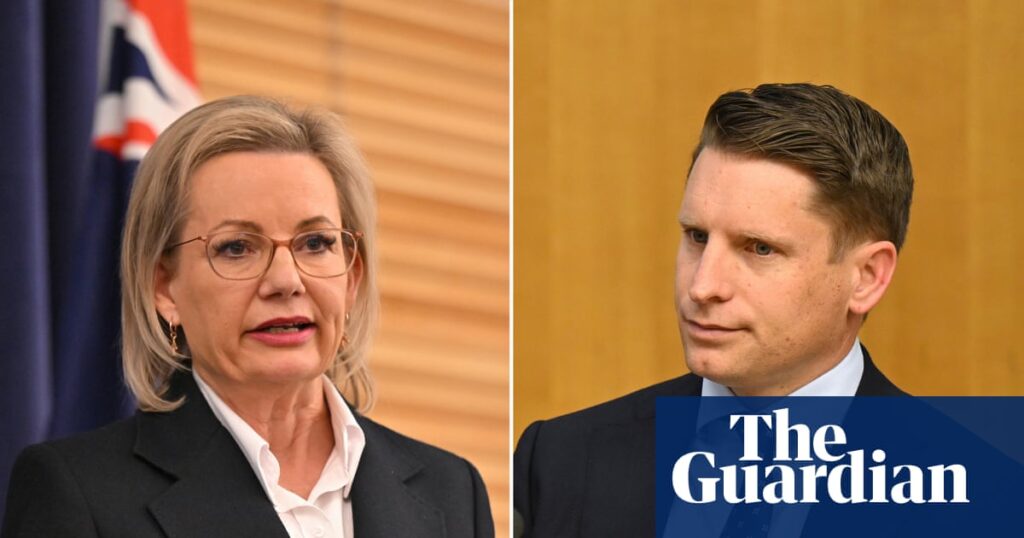
Amid a whirlwind of speculation, Andrew Hastie has decided not to challenge Sussan Ley for the leadership of the Liberal Party. This decision, announced late Friday, leaves many questioning the purpose of the past week’s political maneuvering.
Hastie, a former Special Air Service soldier, was never officially in the race, and technically, there was no contest to withdraw from. Yet, the political shadow-boxing has left Hastie wounded and embarrassed, casting doubt on his long-standing leadership ambitions.
The Rise and Fall of Hastie’s Leadership Bid
The speculation surrounding Hastie’s potential leadership challenge began in earnest last Friday. A group of supporters initiated a campaign to install him as leader, following Sussan Ley’s oversight of the second Coalition breakup in eight months. However, Hastie’s campaign had been brewing for months, marked by his nationalist vision on energy, immigration, and manufacturing—an agenda that served as a leadership pitch for a party in search of direction.
Hastie’s resignation from the shadow cabinet in October allowed him to advocate his agenda without restraint, setting the stage for a leadership bid when the opportunity arose. With the opposition’s poor polling performance, many conservative MPs anticipated a leadership spill around the federal budget in May. As the Coalition unraveled last week, Hastie and his allies saw a potential opening.
Political Realities and Internal Dynamics
Hastie, at 43, was seen as a candidate who could offer generational change and attract right-wing voters drifting towards Pauline Hanson’s One Nation. Some supporters imagined a scenario where Hastie’s rise to leadership would be so inevitable that fellow right-faction contender Angus Taylor would step aside, and Ley would allow a peaceful transition of power.
However, political realities proved otherwise. Even with the right’s support, Hastie faced challenges in gaining endorsement from his more moderate colleagues, given his extreme social views on issues like abortion. Taylor, at 59, had no intention of stepping aside. After inconclusive talks between Hastie and Taylor in Melbourne, Hastie sought to gauge his support among colleagues, receiving a clear answer.
“Having consulted with colleagues over the past week, and respecting their honest feedback to me, it is clear that I do not have the support needed to become leader of the Liberal Party,” Hastie stated.
Looking Forward: The Liberal Party’s Path
This marks the second time Hastie has refrained from a leadership contest, having previously declined after the 2025 election. Sources close to Hastie assert that his decision was self-determined, with no deal made with Taylor and no lingering animosity. Allies remain hopeful that Hastie will play a significant role alongside his conservative colleagues if he eventually challenges and defeats Ley.
Meanwhile, a source close to Taylor indicated that a formal bid to unseat Ley is a matter of “when, not if.” This gives Ley a temporary reprieve, as the timing for such a challenge is not expected to be immediate.
Although Ley narrowly defeated Taylor after the last election, the shifting dynamics within the Liberal party room do not guarantee a reversal of that result. Hastie’s allies caution against assuming that his supporters would automatically back Taylor, maintaining hope that Hastie will eventually be the party’s choice.
The Liberal Party faces a period of uncertainty, with internal divisions and leadership questions looming large. As the party navigates these challenges, the focus will be on unifying its factions and presenting a cohesive vision to regain voter confidence.