



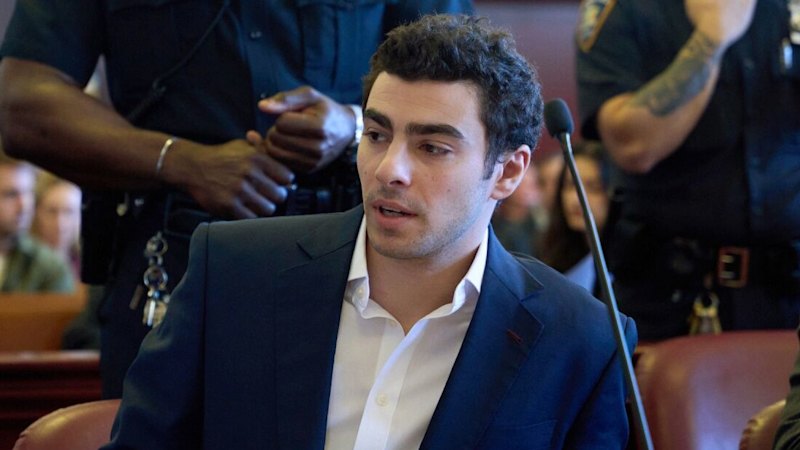
Luigi Mangione will not face the death penalty after a U.S. judge dismissed murder and weapons charges against him on Friday. The charges were related to the killing of UnitedHealthcare CEO Brian Thompson, marking a significant setback for federal prosecutors. The decision was rendered by U.S. District Judge Margaret Garnett in Manhattan, who cited Supreme Court precedents as the basis for her ruling.
Judge Garnett stated that the murder charge was legally incompatible with the two stalking charges Mangione still faces. Despite the dismissal, Mangione, 27, could still face life imprisonment without parole if convicted on the stalking charges. Federal prosecutor Dominic Gentile mentioned during a routine court hearing that the government has yet to decide on an appeal.
Background of the Case
Brian Thompson, who led UnitedHealth Group’s health insurance business, was tragically shot and killed on December 4, 2024, outside the Hilton hotel in midtown Manhattan. Mangione was arrested in Pennsylvania five days later and has since pleaded not guilty to all charges related to Thompson’s death. His arrest and subsequent charges have sparked widespread public interest, with some viewing him as a folk hero amid growing discontent over healthcare costs and insurance practices.
The case against Mangione has been fraught with legal complexities. Judge Garnett’s decision to dismiss the murder charge underscores the intricate legal landscape surrounding the case. She acknowledged that ordinary people might find the outcome perplexing, yet emphasized her duty to adhere to Supreme Court mandates.
Legal Analysis and Implications
In her 39-page decision, Judge Garnett explained that federal prosecutors could only pursue murder and weapons charges if the stalking charges were deemed “crimes of violence.” However, the charges did not meet this criterion, as the use of force could be interpreted as reckless rather than intentional conduct. Both prosecutors and Mangione agreed that this did not satisfy the Supreme Court’s definition of a crime of violence.
“The law must be the court’s only concern,” Judge Garnett stated, acknowledging the “tortured and strange” nature of the legal analysis required.
Despite dismissing the murder charge, Garnett rejected Mangione’s attempt to suppress evidence seized during his arrest. The evidence, which included a 9-millimeter pistol, silencer, and journal entries, was deemed admissible as police had probable cause for the search.
Future Proceedings and Broader Context
Jury selection for Mangione’s trial is scheduled to begin in September, with the trial’s evidence phase starting on October 12. In addition to the federal charges, Mangione faces separate murder, weapons, and forgery charges in a New York state court, though no trial date has been set for this case. The state prosecutors experienced a setback in September when two terrorism-related counts against Mangione were dismissed.
This case highlights ongoing debates about the intersection of legal technicalities and public perceptions of justice. The dismissal of the murder charge may fuel discussions on the adequacy of current legal frameworks in addressing violent crimes, particularly those involving high-profile victims.
Public Reaction and Next Steps
The public reaction to Mangione’s case has been polarized. While many officials have condemned the killing, some segments of the public have expressed sympathy for Mangione, viewing him as a symbol of resistance against perceived injustices in the healthcare system.
As the legal proceedings continue, attention will remain focused on the implications of Judge Garnett’s decision and the potential for an appeal by federal prosecutors. The case serves as a reminder of the complexities inherent in the legal system and the challenges of balancing legal principles with public expectations of justice.