



As Australians are advised to slip, slop, slap, seek, and slide to protect themselves from the sun, agricultural crops are increasingly in need of shade. The recent heatwave that swept across the southeast of the country shattered temperature records, with New South Wales and South Australia experiencing highs above 49 degrees Celsius. This extreme heat has prompted fruit-growing regions to seek innovative ways to safeguard crops and businesses against future heat events.
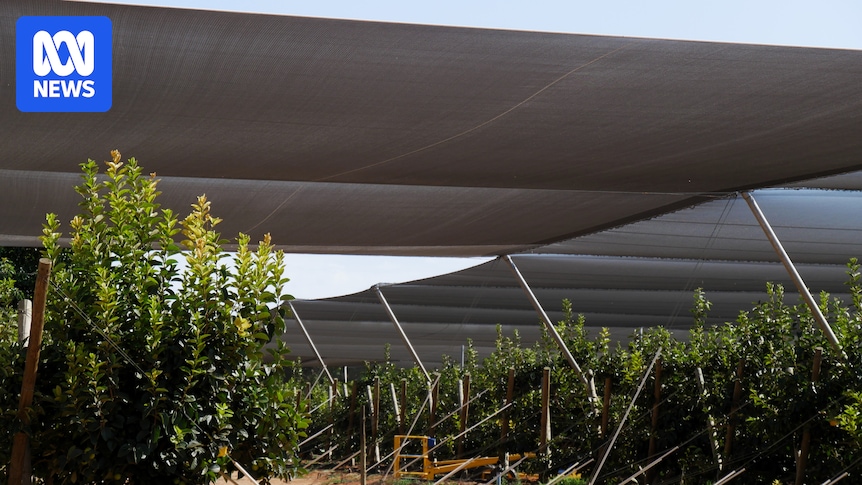
For Craig Burne, a persimmon and avocado grower in South Australia’s Riverland, netting infrastructure has become essential. “We have overhead misting systems that activate at 35 degrees to cool the avocado orchard, and we have nets for the persimmons,” he explained. “Without these systems, growing these crops in this climate would be nearly impossible.”
While some of Burne’s persimmon crop was affected by heat, it fared better than his avocado crops, which lacked netting. “Without those net structures, you’re not going to get through without crop loss,” he emphasized.
Netting: The Future of Crop Protection?
Kyle Lamont, sales director at G2 Netting Group, noted a significant increase in netting sales across Australia, particularly in regions like the Riverland, Sunraysia, and Goulburn Valley. “In the last five to ten years, there’s been a noticeable uptick in growers seeking protection,” he said. “During peak heatwaves, temperatures under netting structures can be 2 to 3 degrees cooler.”
Lamont highlighted the importance of sun protection for export markets in countries such as China, Korea, and Japan, which demand “pristine” fruit. However, installing netting structures can be costly, with expenses reaching approximately $60,000 per hectare. While small fruit producers may struggle to afford such infrastructure, for corporate growers, it’s a logical investment.
South Australia’s Department of Primary Industries and Regions had previously offered grants covering up to 50% of netting infrastructure costs for Riverland and Adelaide Hills growers, though this funding ended on June 30, 2025.
Climate Challenges and Adaptation
Adelaide University environmental health researcher Peng Bi warned that heatwaves will persist as a challenge across the country. “Heatwaves have occurred in 2009, 2014, 2019, 2024, and now 2026,” he noted. “These intense heatwaves impact society, including agricultural productivity.”
Professor Bi stressed the importance of climate change mitigation and adaptation. “Heatwaves will affect public health and likely impact farming communities and their outdoor activities,” he said.
In South Australia’s Riverland, Craig Burne is contemplating future strategies. “The question is whether to consolidate our business by reducing less productive avocado orchards and replanting persimmons under net,” he pondered. “Ideally, I’d have the entire farm under net, but avocados are just too large for that.”
Looking Ahead
The increasing frequency and intensity of heatwaves present a formidable challenge for Australia’s agricultural sector. As growers like Burne adapt to these conditions, the role of protective netting becomes ever more critical. While the costs can be prohibitive, the potential benefits in terms of crop survival and quality make it an investment worth considering for many. As climate patterns continue to shift, the agricultural industry must remain agile, adopting new technologies and strategies to ensure sustainability and resilience.