


Highguard’s launch has quickly become one of the most talked-about debuts of 2026, but not for the reasons its developers would have hoped. The new free-to-play PvPvE hero shooter from Wildlight Entertainment went live on January 26 and immediately drew massive interest on Steam, followed just as quickly by a wave of criticism that pushed its user rating into negative territory.
First revealed as the final announcement at The Game Awards 2025, Highguard arrived with high expectations, sceptical first impressions, and now, a divided community trying to decide whether the game deserves its rough start.
A Game Awards Reveal That Set The Tone
Highguard was unveiled last December as the “one last thing” reveal at The Game Awards, a slot usually reserved for established franchises or major surprises. Instead, the reaction online was muted at best. Many viewers criticised the reveal trailer for being underwhelming and unclear about what made the game different, with comparisons to Concord appearing almost immediately.
Following the reveal, Wildlight Entertainment largely went quiet until launch day, confirming only that the game would release on January 27 SGT. That silence fuelled further doubt, with some players openly questioning whether Highguard would be delayed or cancelled before it even launched.
Strong Launch Numbers On Steam
Despite the scepticism, Highguard’s launch numbers were undeniably impressive. Within its first hour on Steam, the game reached a peak of 97,249 concurrent players, placing it among the platform’s top ten most-played titles at the time. Even thirteen hours later, during off-peak hours for North America, more than 10,000 players were still active.
The numbers showed clear curiosity from players, helped by the game’s free-to-play model and crossplay support across PC, PlayStation 5, and Xbox Series X and S. However, strong interest did not translate into positive sentiment.
Overwhelmingly Negative Early Reception
Just hours after launch, Highguard’s Steam rating dropped to Overwhelmingly Negative, before climbing slightly to Mostly Negative. At the time of writing, only around 31 percent of user reviews are positive, with the remaining 69 percent rated negatively across multiple languages. Some positive reviews have even been flagged as sarcastic by other users.
By the end of January 27, more than 14,000 of the game’s roughly 20,000 Steam reviews were unfavourable, placing Highguard among the lowest-rated major launches on the platform this year.
Players Criticise Performance And Core Design
Many of the harshest reviews focus on how Highguard actually plays. Steam user ROUNDERHOUSE struck a sympathetic but critical tone, saying they “mostly just feel bad for the devs,” while arguing that the game “clearly wasn’t designed or prepared for this level of scrutiny.”
They described visuals as “blurry and unclear,” and criticised the scale of the maps, famously writing that “the map is the size of Latvia but you only have 3 players,” leading to long stretches of running without meaningful encounters. Despite being marketed as fast-paced, the game’s systems were seen as contradictory, including mechanics that require players to mine resources mid-match.
Other reviewers echoed similar concerns. Howl Jenkins called Highguard “above all, a confusing game,” arguing that the 3v3 format simply does not work on such large maps. They criticised the number of overlapping systems, saying players are forced to juggle looting, farming, PvE, objectives, and PvP all at once, which “ends up doing the opposite” of being fun.
Howl Jenkins concluded bluntly that, as of now, “saying it’s worse than Concord sounds harsh, but it’s true.”
Inconsistent Performance And Technical Frustrations
Technical issues have been another major pain point. Steam reviewer BrotherFrog questioned how the game could run so poorly on modern hardware, listing a Ryzen 7 7800X3D and RTX 5080 while stating that “you have to actually try to make it run this bad.”
Others responded to that review claiming smoother experiences on lower-end systems, suggesting performance issues vary widely depending on setup rather than being universal.
More severe frustrations came from players unable to launch the game at all. One reviewer, Mesk, reported being blocked by a “Secure Boot & TPM 2.0 Not Detected” error, saying Highguard was the only game that required them to dig into their BIOS settings. After failing to get it running on PC, they tried the PS5 version instead, only to say that experience was “somehow even worse.”
Similar complaints have also appeared across Reddit, with players sharing performance problems and launch issues.
Concerns Over Anti-Cheat And Review Bombing Claims
Another controversial element has been Highguard’s kernel-level anti-cheat software, which some players see as invasive. While such systems are becoming more common in competitive shooters, they remain a flashpoint for negative reviews.
At the same time, some observers have suggested Highguard may be facing review bombing. A noticeable portion of early reviews came from players with less than an hour of playtime, raising questions about how much of the backlash reflects actual gameplay experience versus first impressions and online sentiment.
What Highguard Is Trying To Do Differently
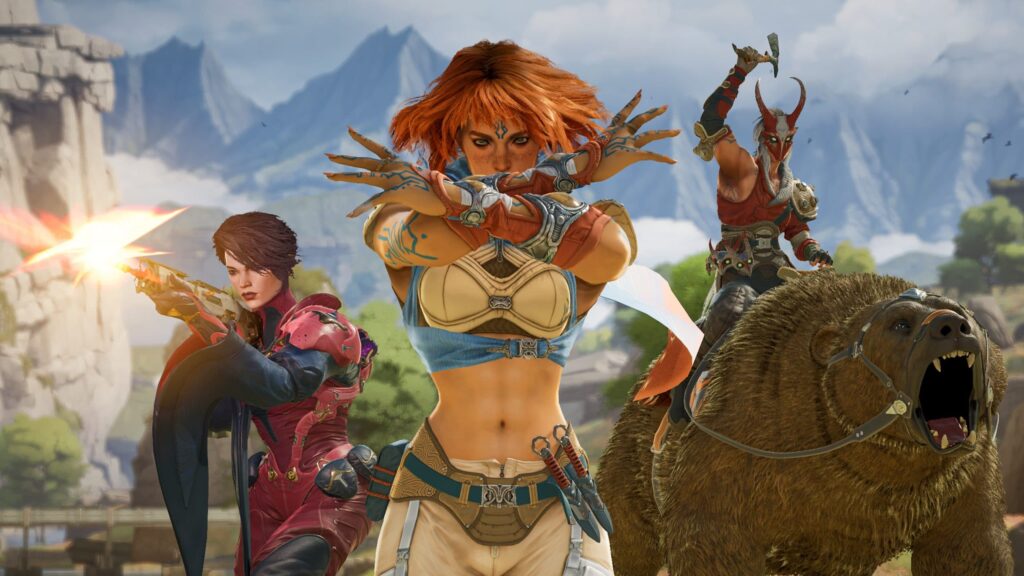
At its core, Highguard is a PvPvE raid shooter built around 3v3 team battles. Teams, known as Wardens, face off against rival players while also dealing with NPC enemies and raid bosses. One of the game’s standout features is horseback traversal, allowing players to move across large maps in a way that blends fantasy elements with shooter mechanics.
Its main Raid Mode unfolds across multiple phases. Matches begin with base preparation and loadout choices, move into exploration and looting, and escalate when the Shieldbreaker sword appears, triggering direct confrontations. Securing the sword allows a team to raid enemy fortresses, plant bombs, and destroy generators. Matches can last anywhere from eight to thirty minutes.
Highguard launches with eight playable characters, a focused weapon lineup, and multiple fortresses that teams can vote to defend, each offering unique layouts and defensive options.
Devs Admit The Reveal Missed The Mark
In response to the game’s rocky start, Wildlight Entertainment CEO Dusty Welch acknowledged that the initial reveal did not land as intended.
“I wish Highguard had been received better,” Welch said, adding that the team read the feedback and recognised their role in the reaction. He admitted the trailer focused more on entertainment than clearly explaining the game’s unique loop, saying they “could have made a better trailer.”
Welch also clarified that Wildlight did not pay for its Game Awards slot, explaining that the opportunity came from genuine support for the game rather than marketing spend.
Creative director Jason McCord added that the decision to go quiet after the reveal was intentional, mirroring the approach used ahead of Apex Legends’ launch. According to McCord, the plan was always to announce the game, go dark, and let players experience it directly at launch.
A Launch Full Of Potential And Problems
Highguard’s debut is a clear mix of strong interest and significant backlash. Its player numbers show there is genuine curiosity around Wildlight Entertainment’s new IP, but its Steam reviews highlight deep concerns around performance, clarity, and overall direction.
Whether the game can recover will depend heavily on how quickly technical issues are addressed and whether upcoming patches and content updates can convince players to give it another chance. With a year-one roadmap promising new characters, maps, and weapons on a monthly schedule, the next few months will be crucial for Highguard’s long-term future.