



Australians traveling overseas for the summer holidays faced a significant financial burden as international travel prices soared by nearly a quarter from November to December last year. This sharp increase, reported by the Australian Bureau of Statistics, highlights the ongoing challenges in the travel sector. However, a recovery in aircraft production by major manufacturers offers a glimmer of hope for long-term price relief from major carriers.
The 24.4 percent spike in international travel costs, predominantly airfares, is unusually high even for the holiday season. This surge contrasts with a more modest annual increase of 5.8 percent in both domestic and international travel prices, which has contributed to inflationary pressures in Australia.
Impact of Pandemic on Travel Costs
AMP chief economist Shane Oliver attributes the dramatic rise in international travel prices to lingering effects of the pandemic. “The reduction in competition in holiday travel, particularly among airlines and accommodation businesses, is still having an impact,” Oliver explained. “Every time school holidays approach, prices for travel, whether it’s airlines or hotels, skyrocket.”
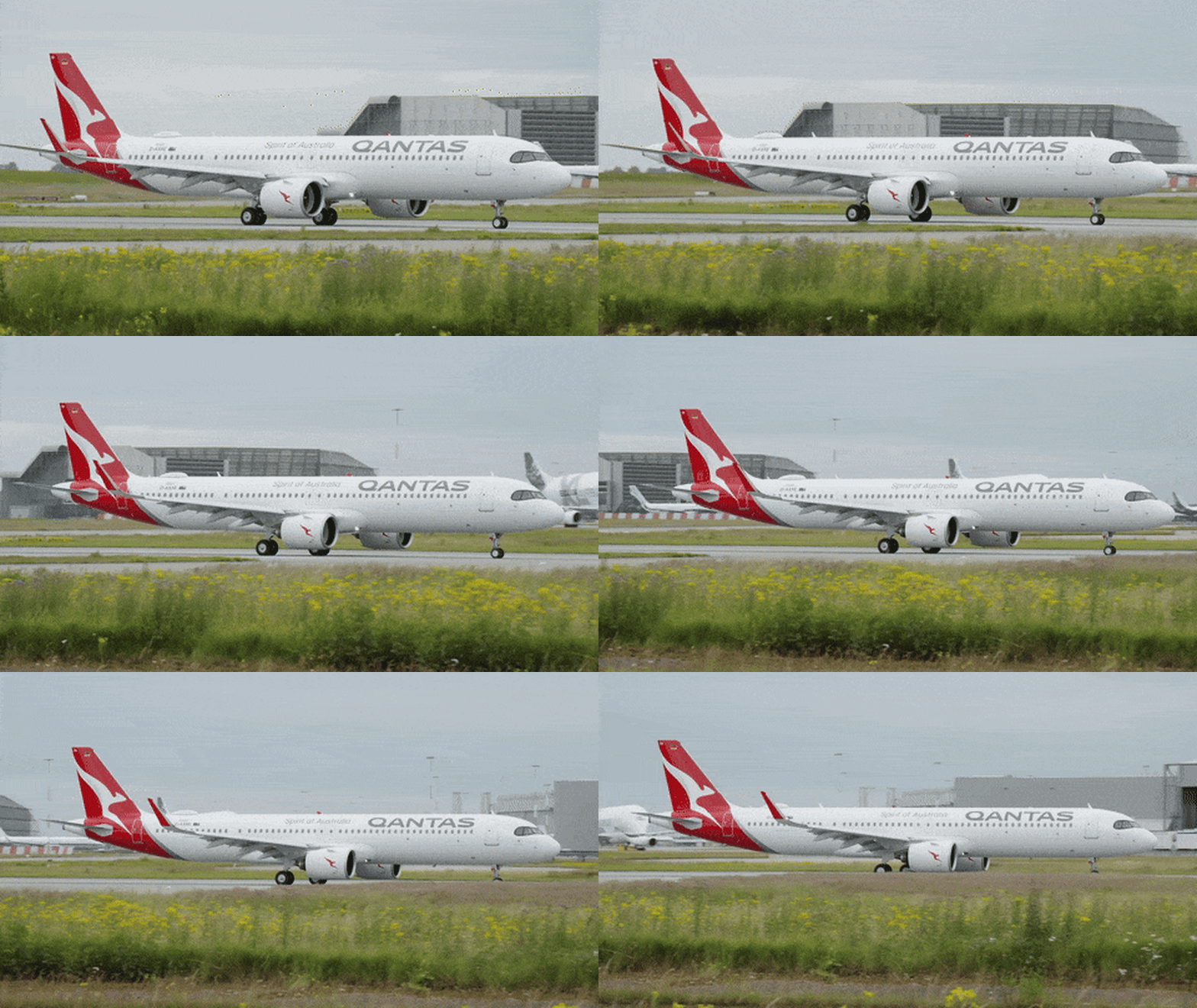
This increase in fares comes as the aircraft manufacturing industry begins to recover, raising hopes for reduced operating costs for carriers over time. Qantas, for instance, anticipates receiving over a dozen new planes by the end of June, aided by the recovery in plane production.
Fleet Renewal and Its Implications
International aviation consultant Neil Hansford noted that the renewal of Qantas’ fleet would not only reduce costs but also enhance operational flexibility. “The numbers show Qantas is emerging well from COVID, as the pace of plane production begins to resume in earnest,” he said.
London-based aviation consultancy IBA forecasts that Airbus, Boeing, and Embraer will deliver 1,800 aircraft to global airlines in 2026, up from 1,530 the previous year.
Qantas is on track to have seven Airbus A321XLRs in service by June’s end, complementing eleven super-efficient A220s arriving at QantasLink. “The real effect for Qantas will be that they’re not spending as much money on heavy maintenance,” Hansford added. “The airline is buying new aircraft with new warranties and not throwing money into old airframes.”
Environmental and Economic Considerations
Younger aircraft fleets are not only more efficient but also less costly to operate. Older fleets, often decades old, tend to suffer from frequent mechanical issues, increased downtime, and higher operating costs. Newer aircraft also produce up to 25 percent fewer emissions, aligning with climate commitments that may soon become additional costs for the industry and passengers alike.
The average age of Qantas’ fleet is 16.2 years, according to Planespotters, while Jetstar’s fleet is 10.7 years old, and Virgin’s primarily Boeing 737 fleet averages 12.2 years.
Airbus is set to deliver Qantas’ first A350-1000ULR for its world-first Sydney-London direct Project Sunrise flights. “Passengers in Australia have left no doubt they want non-stop Sydney or Melbourne to London flights,” Hansford said, noting that this positions Qantas uniquely, especially for premium traffic.
Challenges and Future Outlook
The global aviation industry has faced significant challenges in producing new planes, with Boeing particularly affected by production issues following two 737 Max crashes. However, the uptick in aircraft production is expected to benefit other airlines as well. Virgin Australia is set to receive 12 737 MAX-8s and four more Embraer E190-E2s for its regional operations in Western Australia.
Singapore-based aviation consultant Brendan Sobie remarked that manufacturers are experiencing a “gradual recovery” that could take “at least a few years.”
As the aviation industry continues to navigate these challenges, Qantas is scheduled to release its financial year 2026 half-year results on February 26. The developments in aircraft production and fleet renewal are poised to play a crucial role in shaping the future of air travel costs and operations.