


Venezuela’s acting President Delcy Rodriguez signed a landmark law on Thursday, paving the way for the privatization of the nation’s oil sector. This significant legislative overhaul was approved by the country’s National Assembly earlier in the day, marking a pivotal shift in Venezuela’s energy policy.
“We’re talking about the future. We are talking about the country that we are going to give to our children,” Rodriguez stated, emphasizing the long-term vision behind the reform. Ruling-party lawmaker Orlando Camacho, who heads the assembly’s oil committee, declared that the reform “will change the country’s economy.”
Context and Background
The announcement comes less than a month after a dramatic turn of events in Venezuela’s political landscape. The United States launched a military operation that resulted in the kidnapping of then-President Nicolas Maduro. Since then, Washington has exerted considerable pressure on Caracas, seeking access to its lucrative oil sector.
Under President Donald Trump’s administration, the US has proposed an ambitious $100 billion reconstruction plan for Venezuela’s oil industry, with intentions to manage oil sales “indefinitely.” Despite these plans, US oil executives have shown reluctance to invest due to the region’s instability.
Key Changes in the Oil Sector
The newly signed legislation grants private companies control over the production and sale of oil, a significant departure from previous policies. The law also relinquishes state control over exploration activities, introduces independent arbitration for disputes, and limits taxes to a single contribution of no more than 15% on gross income, with royalties capped at 30%.
This reform represents a reversal of a core principle of Venezuela’s socialist movement, which has dominated the nation’s politics for decades. “This obviously completely dismantles Hugo Chavez’s oil model,” noted oil analyst Francisco Monaldi, highlighting the profound implications of the reform. However, he cautioned that the state would still retain some discretion over the issuance of contracts to private entities.
Implications for Investment and Production
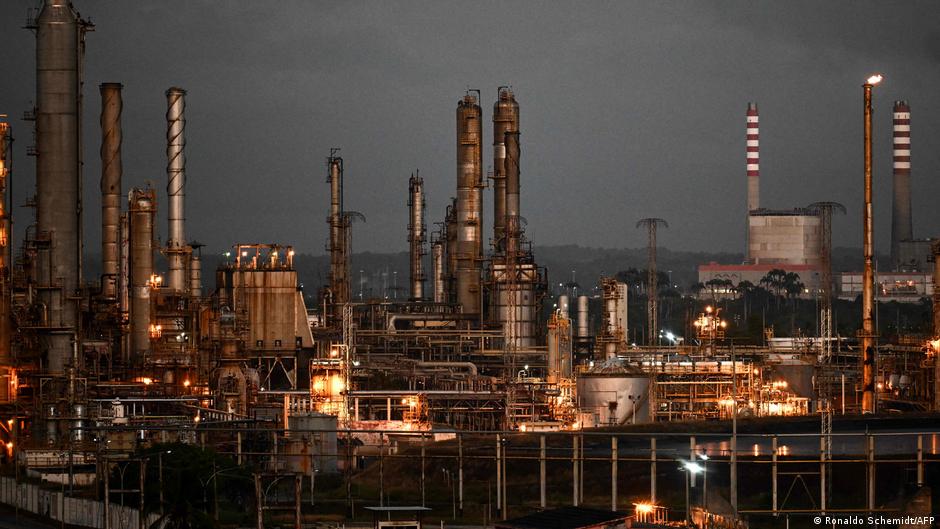
Venezuela, home to the world’s largest proven reserves of crude, was once a major player in the global oil market. However, years of underinvestment, corruption, and mismanagement severely impacted its exploration and production capabilities. US sanctions, in place since 2019, further compounded these challenges.
Despite these hurdles, the industry is showing signs of recovery. Production reached 1.2 million barrels per day in 2025, a significant increase from the 300,000 barrels extracted in 2020, though still below the 3 million barrels per day achieved at the start of the century.
Government Expectations and Historical Parallels
The Venezuelan government hopes that these changes will entice US oil majors to return and invest in the country. Historically, multiple US oil companies operated in Venezuela until 2007, when the government under Hugo Chavez tightened state control, prompting their exit. Currently, Chevron remains the only US firm operating in Venezuela, thanks to a special license.
US Eases Sanctions
As Venezuela was approving these sweeping changes, the US began to ease its sanctions on Venezuelan oil. The US Treasury issued a general license authorizing transactions involving the Venezuelan government and state oil company PDVSA. This decision marks a departure from the previous approach of granting individual exemptions to sanctions for companies seeking to engage in business in the country.
The move represents a significant shift in US policy, potentially opening the door for increased foreign investment in Venezuela’s oil sector. As the situation evolves, the global oil market will be closely watching the impact of these developments on Venezuela’s economy and its geopolitical relationships.